By Brij Khandelwal
2026.02.19 (Vrindavan Today News): Where the flute once played upon its banks, a haunting silence now prevails. The waters where faith once took a holy dip have now turned into poison.
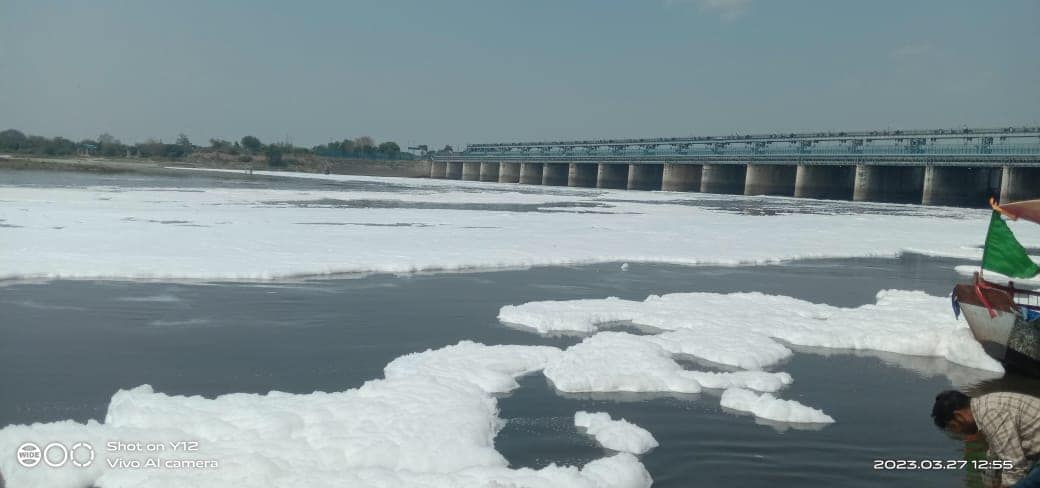
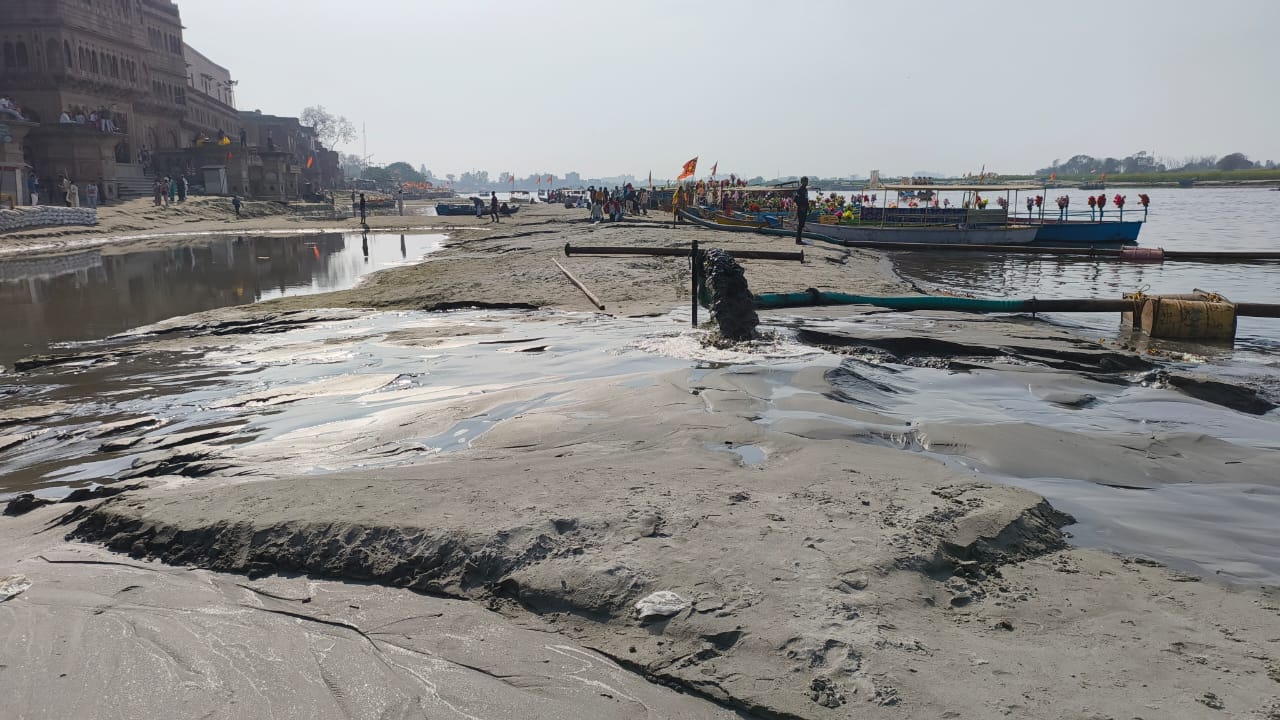
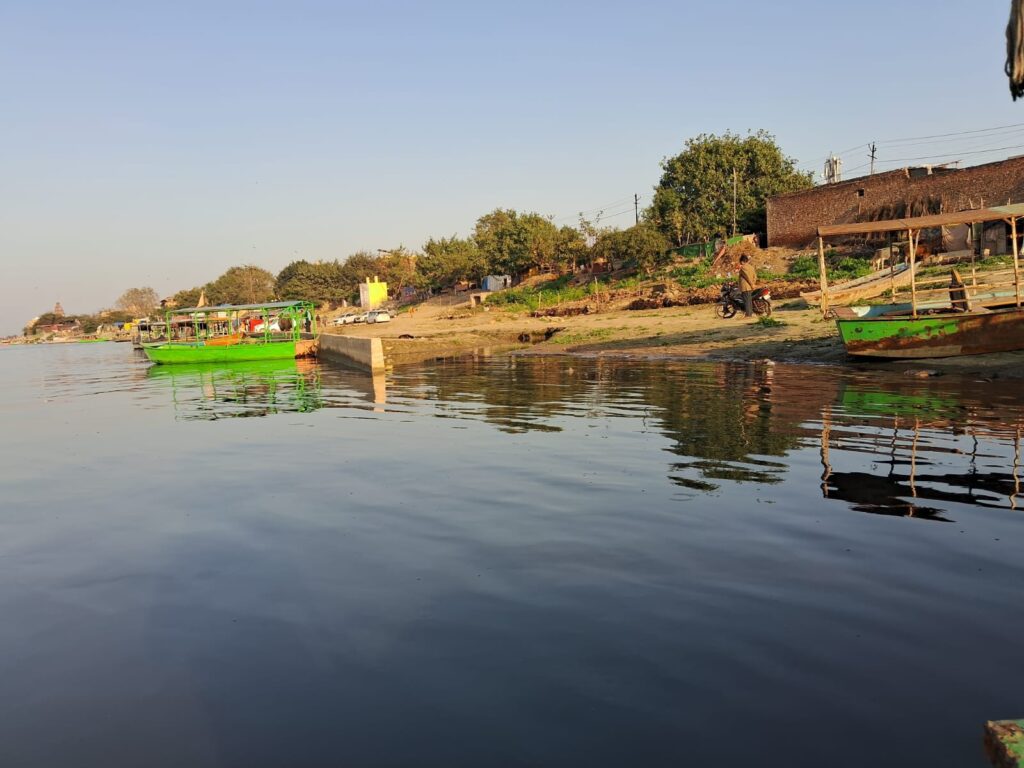
The Yamuna, considered the lifeline of the Braj Mandal, is fighting for its very existence today. It no longer resembles a river; it looks like a drain. Instead of water, a black, foul-smelling, foam-filled liquid flows. The images are screaming, and the truth is laid bare. Only one question remains: Do we truly want to save the Yamuna?
Recent reports state clearly: “Pollution choking river Yamuna.” According to the November and December 2025 reports by the Delhi Pollution Control Committee (DPCC), fecal coliform levels in the Yamuna have reached 92,000, which is 37 times higher than the safe limit (2,500).
The river is gasping for breath. It has been converted into a sewer. This is not merely an environmental crisis; it is a direct assault on public health. Dissolved oxygen levels have plummeted to dangerous lows. Toxic foam floats on the surface, and the stench is so pungent that standing on the banks is nearly impossible. Another study found that microplastic concentration in the Yamuna averaged 6,375 particles per cubic meter during the pre-monsoon period (May-June 2024). While this dropped to 3,080 post-monsoon, it remains at a hazardous level.
Furthermore, ammonia levels have hit 27.4 mg/L, forcing water treatment plants to shut down. The Biochemical Oxygen Demand (BOD) stands at 70 mg/L, whereas it should be less than 3 mg/L to support life.
Broken Promises and Failed Plans
The condition of the Yamuna in Agra and the Braj region is no secret. The headline “Yamuna pollution: Agra loses out on the environment front” is not just news; it is a warning.
For years, promises were made. Grand claims were tied to the Yamuna Action Plan (YAP). Billions of rupees were spent. Yet, the river’s color and odor only grew worse. No improvement followed.
Under the Yamuna Action Plan, schemes were devised to intercept city sewage, install treatment plants, and control industrial waste. On paper, everything looked fine; on the ground, the reality was starkly different. Many Sewage Treatment Plants (STPs) are either incomplete or operating below capacity. Untreated waste flows directly into the river through open drains. Since 2018, Phase III of the YAP saw 11 projects launched, including sewer rehabilitation and tertiary treatment plants in areas like Okhla, Rithala, and Kondli, but there has been no significant reduction in pollution levels.
Every day, 28 million gallons of untreated or partially treated wastewater dump into the river in Delhi alone. One report bluntly stated the river has been “reduced to a huge sewage canal.”
A Toxic Reality
This is not just rhetoric; it is the truth. From Delhi to Mathura and Agra, the river carries filth throughout its journey. By the time it enters Braj Mandal, it is exhausted.
People washing clothes, cattle, plastic waste, and industrial chemicals have collectively turned this sacred stream toxic. This water is neither fit for drinking nor safe for agriculture. Even groundwater is being impacted; in Delhi, groundwater microplastic levels average 1,200 particles per cubic meter.
On a recent World Water Day, the question was raised: “Can Yamuna be saved?” This question arises every year. Rallies are held, NGOs run awareness campaigns, and children make posters. Yet, the “system” remains in a deep slumber. Environmental activists associated with the River Connect Campaign say, “The Yamuna is virtually dead in Agra. The dry riverbed and highly polluted water pose a grave threat to the historical monuments lining its banks.”
Environmentalist Dr. Devashish Bhattacharya remarks: “The sacred Braj region is witnessing the painful end of its lifeline, its soul, which is being choked by decades of government apathy and a chain of broken promises. The once-vibrant ghats, echoing with the devotion of pilgrims and the lively chatter of boatmen, now stand as desolate ruins, silent witnesses to the river’s transformation into a toxic, festering wound.”
The Core Issues
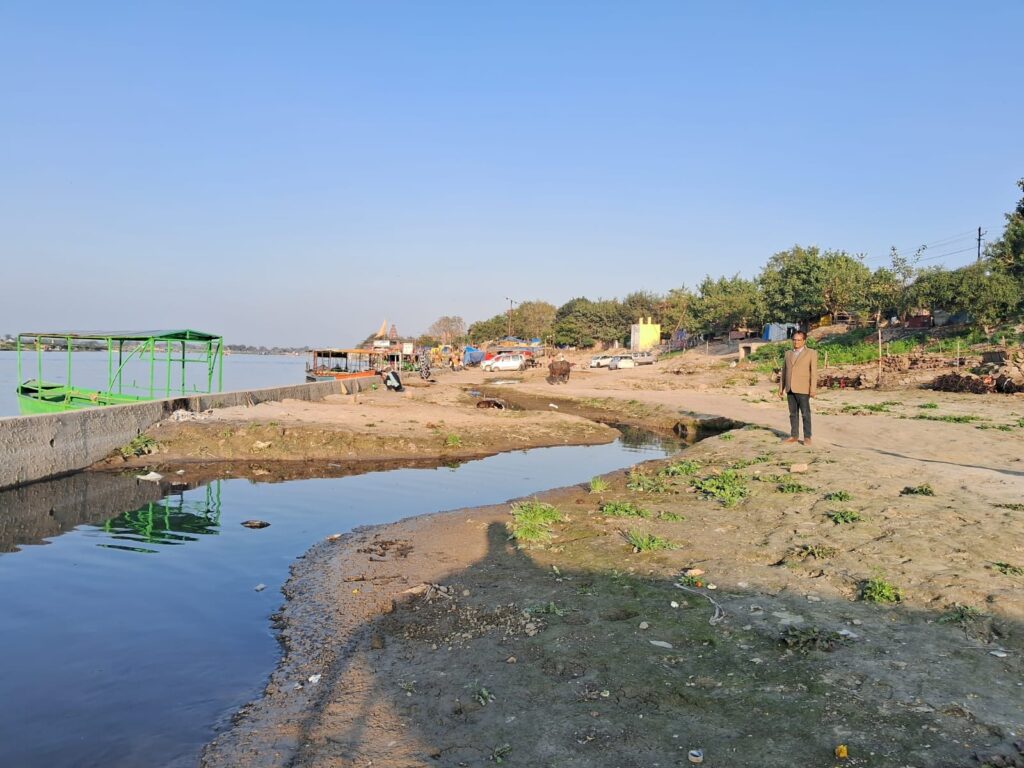
The reality is that the river’s natural flow is also obstructed. Water discharge from upstream barrages is restricted. Without sufficient flowing water, how can the river retain its capacity for self-purification? A river needs a minimum environmental flow to survive, which it is currently denied.
Industrial units are equally to blame. Regulations exist, but monitoring is lax. Illegal discharges continue. Chemicals and heavy metals dissolve into the water. The administration issues notices, and then silence returns. In Delhi, 58% of waste is dumped directly into the river.
The Spiritual and Moral Crisis
The spiritual and cultural identity of Braj Mandal is tethered to the Yamuna. The souls of Vrindavan, Mathura, and Gokul reside in the Yamuna. When the river is sick, the culture falls ill. Devotees stand on the banks to perform Aarti, but they are afraid to touch the water.
This is a crisis of morality as much as environment. In the name of development, we have strangled the river. City sewers, industrial waste, and our collective negligence have made it terminal. The current state of the Yamuna in Braj is a shameful legacy for future generations.
The Path Forward
Hope is not entirely lost. Local groups and conscious citizens continue to raise their voices. The River Connect Campaign is relentlessly striving to save the river, demanding: Construction of barrages; Ensuring minimum water flow; Cleaning of the Ghats; Strict action against polluters; Dredging of the riverbed.
The Yamuna must be viewed not just as a religious symbol, but as a living ecosystem. It should be granted legal rights. Monitoring should be handed to independent agencies. Above all, community participation must be at the heart of the solution.