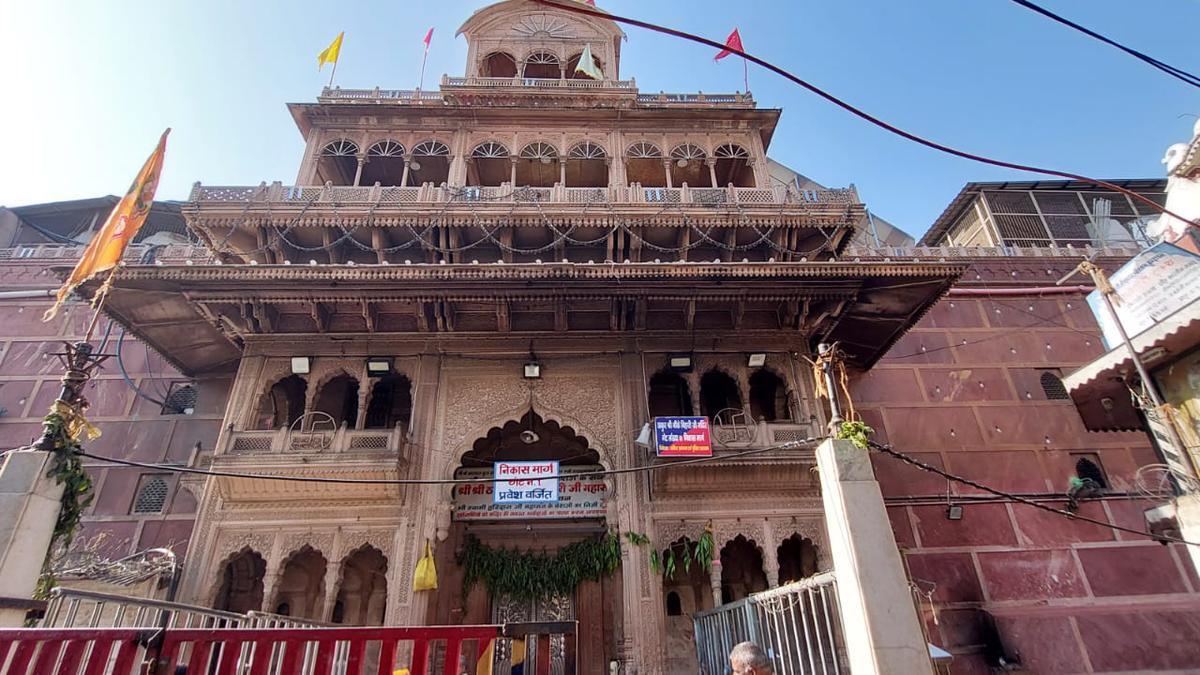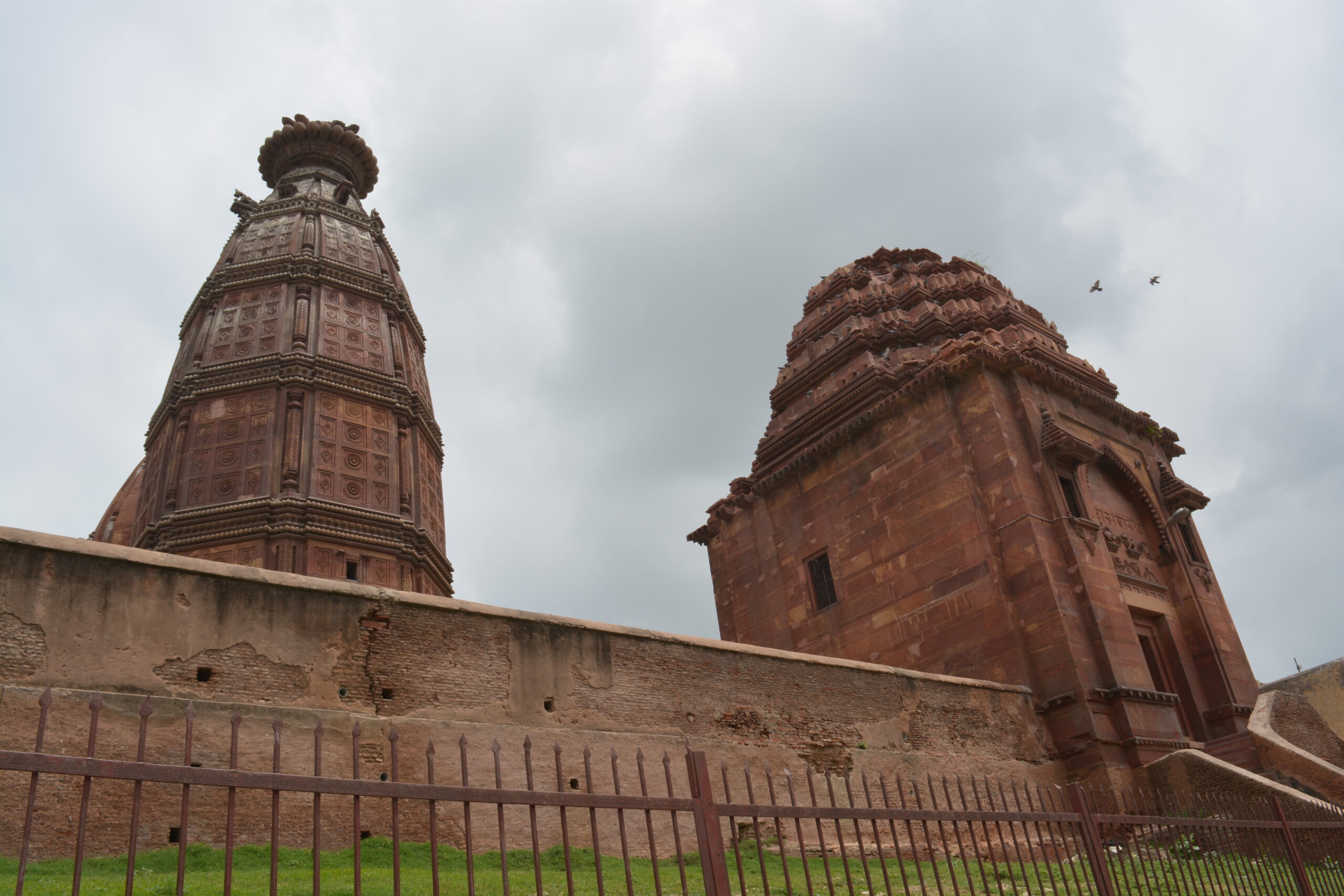
Shastras reveal Vrindavan not as a town but as the most sacred form of the Supreme Lord. Every dust particle is divine; every grove is a temple; every breeze is grace. To bow down to Vrindavan is to bow down to Kṛṣṇa Himself. To cicumambulate Vrindavan is performing parikrama to Kṛṣṇa Himself
11th December, 2025 (Vrindavan Today News): Vrindavan is not merely a geographical location; the sacred texts of our tradition affirm that Vrindavan is the Supreme Lord Himself manifest as a holy abode. In Vedic theology, the Lord, His Name, His Form, His Pastimes, and His Dham are all non-different (abhinna). Hence, Vrindavan is worshipped as a living deity—eternal, conscious, and divine.
- Vrindavan—The Eternal Abode (Nitya-dham)
The Brahma-saṁhitā (5.56) declares:
“Vaikuṇṭhaṁ vrajaṁ iti”—
Vraja is the highest spiritual realm, beyond the material sky.
The commentaries explain that Vrindavan of this world is a direct manifestation of Goloka. It is not created, nor destroyed. Just as the Lord descends, His Dham also descends (dhamnâ saha patati).
- Non-Difference Between Kṛṣṇa and His Dham
The Padma Purāṇa states:
“Śrī Kṛṣṇa-caitanya-dhāma—kṛṣṇa-tulyāya varṇyate.”
The Lord’s abode is described as equal to Him.
Similarly, the Skanda Purāṇa glorifies:
“Vṛndāvanaṁ parityajya padam ekaṁ na gacchati.”
Kṛṣṇa never takes a single step outside Vrindavan.
This reveals Vrindavan as the very body of the Lord, inseparable from Him.
- Vrindavan as Chinmaya-bhumi—Land Full of Consciousness
The Śrīmad-Bhāgavatam (10.13.53) describes how every particle of Vraja is imbued with divine energy:
“Sarvaṁ brahma-mayaṁ”—
Everything in Vrindavan is spiritual.
Acaryas note that even the dust (vraja-raja), trees (vṛkṣa), birds (khaga), and stones (pāṣāṇa) are conscious associates of the Lord, participating in His eternal līlā.
- Gaudiya Literature: Vrindavan as Worshipable Deity
Śrī Rūpa Gosvāmi in Vraja-vilāsa-stava writes:
“Jaya jaya vṛndāvana-dhāma… tava dhyānaṁ mama jīvanaṁ.”
O Vrindavan Dham! Meditating upon you is my very life.
This establishes Vrindavan as an object of direct worship, not merely reverence.
Śrīla Jīva Gosvāmi further establishes in Bhagavat-sandarbha that:
Vrindavan is Kṛṣṇa-svarūpa (Kṛṣṇa in an expanded form).
To serve Vrindavan is to serve Kṛṣṇa directly.
- Caitanya Mahaprabhu’s Teachings
Shriman Chaitanya Mahaprabhu embraced the dust of Vrindavan to His heart. The Caitanya-caritāmṛta (Madhya 17.193) states:
“Vṛndāvana-dhāma—kṛṣṇa-eka-śarīra.”
Vrindavan Dham is one body with Kṛṣṇa.
Shriman Chaitanya Mahaprabhu Himself revealed that Vrindavan must be approached with the mood of serving a deity—through humility, purity, and devotion.
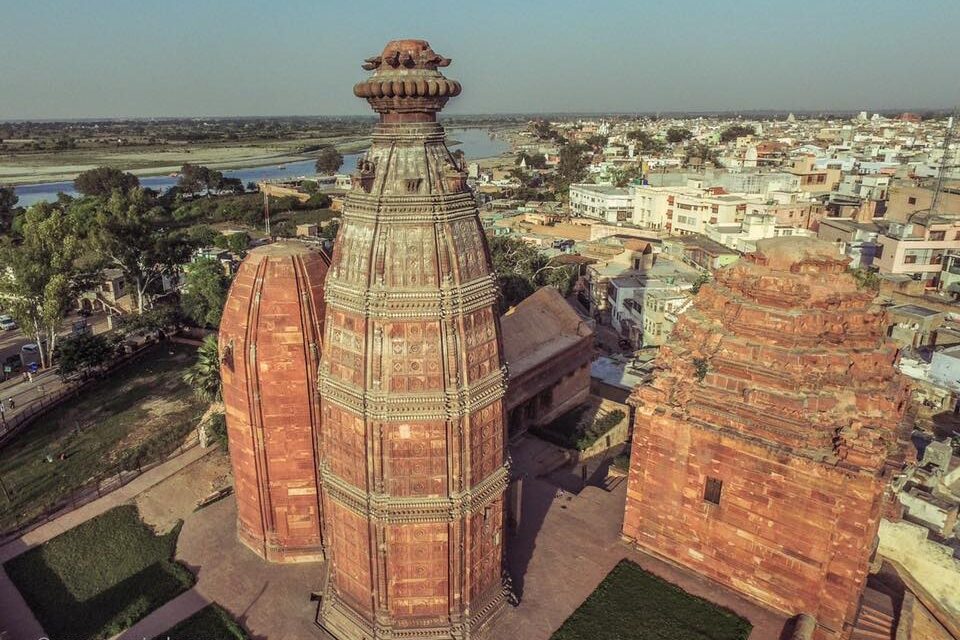
- Every Element of Vrindavan Is Worshipable
The Garga-saṁhitā (Vraja-khaṇḍa) glorifies:
Yamunā as the flowing mercy of Śrī Kṛṣṇa
Govardhan as Haridāsa-varya, the Lord’s topmost servant
Kadamba, Tamāla, Pīpal trees as eternal residents
Vamsīvat, Nidhivan, Seva-kunja as activated līlā-sthalīs
Thus, the entire space of Vrindavan is a deity composed of divine consciousness.
- Implication for Modern Times
Understanding Vrindavan as a deity carries a profound message:
Desecration of Vrindavan is equivalent to desecration of the deity.
To protect the forests, Yamunā, the groves, and the skyline is not an environmental duty alone—it is seva.
As Iskcon Founder His Divine Grace A. C. Bhaktivedanta Swami Śrīla Prabhupāda repeadetly said:
“Vrindavan should not be treated as a mundane place. One must behave here as if one is in the presence of the deity at all times.”