With the deterioration in the river’s purity, the sacred practices have been severely affected, marking a significant cultural and spiritual loss.
Vrindavan Today | Bureau Report
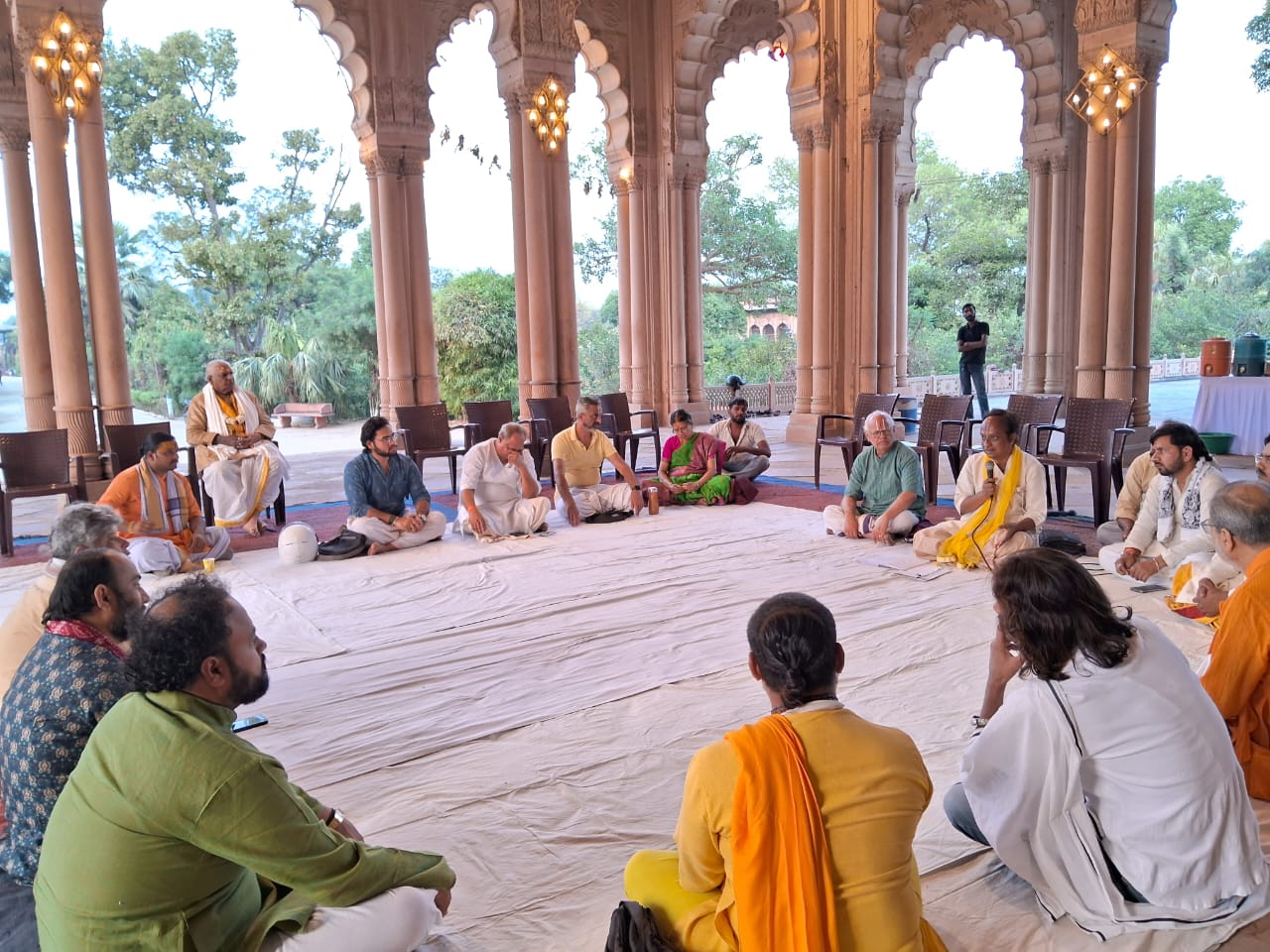
19th March 2026, Vrindavan: During the recent visit of President Droupadi Murmu to Vrindavan, concerns over the deteriorating condition of the Yamuna River were strongly raised by religious leaders and temple representatives in the Braj region. A meeting of the Braj Vrindavan Devalaya Samiti, held at the Bade Bagicha of Sri Ranganath Temple, chaired by Shri Alok Goswami of Shri Radha Raman Mandir, highlighted the growing pollution in the Yamuna and the obstruction in its natural flow. The issue was described as not only environmental but deeply religious in nature.
The committee resolved to escalate the matter to the highest levels of governance. A delegation announced plans to meet the President, the Union Jal Shakti Minister, and the Chief Ministers of Delhi, Haryana, and Uttar Pradesh, urging immediate steps to restore the river’s “nirmal” (clean) and “aviral” (uninterrupted) flow.
Taking advantage of the President’s presence in Vrindavan, the ‘Temple Alliance’ also submitted an appeal through a formal letter and media channels, requesting urgent intervention to free the Holy Yamuna from pollution.
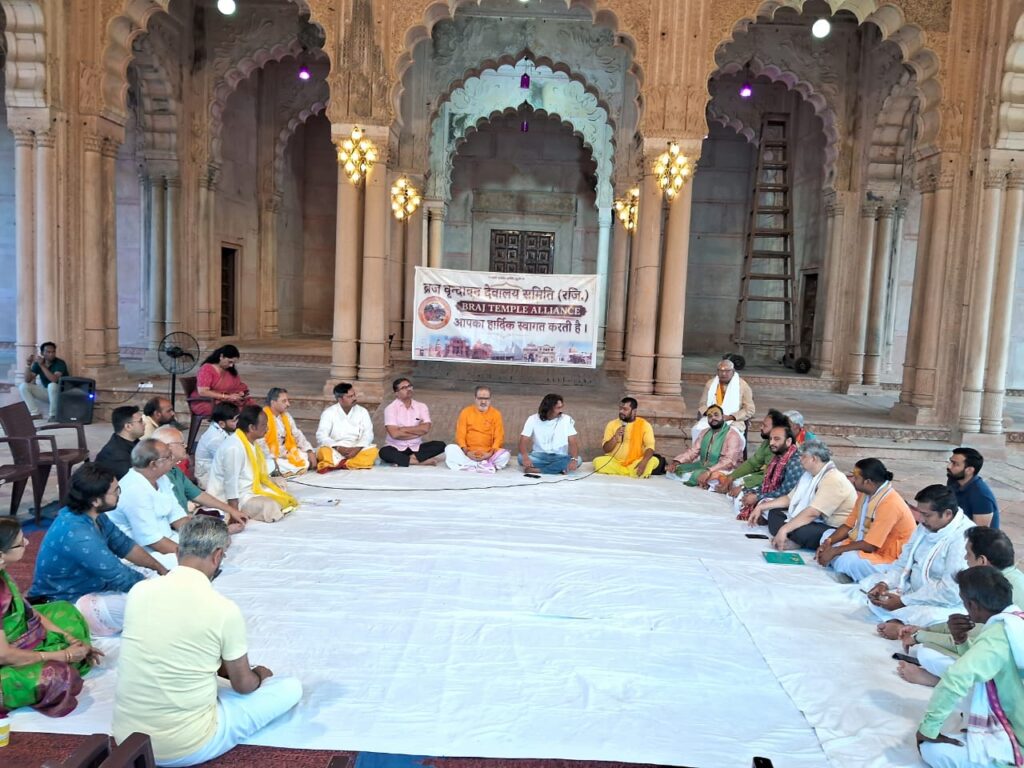
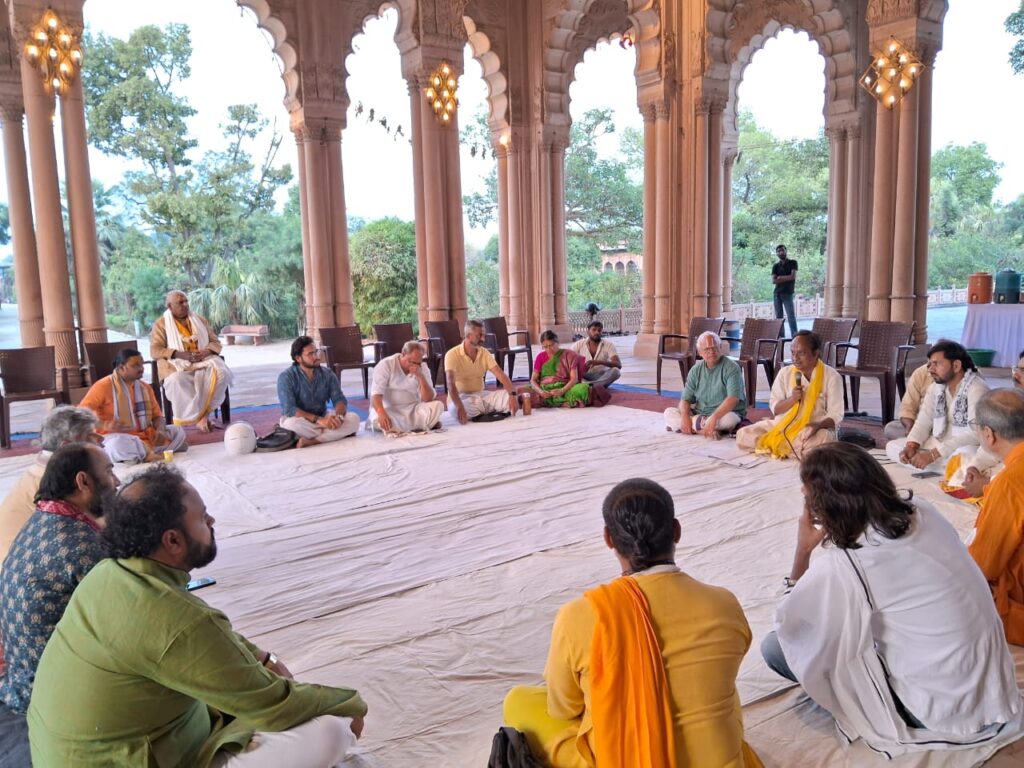
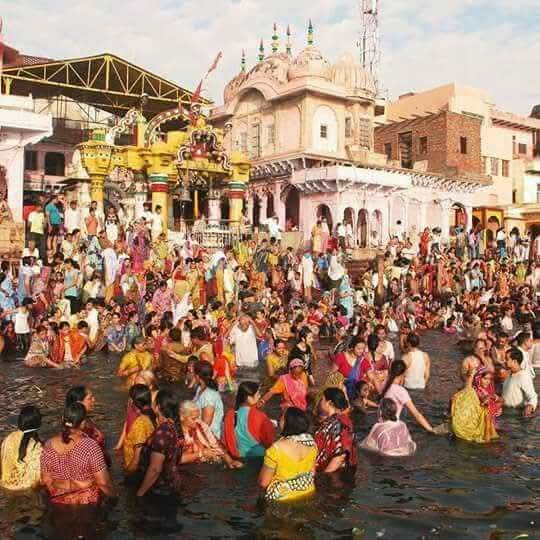
Speakers at the meeting emphasized that Braj is globally revered as the land of Shri Krishna, attracting millions of devotees. For centuries, Yamuna water has been integral to temple rituals, including deity abhishek, temple kitchens, and daily religious practices.
However, worsening pollution and reduced flow have severely impacted these traditions. Devotees, driven by faith, are often compelled to use contaminated water for rituals, raising serious concerns about both religious sanctity and public health.
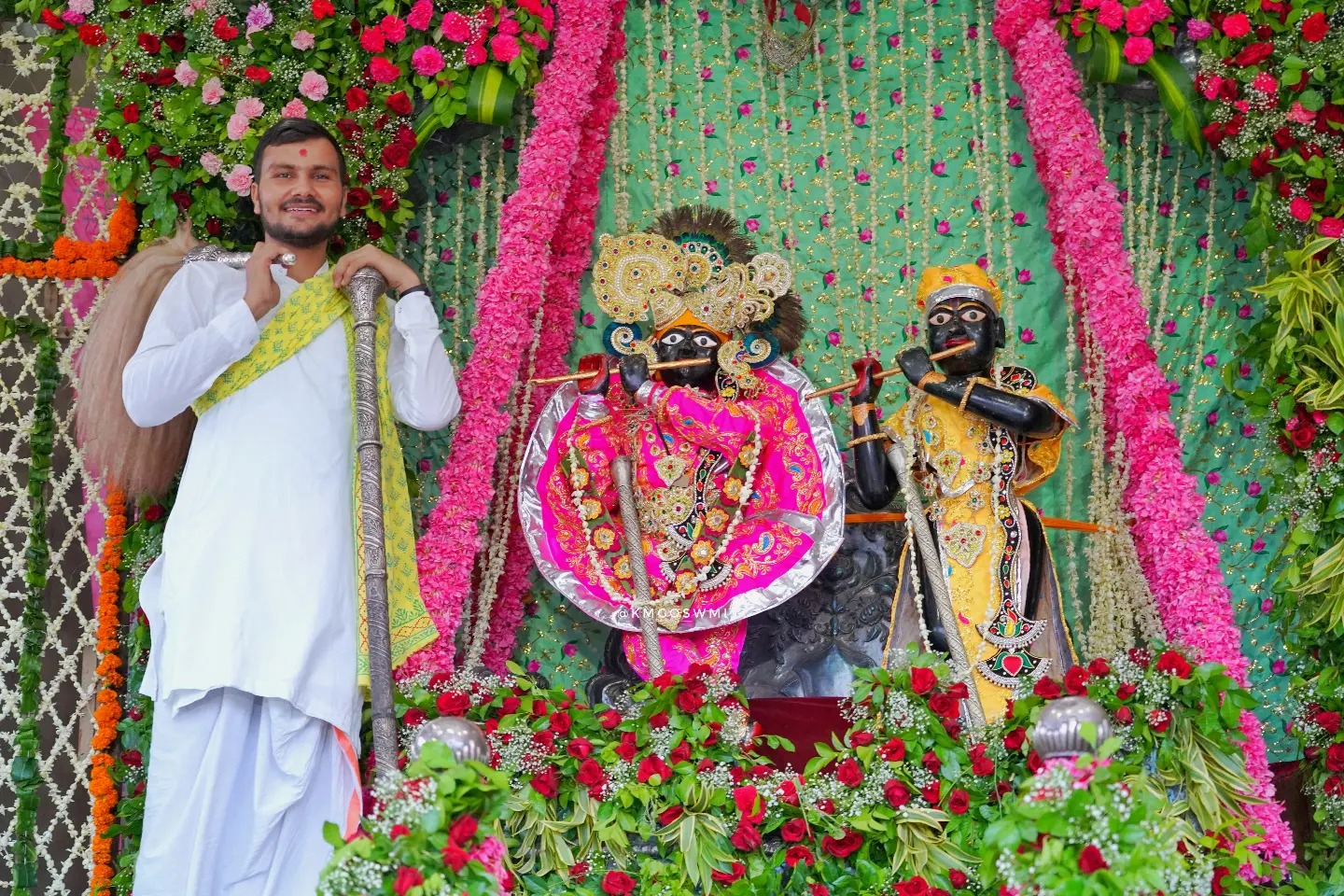
Religious leaders also cautioned that development projects should not come at the cost of the Yamuna’s natural flow. They stressed that preserving Braj’s cultural and spiritual heritage must go hand in hand with river conservation. Due to the increasing pollution in the Yamuna River, the sacred tradition of carrying Yamuna water to temples has gradually declined and, in many places, has been discontinued. In earlier times, the Rang ji Mandir would ceremoniously carry Yamuna water in a procession daily. The Yamuna water used to be carried in silver pitchers under a ceremonial chhatra. The procession used to be accompanied by the musicians, security, reflecting deep reverence and devotion.
Similarly, Yamuna water was traditionally sent all the way to Nathdwara by bus for temple rituals. Many other temples also regularly collected Yamuna water for their daily and special religious ceremonies. However, with the deterioration in the river’s purity, these sacred practices have been severely affected, marking a significant cultural and spiritual loss. The gathering concluded with hope that the government and concerned authorities would take swift and concrete measures to restore the Yamuna to its pristine and uninterrupted form.
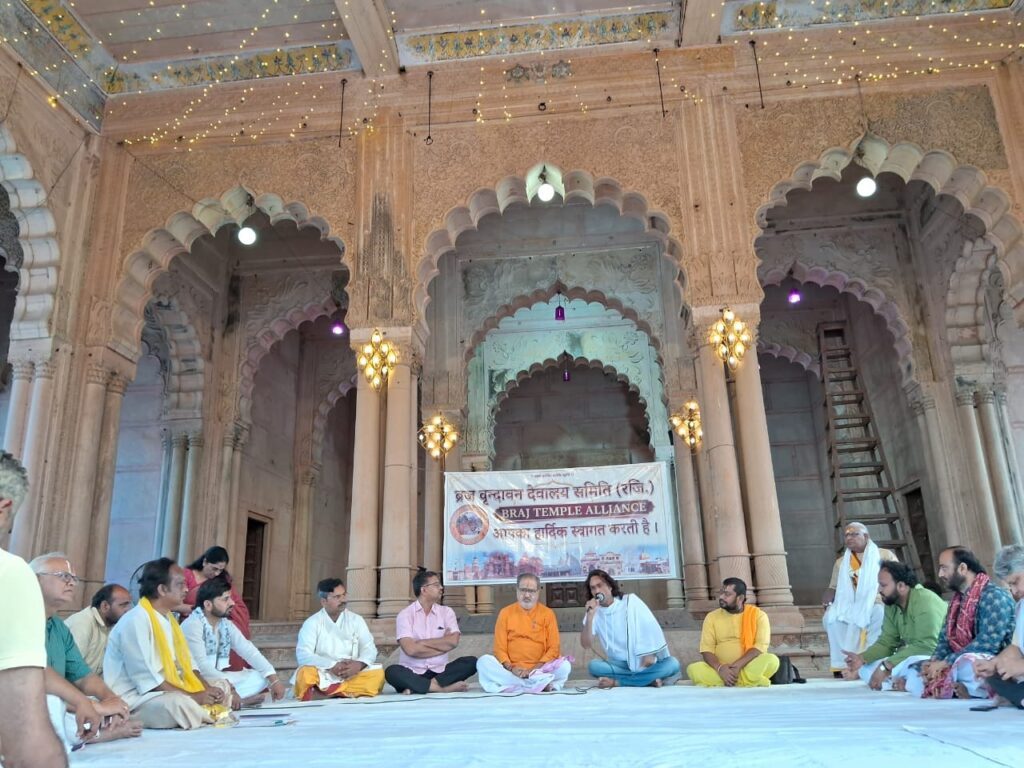
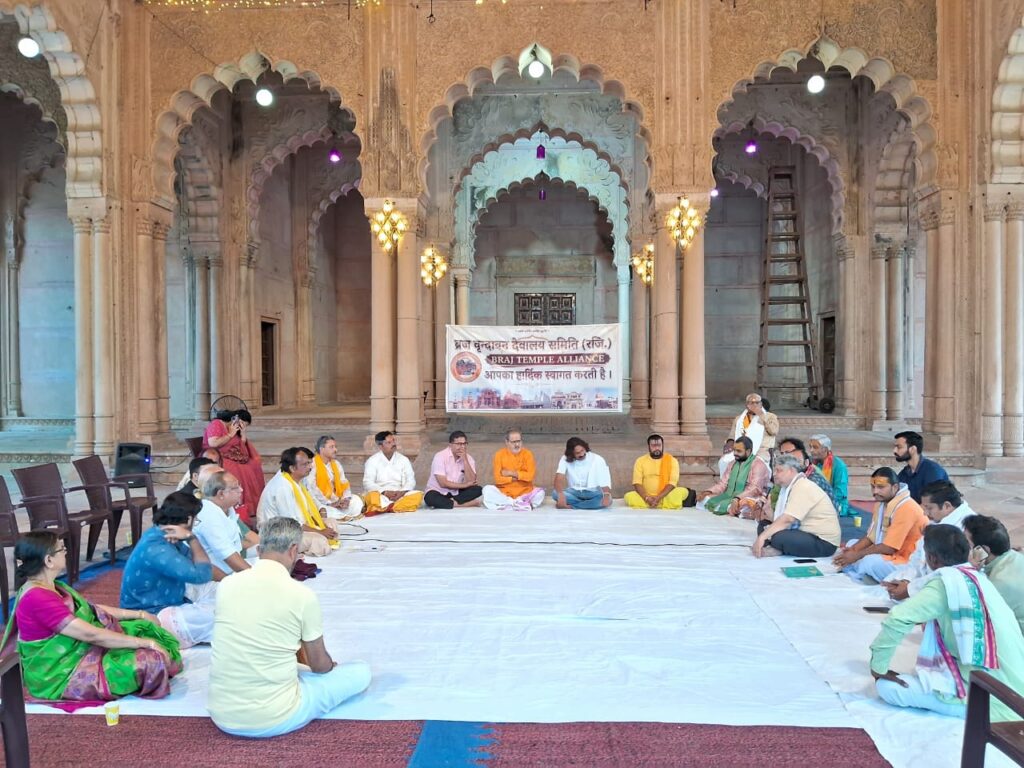
The meeting was attended by the senior temple sevaits including Shri Alok Goswami from Shri Radharaman Temple, Shri Kanta Nath Chaturvedi from Deergh Vishnu Mandir Mathura, Smt. Anagha Srinivasan from Shri Rangnath Mandir, Shri Jai Kishor Goswami from Yugal Kishor Temple (Kishor Van), Shri Rajat Goswami from Banke Bihari Temple. Shah Shri Prashant Gupta from Shajji Temple, Shri Rudra Pratap Singh from Meera Bai Temple, Mahant Shri Ram Krishna Das Babaji from Shyam Sundar Mandir Govardhan, Shri Laxmi Narayan Tiwari from Goda Bihar Temp;le, Shri Siddharth Shukla from Keshi Ghat , Shri Deepak Goswami from Bade Dauji Mandir, Shri Gaurav Aviral Shastri from the Chaturbhuj Naryan Mandir (Chhatravan) and many others.