By Brij Khandelwal
22 December 2025
(Vrindavan Today News): By 2030, the Shri Krishna land, Braj bhoomi, may no longer wake up to blue skies. The sun could rise like a dull, bloody disc, its light filtered through a haze of choking dust. Children might learn to breathe through masks before they learn to write their own names. Hospitals could overflow with patients whose lungs bear the scars of invisible poisons. Outside big cities, a silent storm would be gathering, the slow and relentless march of sand, swallowing villages and farmland where forests and hills once stood guard.
This is the future being manufactured right now, as bulldozers grind away India’s oldest line of defence, the Aravalli hills.
The Taj Mahal, the marble poem to love, now stands under a shroud of dust. What was once the symbol of purity and perfection glimmers pale and tired beneath a film of grey that no polish can hide. Satellite images over the past few years have revealed a chilling reality: vast corridors torn open in the Aravalli ranges by illegal mining have become gateways for desert winds from Rajasthan. Through these man-made wounds, the Thar’s advancing sands now pour into the eco-sensitive Taj Trapezium Zone, bombarding the region with tons of dust every season.
The westerlies, once tempered by the forested Aravallis, now blow unhindered, carrying fine particulate matter that embeds itself in every crevice of the monument. The Taj’s white Makrana marble, already struggling against acid rain and river pollution, is now under siege from gritty, iron-laced sand that corrodes and stains its surface. Conservation experts report accelerated yellowing and pitting on the southern façade, direct evidence of this windborne assault.
From the burnt plains of Rajasthan to the Yamuna’s fading banks, the trail of destruction is starkly visible. Illegal quarries gouge the once-continuous chain of hills, and with every truck of stone extracted, another barrier against the desert is lost. As dunes move eastward and dust levels in Agra rise beyond safe limits, the world’s greatest monument to love faces a slow, suffocating death, buried not by time, but by greed and neglect.

The evidence is irrefutable. High-resolution satellite data from 2024 and 2025 shows thick dust plumes rising each summer from freshly scarred zones in the Aravallis, particularly near Alwar, Tijara, and Neemrana, drifting unhindered toward Agra. The once-verdant ridgelines that served as natural dust filters have been sliced apart, leaving gaping corridors that funnel the desert’s fury straight into the Taj Trapezium Zone. Scientists at the Indian Institute of Remote Sensing confirm that these airborne sands now settle heavily over the Yamuna floodplain, blanketing crops, homes, and the marble marvel itself.
The impact is visible even to the naked eye. The Taj’s once-translucent marble now bears a faint ochre hue, a sickly reminder that it, too, is part of the fallout. Air quality monitors around Agra regularly record particulate matter four to six times higher than prescribed limits during the summer months. Each gust of dusty wind acts like a sandblaster, pitting and dulling the monument’s surface, undoing the painstaking cleaning work of past restorations.
Historians warn that the damage is not just environmental but civilizational. The Taj is no longer merely suffering from local neglect, it is being assaulted by regional ecological collapse. As long as illegal mining continues to tear open the Aravalli barriers, the Thar Desert’s advance will remain unstoppable. What we are witnessing is the slow engulfing of a world heritage, one dust storm at a time. And if urgent action is not taken, India’s greatest monument may fade into the desert haze it once defied.
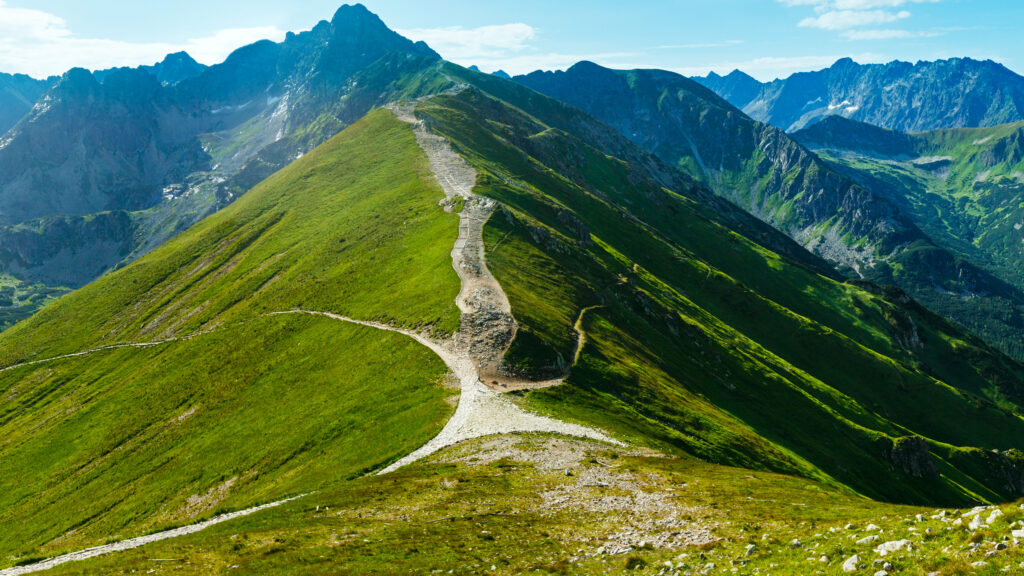
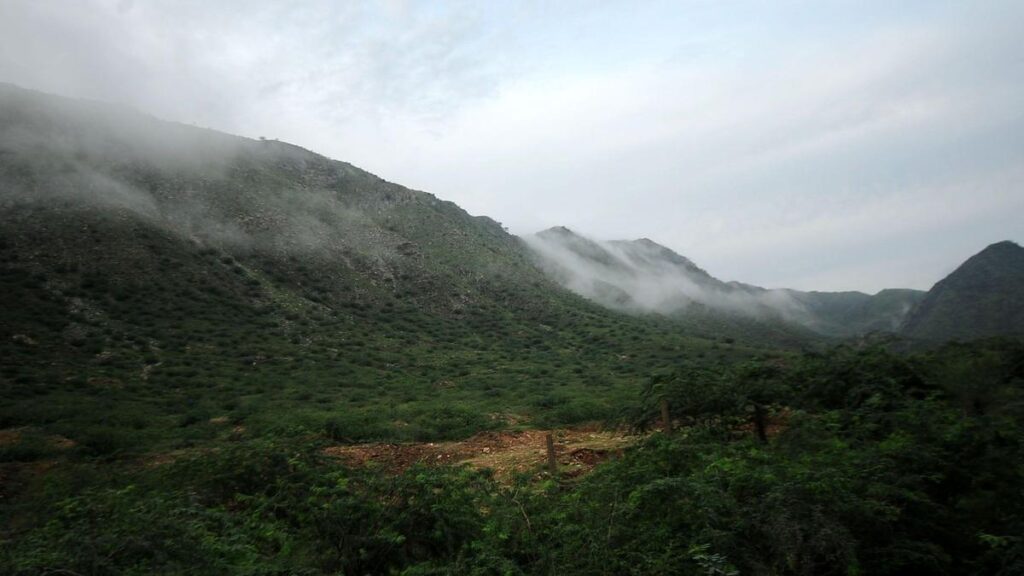
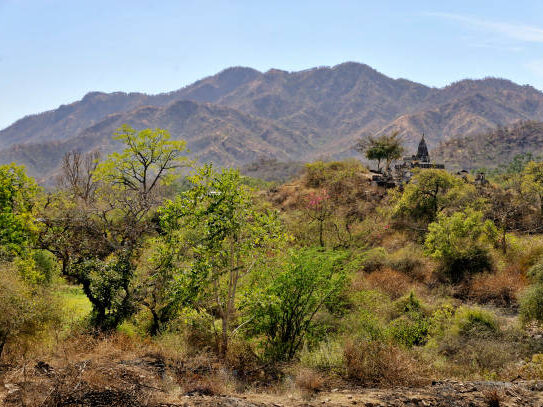
Stretching roughly 700 kilometres across Delhi, Haryana, Rajasthan, and Gujarat, the Aravallis are more than a geological marvel. They are a living, breathing lifeline. Formed two to three billion years ago, older even than the Himalayas, these hills block the encroaching Thar Desert, trap dust from sweeping into Delhi, and replenish millions of litres of groundwater every single day. They regulate local temperature, shelter wildlife, and hold together the fragile ecological balance of northern India. Yet today, this ancient range is being carved, sold, and stripped away, its destruction disguised as “development.”
For decades, the Aravallis have bled under the assault of unchecked mining and real estate sprawl. Mines for sandstone, marble, zinc, and granite have gutted the landscape. Once lush slopes now lie fractured and barren, their water tables plummeting to frightening depths. By 2018, entire hills had vanished from Haryana’s maps; biodiversity collapsed, and the dust clouds rising from mining pits became a permanent part of Delhi’s air. Each truckload of rock carried away is another breath stolen from the city’s future.
And now, the highest court in the land has handed a new weapon to those who profit from destruction.
On November 20, 2025, the Supreme Court issued a ruling that experts across India have condemned as catastrophic. Acting on a government committee’s recommendation, the court accepted a new definition of what may legally be called “Aravalli hills.” Only landforms rising 100 metres above local relief, plus their adjoining slopes within 500 metres, will qualify. Everything else, no matter how ecologically vital, is excluded.
The change seems trivial, but its consequences are apocalyptic. More than ninety percent of the Aravalli range could lose its protection overnight. That means small ridges, scrub-covered slopes, and low rocky formations, all essential to the ecosystem’s continuity, will be open to exploitation. According to data from the Forest Survey of India, only 8.7 percent of the hills they mapped would still count under this definition. The rest, the living shield that guards North India from the desert, would be up for grabs.
Reports from environmental groups tell a grim story that the ruling ignores. The Citizens’ Report by People for Aravallis, published in May 2025, documented groundwater depths falling to 1,000–2,000 feet across large parts of Haryana and Rajasthan. The same report links mining activity to respiratory illnesses, agricultural collapse, and the vanishing of wildlife. In 2024, the Central Empowered Committee had urged the Supreme Court to declare the entire Aravalli zone a no-mining area. Those warnings were swept aside in favour of an industry-driven compromise.
Already, the signs of crisis are visible. In towns like Alwar and Gurugram, summer heat burns harsher each year. Streams have dried up, wells lie abandoned, and farmlands crack under relentless drought. Leopards and hyenas wander into villages in search of food and water, sparking fear and conflict. Each dust storm that sweeps through Delhi now carries the grit of the Aravallis, airborne evidence of neglect and greed.
The Supreme Court’s judgment has sparked outrage because it betrays the very principles of environmental justice that earlier rulings had upheld. In past landmark cases, the Court had recognised the fundamental importance of these hills. But today, that legacy stands on shaky ground, replaced by a “management plan” that promises sustainable mining while weakening the very definition of what needs protection. It is a cruel paradox: the government speaks of a “Green Wall Project” even as it clears the ground of what little green remains.
The ban on mining must be fully reinstated and expanded, not diluted. The entire range should be declared a critical ecological zone where no commercial exploitation is permitted. Reforestation on a war footing must follow, with local communities leading the effort and being paid to restore what was stolen. Each valley, each slope, each forgotten ridge that still stands deserves to be revived, not rewritten out of existence.
Without these hills, the entire Braj bhoomi will choke, Haryana will parch, Rajasthan will burn, and the Thar will keep marching eastward until the desert meets the sea. The Aravallis must be saved in their entirety, or they will be lost forever.
About the Author Shri Braj Khandelwal is a senior journalist and member of Vrindavan Today’s Editorial Board. He has worked for various newspapers and agencies including the Times of India. He has also worked with UNI, NPA, Gemini News London, India – Abroad, Everyman’s Weekly (Indian Express), and India Today. Shri Khandelwal edited Jan Saptahik of Lohia Trust, reporter of George Fernandes’s Pratipaksh, correspondent in Agra for Swatantra Bharat, Pioneer, Hindustan Times, and Dainik Bhaskar until 2004). He wrote mostly on developmental subjects and environment and edited Samiksha Bharti, and Newspress Weekly. He has worked in many parts of India. He has authored two books on the environment, Towards New Environment and Taj Mahal in Pollution Cauldron: A Reporter’s Diary