- By Brij Khandelwal
2026.01.19 (Vrindavan Today News): Three decades ago, 85-year-old Sita Ram from Morena embarked on a profound spiritual odyssey. He walked barefoot to Badrinath, his sand-worn feet carrying him through Himalayan trails, sustained by bhajans on his lips and the shared warmth of fellow yatris under starlit skies. He ate simple rotis together, chanted “Om Jai Badrinath-hari” in rhythmic unison, and found deep inner peace. On his return, he completed the 21-kilometer Govardhan Parikrama, each step an offering of devotion, pausing at sacred spots to hear Krishna’s pastimes from elders.
Today, Sita Ram recalls that era with a heavy sigh. Pilgrimages have become mechanized: buses replace footsteps, smartphones drown out collective kirtans, and hurried selfies eclipse quiet reflection. What was once a transformative quest of the soul now often resembles a tourist checklist, efficient and comfortable, yet spiritually hollow. Faith endures, but the depth of communal immersion and inner renewal has faded. India’s ancient teerthas, revered for millennia, are being systematically repackaged as commercial tourist hubs, unleashing ecological devastation, cultural erosion, and a profound spiritual crisis.
Nowhere is this more evident than in Mysuru, where the recent protest movement has spotlighted the assault on Chamundi Hills. The 1,058-meter abode of Goddess Chamundeshwari, traditionally reached by a devoted climb up ancient steps, now faces a ₹45 crore “rejuvenation” under the Central Government’s PRASHAD scheme. Launched in 2014-15, PRASHAD has sanctioned over ₹5,500 crore for more than 50 projects nationwide, ostensibly to enhance pilgrim facilities. Yet at Chamundi, the plan includes widened roads, ropeways, amphitheaters, and parking for 2,000 vehicles, imposed on a fragile laterite ecosystem prone to landslides. Despite appeals from the Chamundi Protection Committee, residents, temple authorities, and environmentalists for a proper Environment Impact Assessment, construction advanced until halted by protests in January 2026. The Karnataka High Court issued notices and temporary stays, citing risks to over 200 plant species and endangered blackbuck. Local voices, including former mayors and seers, warn that politicians are turning this sacred hill into a concrete jungle, irreparably damaging its sanctity and ecology.
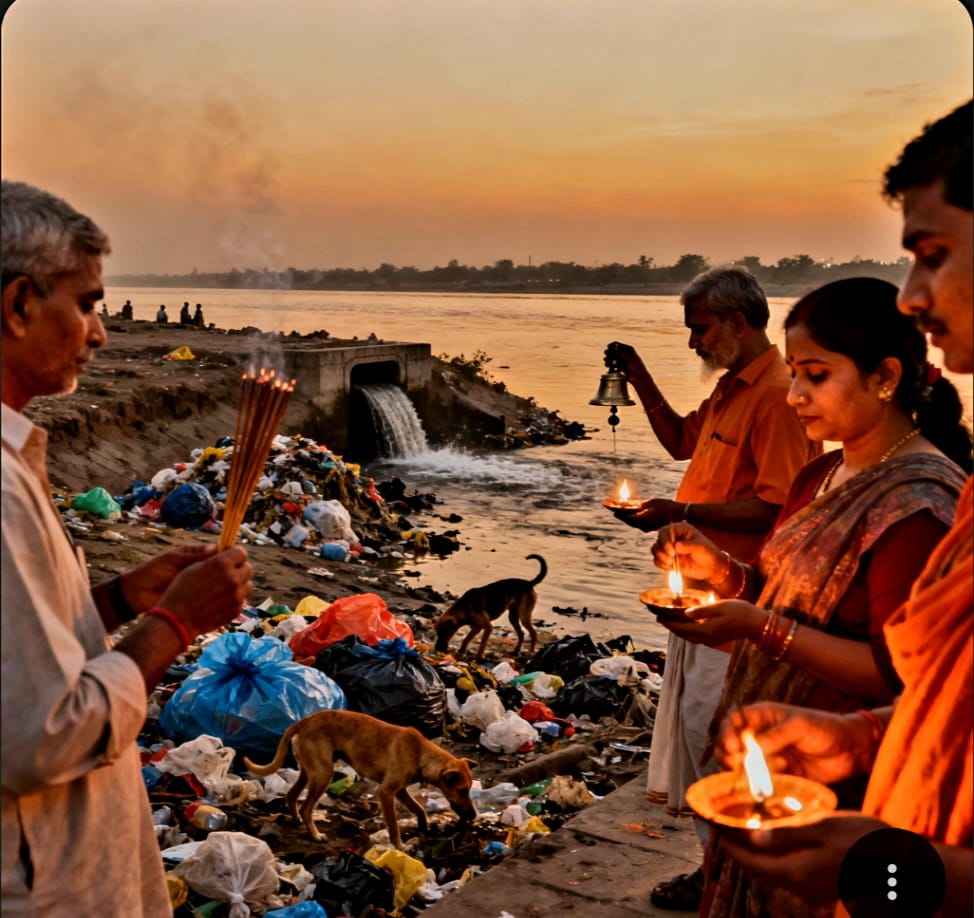
This is no isolated case; it signals a nationwide emergency. In Varanasi, the ₹900 crore Kashi Vishwanath Corridor has boosted footfall but failed to save the Ganga. Despite the ₹20,000 crore Namami Gange mission, data shows fecal coliform levels alarmingly high, often thousands of times above safe bathing limits, with raw sewage still pouring in daily. The river, once a source of purification, remains a toxic lifeline for millions.
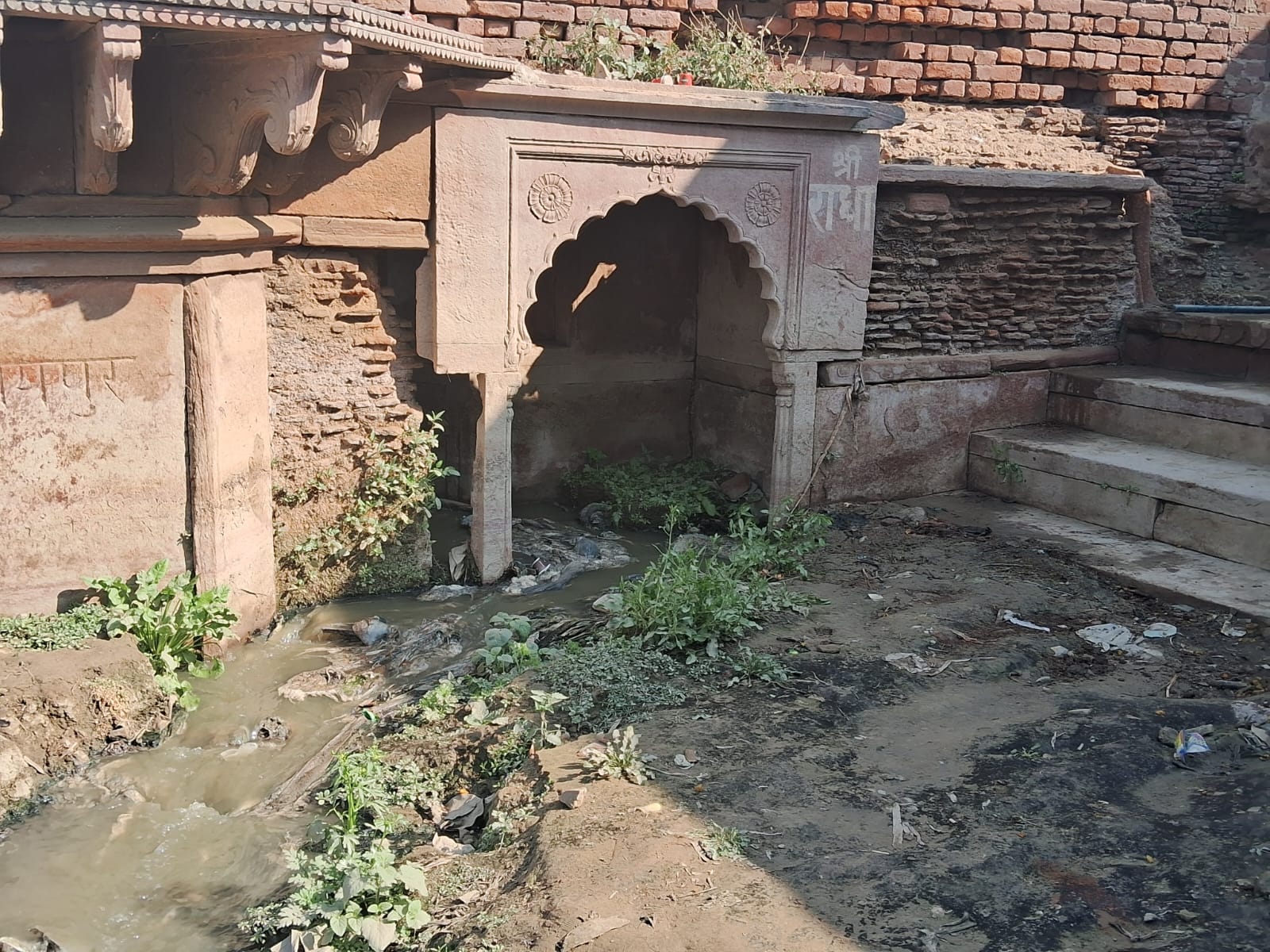
Vrindavan’s Yamuna fares no better, with ammonia levels tenfold above limits, lethal foam, and near-total aquatic life loss in long stretches. Yet annual pilgrims exceed 55 million, overwhelming infrastructure.
The ₹12,000 crore Char Dham Pariyojana highway network, meant to ease Himalayan access, has instead accelerated destruction. Reports from 2023-2025 document hundreds of landslides, over 800 zones identified along the 900-km route, destabilizing slopes, flooding villages, and worsening crises in subsidence-hit areas like Joshimath. Construction explosions and slope-cutting have magnified risks in this tectonically fragile region.
This shift prioritizes transactional tourism over transformative pilgrimage. Helipads serve Kedarnath, luxury resorts replace ashrams, and timed entries compress timeless rituals. Surveys at major sites like Vaishno Devi reveal widespread lament: visitors miss the spiritual ambiance, often prioritizing photos over prayer.
Economically, the promise rings false. While projects like Ayodhya’s Ram Temple claim massive revenue boosts, benefits skew heavily toward external contractors, up to 80% in some circuits, leaving locals with hyperinflation (rents up 300% in Ayodhya) and lost commons. Forests vanish for parking and stalls; non-biodegradable waste piles up; liquor and meat sales invade sacred precincts; commerce drowns out silence. Priests become managers, darshan a rushed backdrop, and the inner journey a mere physical tick-box.
This tragedy is global. Sacred sites worldwide, with millions of devotees or faithfuls, generating carbon emissions and waste; battling chronic overcrowding despite green efforts; straining under pilgrim influxs; face identical pressures: overtourism, pollution, resource strain, and diluted spirituality. India’s Hindu centers, Varanasi, Ayodhya, Char Dham, mirror this worldwide pattern, where mass tourism erodes the very essence of devotion.
Sustainable paths exist: visitor caps, eco-zoning, pedestrian-only areas, zero-plastic rules, and community-led management. Yet political will falters, yielding to short-term electoral and economic gains.
The mountains once whispered humility; rivers sang of renewal. Now they scream in alarm. If bulldozers continue unchecked, we lose not just biodiversity and heritage, we entomb the soul of faith beneath concrete and neon. It is time to choose: preserve these spaces for genuine inner transformation, or surrender them to commerce. The choice defines whether India’s sacred legacy endures, or fades into memory.