Pilgrimage Sites or Theme Parks?
What Have Reel-Makers, Selfie Hunters, and Religious Tourism Done to Our Holy Places?
Vrindavan Today | By Brij Khandelwal
June 11, 2026: Do the gods now meet devotees through camera lenses rather than prayer?
Has pilgrimage become a journey of the soul, or merely another Instagram story waiting to be posted?
Visit any major shrine today. Whether it is Vrindavan, Kedarnath, Badrinath, Vaishno Devi, Tirupati, or Mahakal, the experience is increasingly similar. One often feels less like a pilgrim entering a sacred sanctuary and more like a tourist arriving at a crowded fairground, picnic spot, or theme park.
Prayer beads have been replaced by smartphones. Reverence has given way to performance. Devotion now competes with the relentless urge to record, upload, and broadcast every moment.
For centuries, Indian civilization regarded pilgrimage as a deeply spiritual undertaking, usually reserved for the later stages of life. After decades spent pursuing family responsibilities, careers, and worldly ambitions, individuals gradually turned inward. The concept of Vanaprastha, withdrawing from material pursuits and embracing contemplation after the age of sixty, was not an arbitrary social custom. It reflected a profound understanding of human psychology and spiritual growth.
Today, that wisdom appears increasingly forgotten.
A college break arrives, and the destination is Vrindavan. A new car is purchased, and the family heads for the Char Dham. An anniversary calls for a trip to Kedarnath. A birthday is celebrated at Mahakal. Even honeymoons are launched with a quick pilgrimage before moving on to holiday destinations.
Temples and shrines are no longer merely places of worship. They are becoming social media backdrops, status symbols, and venues for public display.
The consequences are visible everywhere.
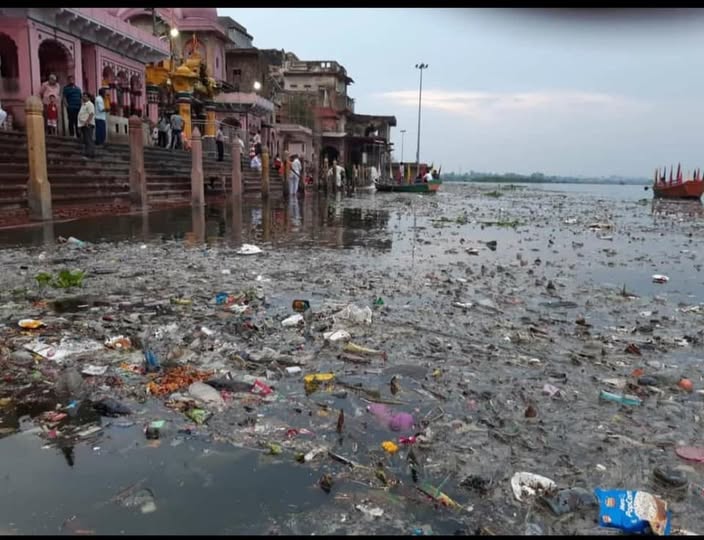
Plastic bottles litter mountain paths. Snack packets and disposable cups accumulate along pilgrimage routes. Loud conversations drown out sacred chants. Selfie-seekers push and shove for the perfect photograph. Film songs blare from mobile phones. Empty liquor bottles are discovered in places once regarded as sacred. The deeper problem, however, is not the garbage itself. It is the growing indifference to sanctity.
The fragile Himalayan ecosystem is paying a heavy price. Mountains are turning into dumping grounds. Rivers are carrying increasing loads of plastic waste. Pilgrim routes are lined with rubbish. Places that once echoed with temple bells and devotional hymns now reverberate with notification tones and the endless soundtrack of social media reels.
Faith itself has become a consumer product.
Purchase a package tour. Take a helicopter ride to the shrine. Spend five hurried minutes before the deity. Capture a dozen selfies. Return home and announce that a profound spiritual experience has been achieved.
That is not spirituality.
It is religious consumerism.
The observation may sound uncomfortable, but perhaps the time has come to ask an even more uncomfortable question. Should every pilgrimage destination remain open to unrestricted tourism? Should every sacred landscape become part of the entertainment and leisure industry?
Perhaps not.
India needs a serious national conversation about preserving the sanctity of its most important pilgrimage centres. One possible approach is to consider age-based restrictions or priority access systems. Routine tourist visits by those below fifty or sixty years of age could be limited, while genuine religious, educational, or family-related visits continue under appropriate guidelines.
The objective would not be to discriminate against the young. It would be to protect places whose primary purpose is spiritual reflection rather than recreation.
Young people have countless opportunities for travel and adventure. There are mountains to climb, beaches to explore, forests to trek through, cultural destinations to discover, and sporting pursuits to enjoy. Life should be lived fully. Dreams should be chased. Horizons should be expanded.
But not every place needs to become a tourist attraction.
Some places deserve silence.
Some places require discipline.
Some places should encourage contemplation rather than consumption.
A civilization that fails to protect its sacred spaces ultimately weakens the very foundations of its spiritual culture.
Today, the lanes of Vrindavan, the ghats of the Ganga, the Himalayan shrines, and countless temples across India are groaning under the weight of crowds more interested in display than devotion. The emerging “touch-and-go” culture is transforming pilgrimage centres into entertainment hubs and reducing sacred journeys to items on a travel checklist.
If this trend continues unchecked, future generations may inherit the temples but lose the spirit that once animated them.
Pilgrimage is not a weekend picnic.
It is not a social media event.
It is not a tourist package.
It is a journey of humility, discipline, restraint, preparation, and faith.
Until we rediscover that distinction, our holy places will continue to attract larger crowds but inspire less devotion. Pilgrims will arrive, but peace will remain elusive. The temples may survive physically, yet their dignity and sanctity will slowly be crushed beneath the feet of the very multitudes who claim to honour them.