A centuries-old tradition ensures that not a single day of Krishna’s birth celebrations is lost
Vrindavan Today | By Sushil Goswami
September 2nd, 2026, Nandgaon (Braj): While Mathura, Vrindavan and much of the country will celebrate Shri Krishna Janmashtami on September 4, the celebrations in Nandgaon will take place a day later, on September 5, followed by Nand Mahotsav on September 6.
The difference of one day is not merely a matter of calendar calculation. It is rooted in a distinctive tradition of Nandgaon that has been preserved for centuries. This is a tradition centred on the joyous celebration of Krishna’s birth in the household of Nanda Baba and Yashoda Maiyya.
In Nandgaon, the birthplace of Krishna’s celebrated childhood pastimes, the festival is experienced not simply as a religious observance but as the arrival of the beloved Lala of Braj.
Eight days of celebration beginning with Raksha Bandhan
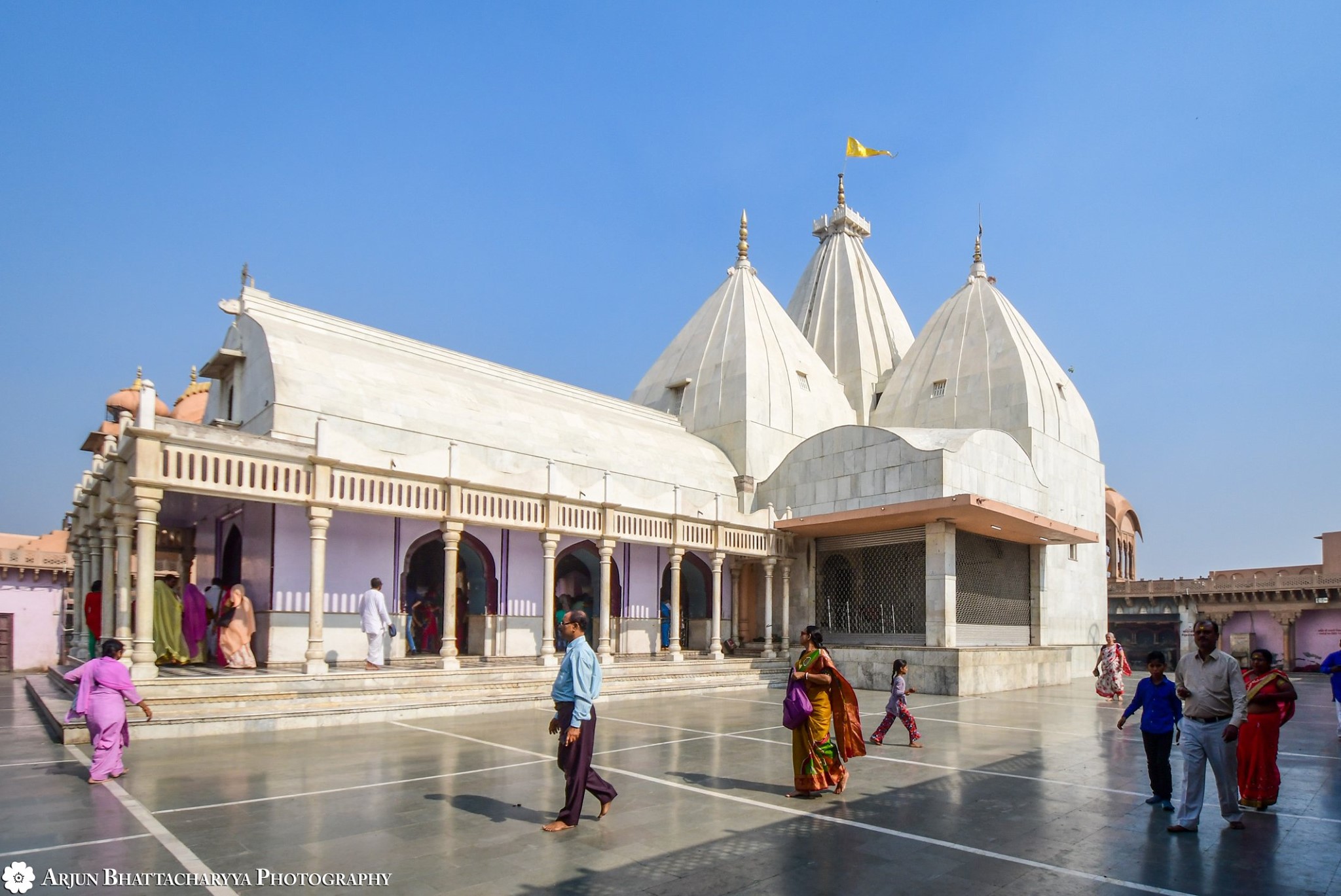
At the Pious Nand Bhavan, preparations for Janmashtami begin with a remarkable tradition on Raksha Bandhan.
From that day onwards, badhai, the congratulatory songs celebrating the birth of a child begin to reverberate through Nand Bhavan. For eight consecutive days, until Janmashtami, rasik saints and traditional singers of Braj sing different badhai verses celebrating the birth of Shri Krishna.
The songs evoke the happiness in Nanda Baba’s household, the maternal affection of Maa Yashoda and the extraordinary joy that spread throughout Braj following Krishna’s arrival.
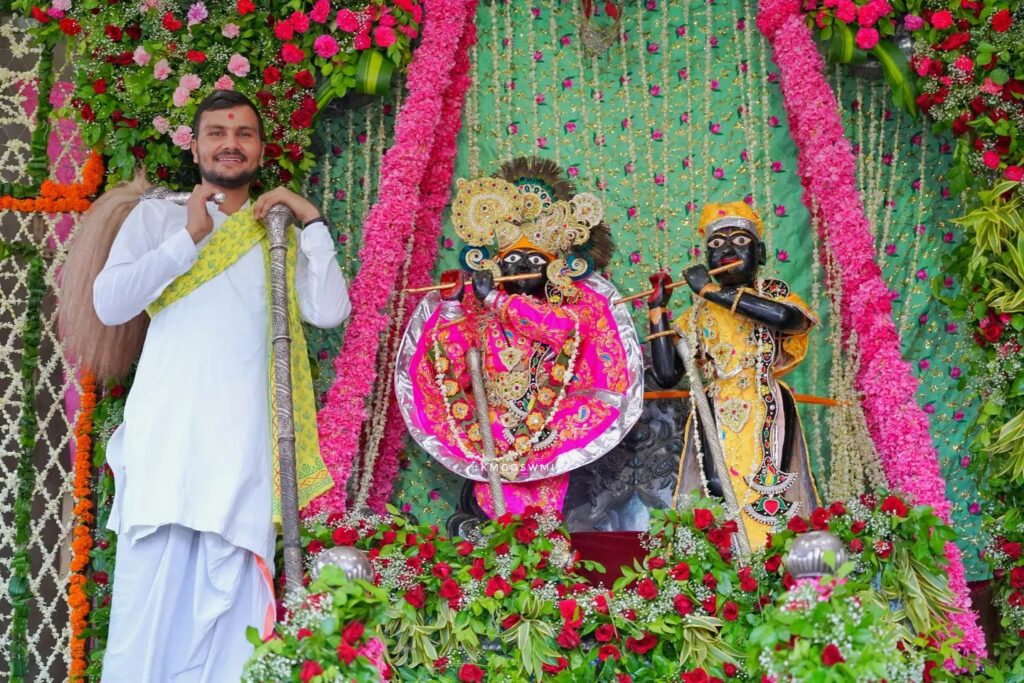
According to Shri Krishna Murari Goswami, sevayat priest of Nand Bhavan, this tradition has been handed down from generation to generation. From the first day of the Krishna fortnight of Bhadrapada, Goswami families traditionally sing badhai verses composed by different rasik saints. Each day has its own badhai.
Why the date is fixed eight days after Raksha Bandhan
This is also the key to understanding why Nandgaon does not always celebrate Janmashtami on the same date as other places.
According to the traditional practice followed at Nand Bhavan, the lunar calendar can occasionally produce a kshaya tithi i.e a date that is omitted because of the manner in which lunar days fall. If the celebrations were adjusted strictly according to such calendar variations, one of the days of badhai would have to be dropped. For the people of Nandgaon, that was simply unacceptable.
There could be no reduction in the celebration of the birth of their beloved Lala.
The tradition holds that, centuries ago, the sevayats of Nand Baba’s temple established a special method of calculating the festival. Janmashtami would therefore be celebrated on the eighth day after Raksha Bandhan, irrespective of whether a lunar date was lost or added.
The system ensured that all the traditional days of badhai remained intact.
This unique practice has continued for hundreds of years and remains an important part of Nandgaon’s religious heritage.
More than a date on the calendar
Nandgaon’s Janmashtami illustrates the distinctive devotional character of Braj. Here, Krishna is not only the Supreme Being worshipped with reverence. He is Nanda Baba’s son, Maa Yashoda’s beloved child and Braj’s own Kanha. The emotional relationship between the devotee and the deity is at the heart of the celebrations.
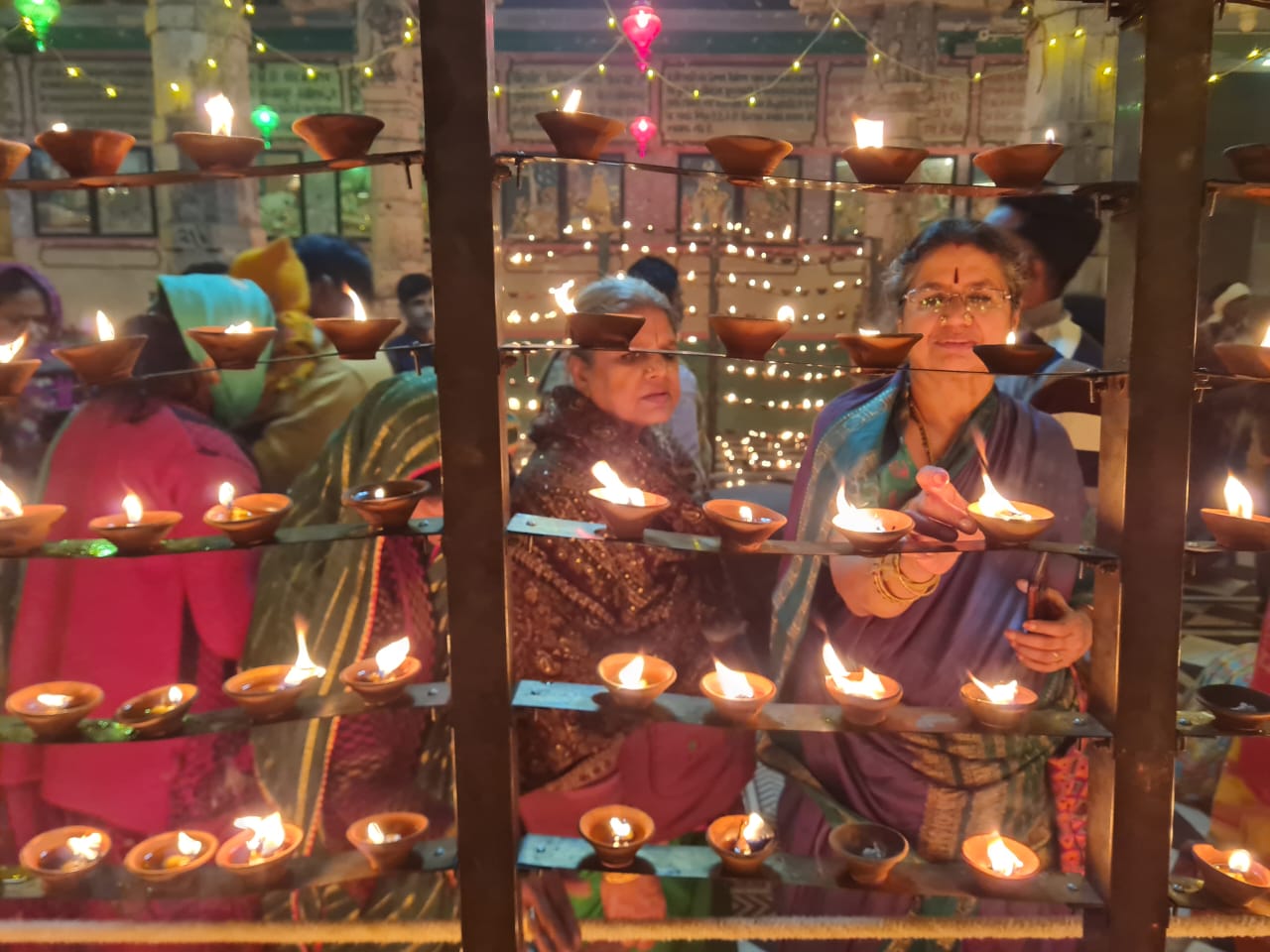
On September 5, the courtyard of Nand Bhavan will once again come alive with the sounds of badhai songs. Devotees from different parts of the country are expected to gather in large numbers to participate in the birth celebration of Shri Krishna.
Traditional Braj folk songs, devotional music, badhai verses and age-old temple rituals will turn Nandgaon into a celebration of Krishna’s childhood.
The following day, September 6, Nand Mahotsav will be celebrated with traditional fervour, marking the joyous festivities in Nanda Baba’s household following Krishna’s birth.
Preserving the living heritage of Braj
While September 4 will witness Janmashtami celebrations across Mathura, Vrindavan and much of India, Nandgaon’s celebration on September 5 represents something more than a difference of one day.
It is a reminder of how Braj’s living traditions have preserved the intimate relationship between Shri Krishna and his devotees.
For Nandgaon, the calendar is ultimately secondary to the emotion behind the festival. The traditional calculation was devised so that every badhai could be sung, every day of celebration could be observed and no part of the joyous festival of Lala’s birth would ever be sacrificed.
Thus, Nandgaon’s Janmashtami is not merely a festival observed on a particular date.
It is an expression of centuries-old love for the child Shri Krishna, the beloved Lala of Nanda Baba, Yashoda Maiyya and all of Braj.