“The Municipal Corporation’s mobile application is being upgraded and a two-hour response time is being set for garbage-related complaints. If a complaint is not resolved within the stipulated period, it will be escalated progressively to senior officials,”Aojaswi Raj, Municipal Commissioner
Vrindavan Today | Bureau Report
September, 22nd, 2026, Mathura:The Septemberwachh Braj Campaign is set to move beyond awareness programmes towards a focused, result-oriented approach, with Krishna Nagar being developed as a pilot model for a cleaner, waste-free area.
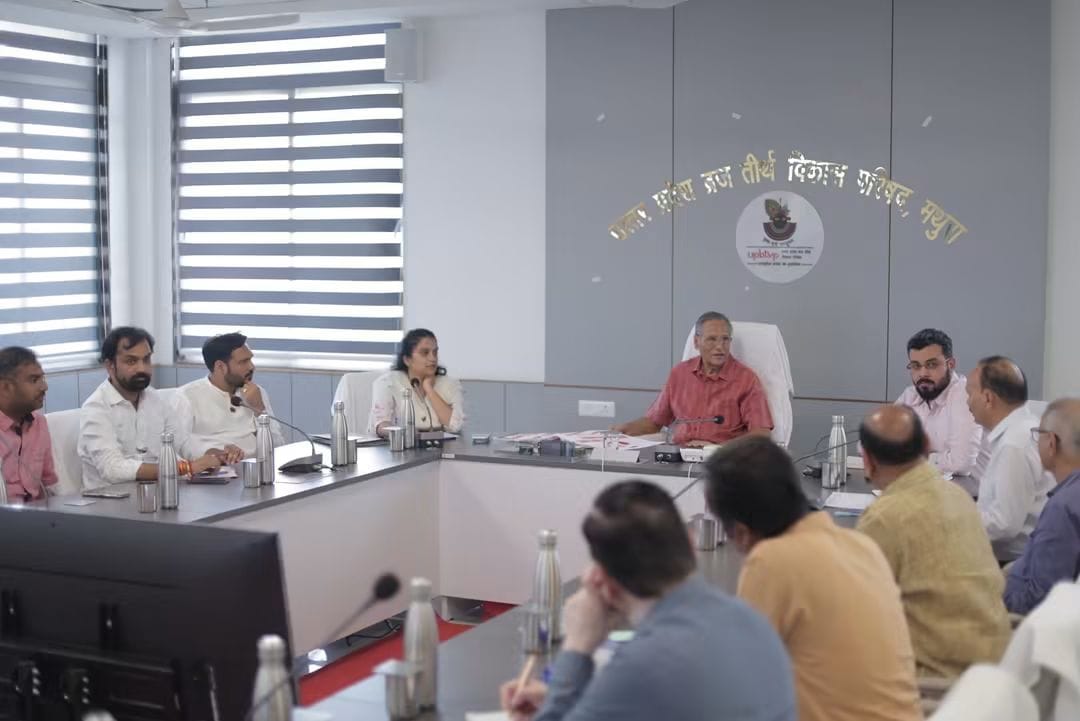
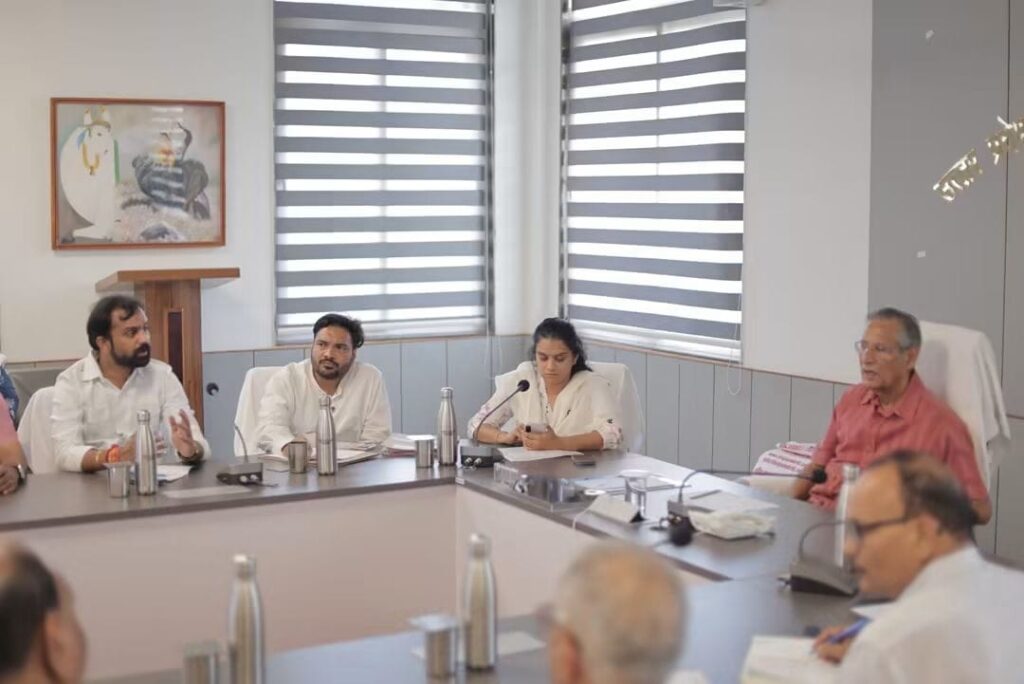
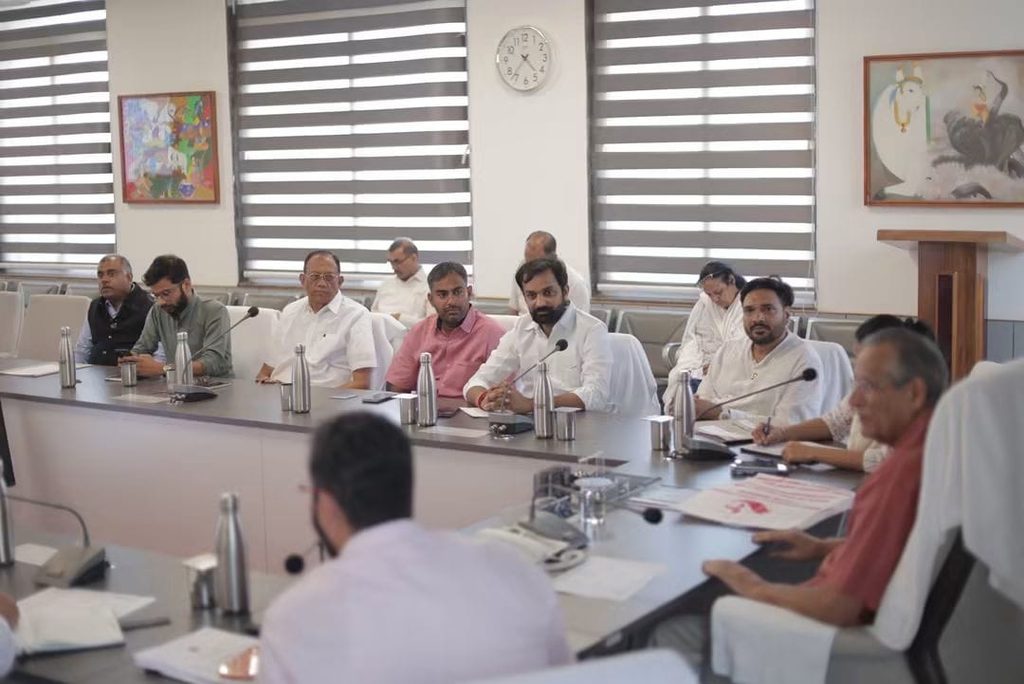
The decision was taken at a meeting of the core group of the Swachh Braj Campaign held at the conference hall of the Uttar Pradesh Braj Teerth Vikas Parishad. The meeting was chaired by Parishad Vice-Chairman Shri Shailjakant Misra.
During the meeting, Jagannath Poddar, Director of Friends of Vrindavan, suggested that instead of spreading the cleanliness campaign thinly across a large area, one locality should first be adopted as a model area, where all stakeholders could work together to demonstrate visible and measurable results. The suggestion was readily accepted.
Following the proposal, Shri Shailjakant Misra suggested Krishna Nagar as the pilot area for the initiative.
The concept is to create a replicable model through coordinated participation of the Municipal Corporation, district administration, Braj Teerth Vikas Parishad, traders, residents, educational institutions and civil-society organisations. Once the Krishna Nagar experiment is evaluated, the approach can be extended to other areas of Mathura and Braj.
Awareness and Community Participation
The first phase of the campaign will involve three to four days of audio messaging to sensitise shopkeepers, residents and other stakeholders about responsible waste disposal and cleanliness.
This will be followed by an awareness rally involving traders’ associations, the district administration, Municipal Corporation, Braj Teerth Vikas Parishad, social organisations and students from schools and colleges. Door-to-door outreach will also be undertaken alongside the rally.
The objective is to encourage residents and businesses to take ownership of cleanliness rather than treating waste management solely as the responsibility of municipal authorities.
Friends of Vrindavan to Contribute 1,000 Cloth Bags
As part of its commitment to the initiative, Friends of Vrindavan has pledged to contribute 1,000 reusable cloth bags for distribution during the campaign.The organisation has been working on environmental conservation and cleanliness initiatives in Vrindavan and the wider Braj region for several decades. Its participation in the campaign is intended to strengthen the campaign’s focus on reducing single-use plastic and promoting reusable alternatives.
The broader campaign has set a target of making 50,000 cotton bags available for distribution, along with 5,000 flex banners and 20 lakh awareness pamphlets.
Two-Hour Response for Garbage Complaints
Chief Executive Officer of UPBTVP Lakshmi Nagappan placed the agenda before the meeting, while Municipal Commissioner Aojaswi Raj briefed participants on the Municipal Corporation’s sanitation measures.
According to the Municipal Commissioner Aojaswi Raj, the civic body’s mobile application is being upgraded and a two-hour response time is being set for garbage-related complaints. If a complaint is not resolved within the stipulated period, it will be escalated progressively to senior officials.
Dustbins will also be installed at markets and public places. A bag-dispensing machine will be tested at the vegetable market. A proposal was also discussed to provide a reusable cloth bag to people who deposit used plastic bottles, thereby encouraging waste collection and reducing the use of single-use plastic.
A Replicable Model for Braj
Separate working groups involving shopkeepers, traders’ organisations, educational institutions, hotels and social organisations are proposed to coordinate the campaign, with monitoring at the central level.
Action against violations of sanitation rules, including fines, challans and notices, will continue.
In subsequent phases, hotels, dharamshalas, hospitals, universities, Civil Defence, Rotary, Lions Club and other institutions are expected to be brought into the campaign.
The Krishna Nagar initiative is thus being conceived not merely as another cleanliness drive, but as a pilot model demonstrating how a defined area can be transformed through coordinated civic action, community participation, waste management and behavioural change.
If successful, the model could subsequently be replicated in other parts of Mathura and the wider Braj region.