The Sacred Radhashtami Rituals of Shri Ladli Ji Mandir, Barsana
Vrindavan Today | Jagannath Poddar
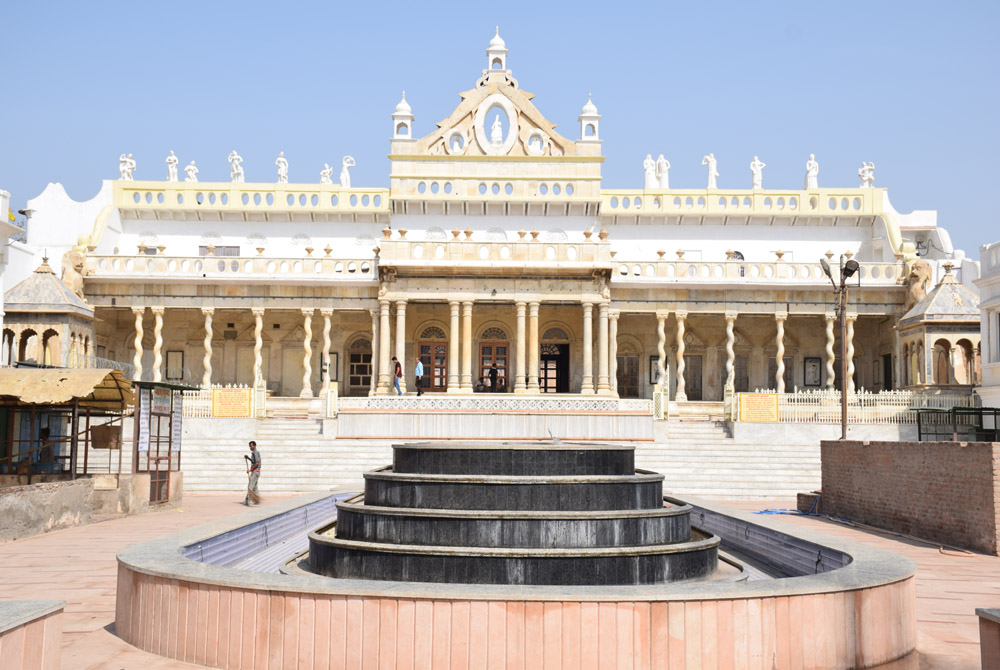
19th September, 2026: The celebration of Shri Radhashtami at Shri Ladli Ji Mandir in Barsana begins with an ancient and deeply revered sequence of rituals performed within the sanctum sanctorum, before the doors are opened for the wider public celebration.
The early-morning observances follow the traditional practices associated with the lineage of Goswami Narayan Bhatt, whose contribution to the devotional traditions of Barsana remains deeply significant. The rituals begin with the Mool Shanti Yajna, a sacred invocation seeking peace, sanctity and divine blessings for the auspicious celebration of Shri Radha’s appearance.
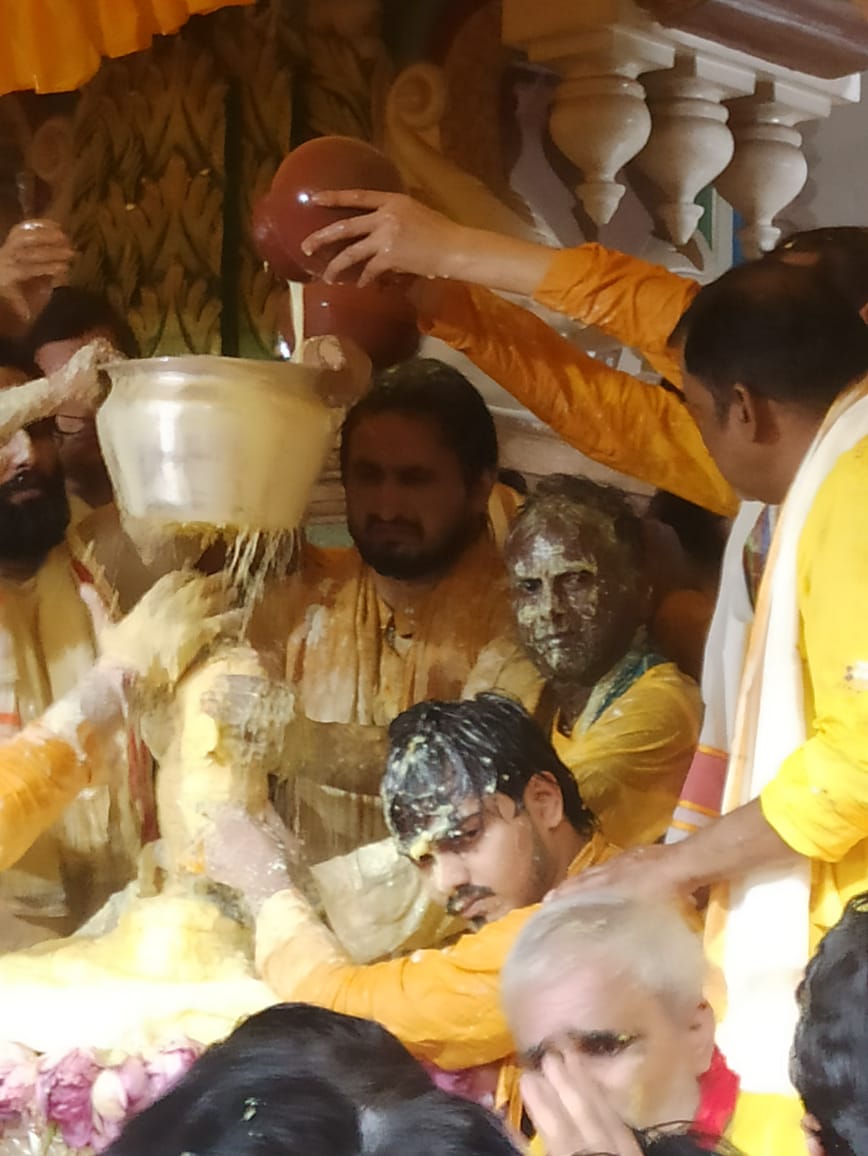
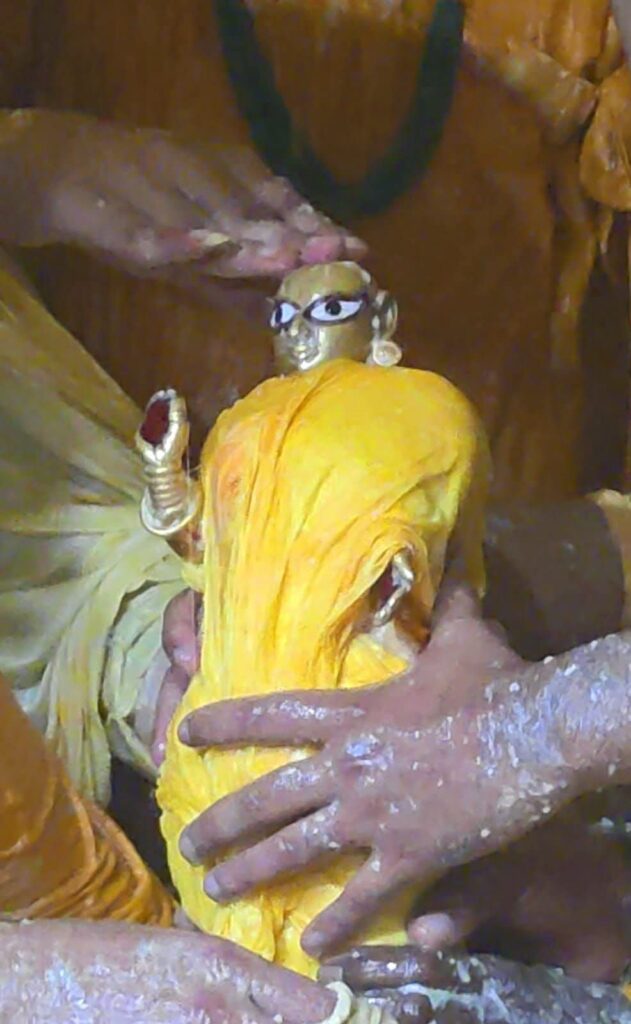
This intimate ceremony is followed by the Panchamrita Abhishek of Shri Ladli Ji, performed inside the sanctum sanctorum. Panchamrita is traditionally prepared from milk, curd, ghee, honey and sugar. It is offered during the ceremonial bathing of the deity. The Abhishek is performed with profound devotion and according to the established traditions of the temple.
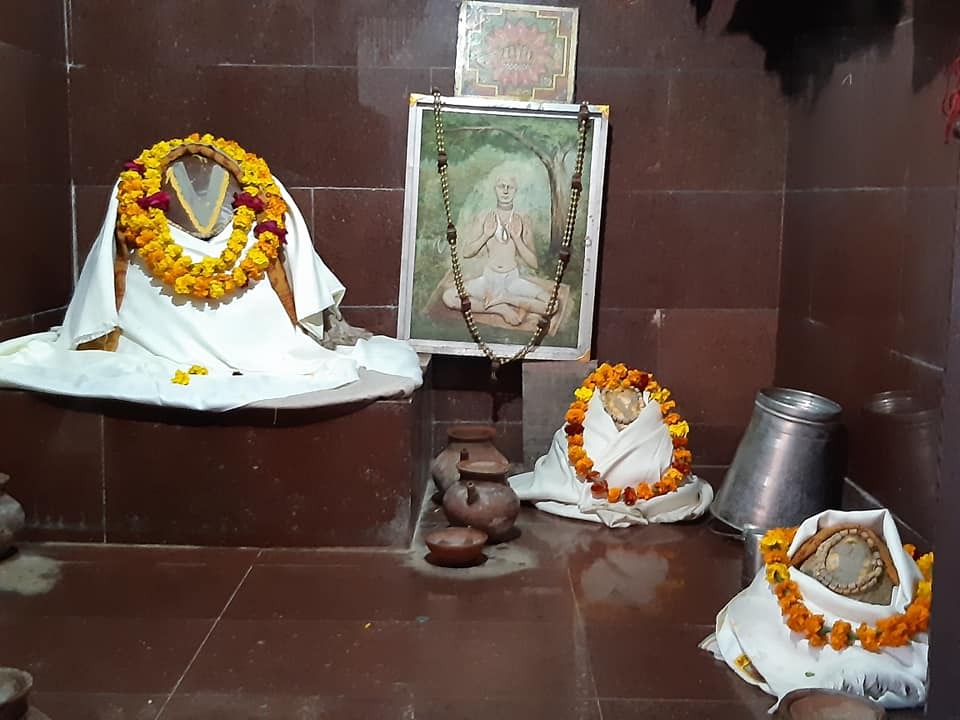
According to Brajacharya Goswami Shri Krishnanand Bhatt, the Radhashtami observances include several important traditional rituals performed within the temple. He explains: “We perform Niji (Person) Garbha Griha Puja, the ritual worship of the Radha Yantra established by Goswami Narayan Bhatt, Sapta Ghrita Matrika Puja, and the traditional personal (Niji) Abhishek. We also perform Aarta, also known as Utsava Aarti.”
These rituals form an important part of the temple’s inner devotional tradition and precede the larger public celebration.
The entire early-morning sequence takes approximately two and a half hours. During this period, the rituals are performed within the sanctum before the doors are opened to the larger public at around 4 a.m. The sequence creates a deeply sacred beginning to one of Barsana’s most important annual festivals.
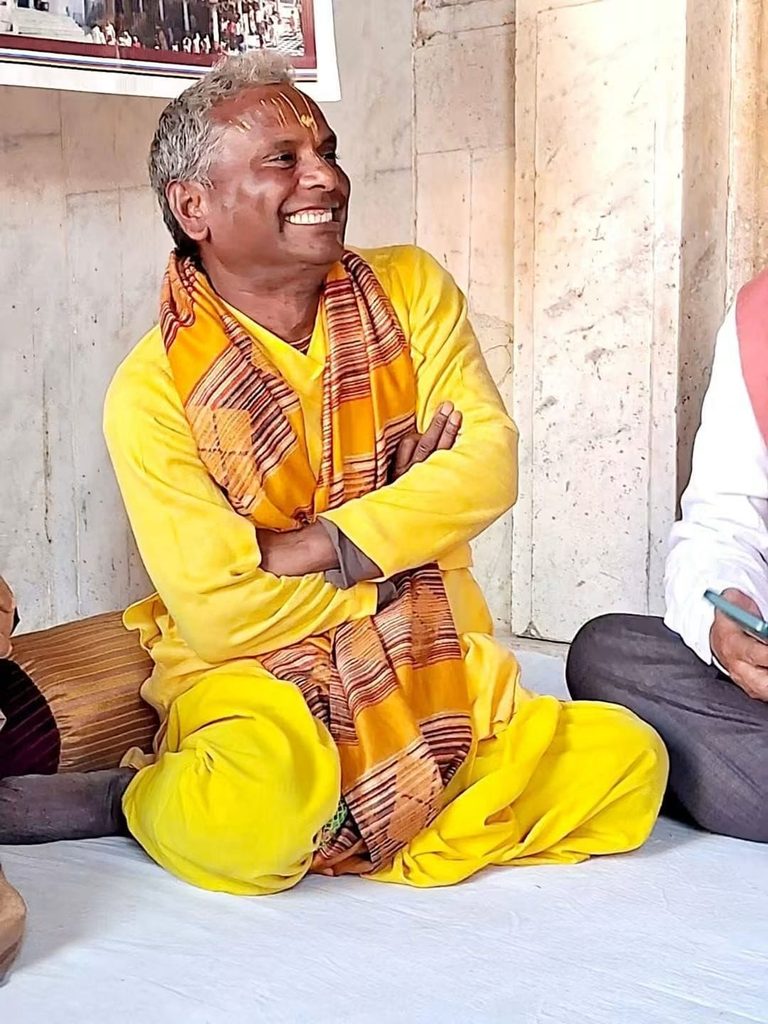
This year, Brajacharya Goswami Shri Krishnanand Bhatt performed the early rituals, continuing the traditional association of the Bhatt lineage with the worship and ritual traditions of Shri Ladli Ji.
A Tradition Linked to Goswami Narayan Bhatt
The religious traditions of Shri Ladli Ji Mandir are closely associated with Brajacharya Goswami Narayan Bhatt, one of the important Vaishnava theologians andassociated with the sacred traditions of Braj.
According to the traditional account preserved in the lineage, Shri Ladli Ji manifested before Goswami Narayan Bhatt. He subsequently entrusted the seva of Shri Ladli Ji to his disciple Shri Narayan Das Goswami. The descendants of Shri Narayan Das Goswami have continued as the traditional sevaits of Shri Ladli Ji Mandir in Barsana.
The relationship between the Bhatt lineage and the Sevait Goswami tradition remains an important feature of the temple’s religious heritage. The Bhattas of Unchagaon are traditionally regarded as the gurus of the Sevait Goswamis of Barsana. According to this tradition, the Sevait Goswamis receive Kanthi Diksha from the Bhatt lineage and are traditionally permitted to undertake seva in the temple after receiving this initiation.
Thus, the relationship between the Bhattas of Unchagaon and the Sevait Goswamis of Barsana represents not merely a historical connection but a continuing religious lineage through which the traditions of Shri Ladli Ji’s worship are transmitted from one generation to another.
The traditional practices associated with the celebration of Braj festivals and the religious customs of the region are also described in the literary works attributed to Goswami Narayan Bhatt, including Brajotsava Chandrika. These works provide an important literary window into the festival traditions of Braj and their ritual observances.
From the Sanctum to the Public Celebration
Only after the completion of these intimate ceremonial observances does the public Panchamrita Abhishek take place, allowing thousands of devotees to participate in the joyous celebration of Shri Radha’s appearance.
For devotees of Barsana, Radhashtami is more than an annual festival. It is an occasion when the entire town turns toward Shri Ladli Ji, celebrating her divine appearance through worship, music, ritual and devotion.
The early rituals at Shri Ladli Ji Mandir preserve an important dimension of this living religious heritage; one in which the celebration begins quietly within the sanctum before unfolding before the thousands of devotees gathered outside.
The continuity of these practices through generations of the Goswami lineages reflects the living character of Barsana’s devotional traditions. Here, ritual is not simply a ceremony performed on a festival day; it is a sacred inheritance transmitted through generations, preserving the religious memory and devotional identity of Barsana.
The Radhashtami observances at Shri Ladli Ji Mandir therefore offer a rare glimpse into the layered traditions of Braj worship ; where the intimate rituals of the sanctum, the authority of traditional lineages, the seva of hereditary Goswamis and the devotion of thousands of pilgrims come together to celebrate the divine appearance of Shri Radha, the beloved Ladli Ji of Barsana.