The city of Krishna needs its sacred character to extend beyond a boundary drawn on an old municipal map
Vrindavan Today | Bureau Report
1st October, 2026, (Vrindavan): There was a time when Vrindavan was surrounded by the Yamuna on three sides.
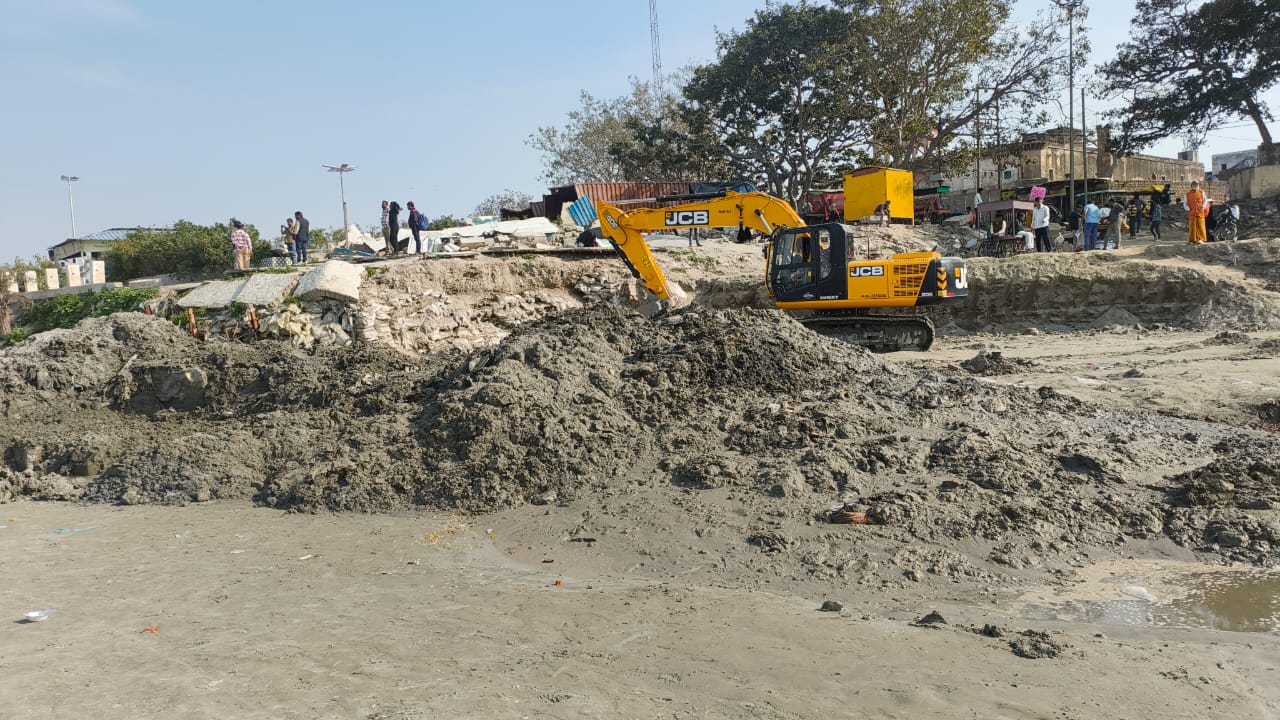
The river was not merely a geographical feature. It was part of Vrindavan’s identity, its landscape, its culture and its sacred imagination. The Yamuna embraced the town like a natural boundary.
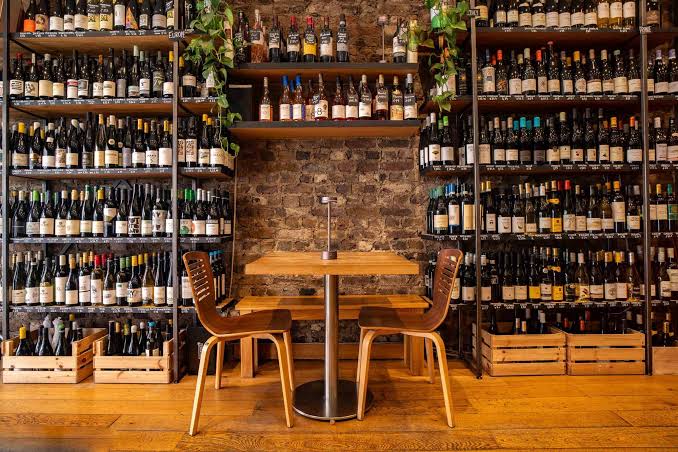
Today, the irony is painful. Vrindavan is increasingly surrounded by wine shops on three sides.
At Dhaurera, Sunrakh, behind Prem Mandir and towards Pani Gaon, liquor outlets have emerged around the expanding edges of Vrindavan. In the evenings, one can see people gathering to purchase liquor. Residents and visitors also report seeing intoxicated people lying on or beside roads.
Whatever the legal status of these outlets, the larger question cannot be avoided.
Is this the kind of environment that a city recognised by the Uttar Pradesh government as a sacred pilgrimage centre should be surrounded by?
In 2017, the Uttar Pradesh government declared Vrindavan a Pavitra Teerth Sthal and prohibited liquor and meat shops within the notified area. The government specifically directed the concerned departments to ensure implementation of the prohibition.
In 2021, the government again declared 22 wards of Mathura Nagar Nigam as a Pavitra Teerth Sthal, with prohibition on the sale of liquor and non-vegetarian food in that notified area.
But Vrindavan has not remained what it was in 2017.
The city has expanded. Its population has expanded. Its roads have expanded. Its hotels, colonies, apartments and commercial areas have expanded. Yet the definition of the sacred Vrindavan appears to remain tied to an old administrative boundary.
This creates an obvious contradiction.
If Vrindavan is a Teerth Sthal because of its unparalleled religious and cultural significance, can that sanctity logically stop at a municipal boundary?
A pilgrim entering Vrindavan does not experience the city according to the revenue map or the municipal boundary. The spiritual landscape of Vrindavan extends into its surrounding villages, forests, sacred groves, ghats and pilgrimage routes.
The government itself has recognised the special character of Braj through several policy decisions. The same principle should now be applied to the changing geography of Vrindavan.
A sacred city cannot be protected only on paper
The question is not about demonising people who consume alcohol. Nor is it simply about the liquor trade.
The question is about land use, public order, pilgrimage experience and the character of a sacred city.
Imagine a pilgrim arriving in Vrindavan in the evening. Instead of being greeted by the atmosphere traditionally associated with the holy town, he encounters liquor shops, crowds outside them and intoxicated people along the roads.
What message does that send about Vrindavan?
The Uttar Pradesh Excise Policy provides a regulatory framework for liquor retail outlets, including geo-fencing of retail shops and other compliance mechanisms. But regulation of liquor trade and preservation of a declared pilgrimage centre are two different questions. The latter requires the government to look at Vrindavan not merely as an excise jurisdiction but as a living sacred landscape.
Extend the protection to the expanded Vrindavan

The solution is neither complicated nor unreasonable.
The government should undertake an immediate review of the present geographical extent of Vrindavan as a pilgrimage city, in consultation with the Braj Teerth Vikas Parishad, local residents, religious institutions, municipal authorities and the Excise Department.
If the city has expanded beyond the boundaries considered when the original notification was issued, the notified pilgrimage area should be correspondingly reviewed and, where legally appropriate, expanded.
At the very least, liquor outlets should not be permitted to turn the immediate approaches to Vrindavan into alcohol-selling corridors.
The administration should also examine complaints regarding public drinking, intoxication and obstruction on roads around these outlets and enforce the law strictly wherever violations occur.
Vrindavan cannot become sacred in the centre and ordinary everywhere else
There is a deeper principle involved here.
Vrindavan is not merely another urban settlement. Its economy, architecture, landscape and public life are inseparable from pilgrimage.
The government has already recognised this principle by declaring it a ‘Teerth Sthal’.
Now the government must ask itself whether the Vrindavan of 2026 can continue to be governed by the geographical assumptions of 2017.
The Yamuna may no longer flow around three sides of Vrindavan as she once did.
But surely, in a city associated with Krishna, Radha and the sacred Braj landscape, wine shops should not be allowed to become the new markers of its three frontiers.
Vrindavan needs a clearly defined sacred buffer around its expanding urban limits—not merely for religious sentiment, but for the preservation of its identity as one of India’s most important pilgrimage cities.
The question before the government is simple: Will Vrindavan’s sacred boundary expand with Vrindavan itself, or will the sacred Vrindavan remain confined to an old municipal map while the real city grows around it?