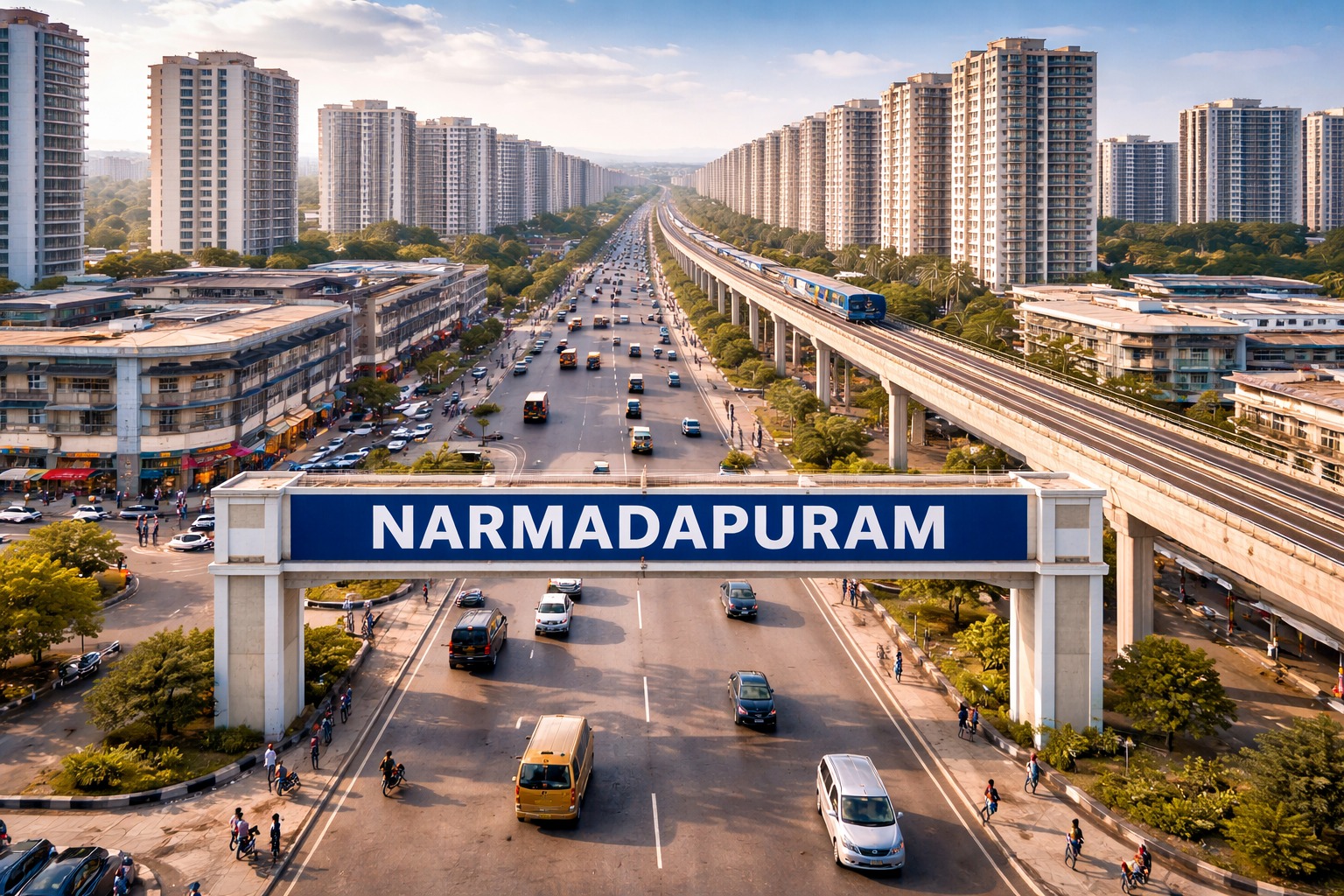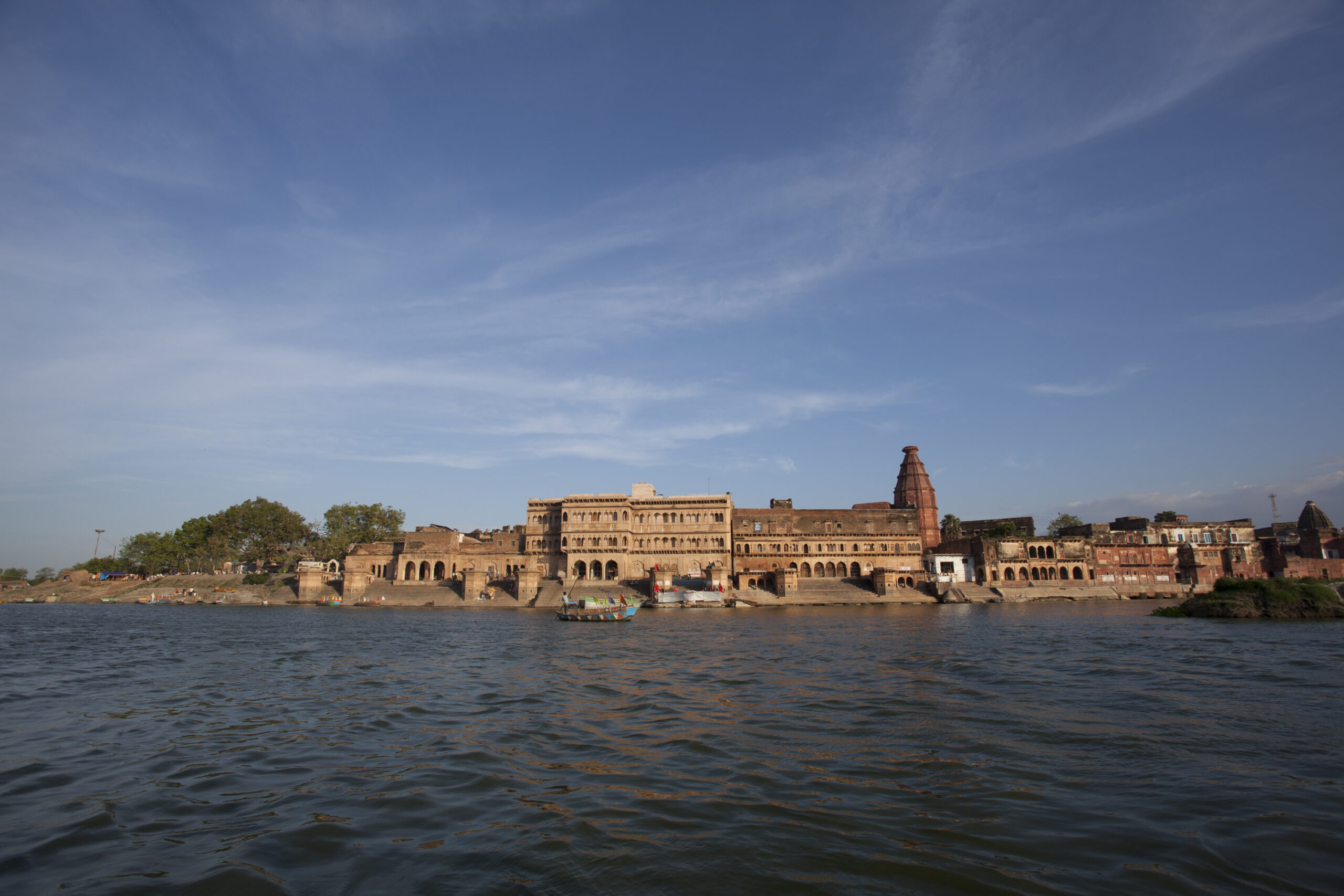
From a stinking, algae-infested river to a world-class waterfront, Braj Mandal has a chance to reclaim its lost glory. Will the authorities act before it is too late?
Vrindavan Today | Brij Khandelwal
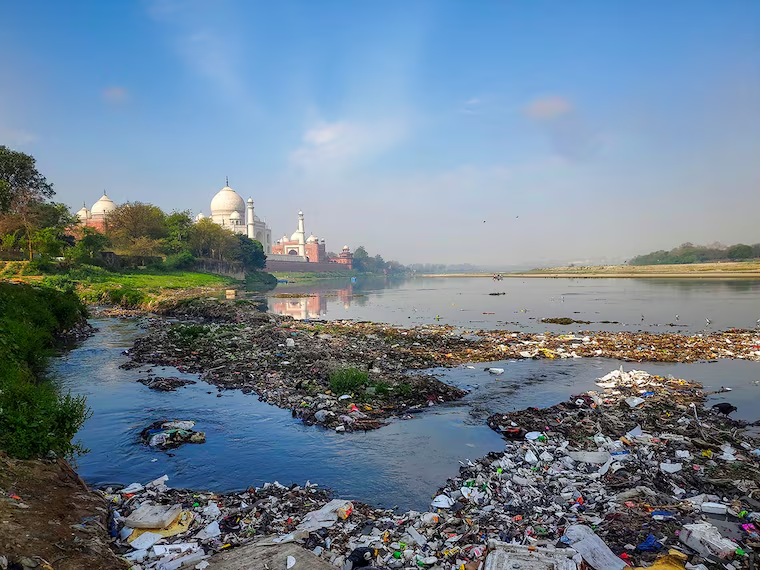
October 27, 2026, Agra: What should have been a river of life has become a stinking open drain. The Yamuna flowing past the Taj Mahal lies dry or reduced to stagnant pools for much of the year. Thick green slime and organic muck spread across its surface, breeding insects and releasing a foul stench. The sight is heartbreaking; the smell is worse.
The horror does not stop at the riverbank. Algae and biological growth linked to the polluted environment have repeatedly disfigured the Taj Mahal’s marble. Greenish-black stains reappear on the northern façade, lattice screens, Chameli Farsh, and railings. In October 2026, Archaeological Survey of India (ASI) officials again recorded the return of these stains, driven by swarms of non-biting midges (Goeldichironomus). The insects breed in the river’s stagnant, sewage-laden waters and silt when levels drop after the monsoon and again in peak summer. Their droppings leave the marks. ASI has repeatedly told district authorities that desilting and steady clean-water flow are essential; little has changed. Drains such as Mantola, Bhairon and others near the Taj continue to discharge untreated sewage and effluent. A dying river is staining a living wonder of the world while officialdom watches with disturbing indifference.
The situation demands urgent action, not another round of promises and cosmetic exercises. Braj Mandal needs a clean, flowing Yamuna, scientific dredging where justified, effective sewage treatment and a thoughtfully planned riverfront. The crisis is serious, but it also offers an opportunity to reshape the region’s future.
Upstream barrages and large-scale diversion of water into canal systems serving Haryana, Rajasthan and other areas have altered the Yamuna’s natural flow through Braj. Floods that once regularly inundated the region have become less frequent. In stretches near Agra, Mathura and Vrindavan the river now remains dry or reduced to a trickle for much of the year, leaving stagnant pools rich in organic pollutants.
This changed hydrology requires a fresh approach. Authorities cannot plan riverfronts as though the river still follows its old patterns. Any strategy must rest on current water availability, seasonal flows, environmental needs and the demands of growing urban populations. Reduced flooding may open limited opportunities for carefully designed development, but it does not eliminate flood risk, especially during intense monsoon events. Proper hydrological studies, floodplain mapping and environmental safeguards are non-negotiable.
The first priority remains restoring the river’s health. Untreated sewage must stop entering the Yamuna. Existing sewage treatment plants must function efficiently, major drains must be intercepted, and water quality must be monitored transparently and regularly. Without these basics, even the most expensive riverfront will remain a decorated sewer.
Braj Mandal is one of India’s most important cultural, religious and tourism regions. The Taj Mahal, Agra Fort, Mathura, Vrindavan and countless other heritage sites draw visitors from across India and the world. Yet the river that shaped this historic landscape has become an eyesore.
A well-planned Yamuna riverfront could transform this picture. Public promenades, landscaped gardens, cycling and walking tracks, cultural spaces, heritage interpretation centres and carefully designed viewing points would give residents much-needed open space and offer tourists a richer experience. River cruises, if water depth, navigation channels and reliable levels can be secured through technical studies, could add another dimension: sunset rides, guided heritage tours and cultural programmes that encourage longer stays and support local livelihoods for boat operators, guides, hospitality workers, vendors and artisans.
The larger vision is clear: Braj Mandal should stop turning its back on the Yamuna. The river must become an integral part of the region’s public life, tourism economy and environmental planning.
Ahmedabad’s Sabarmati Riverfront shows what is possible: engineered embankments, promenades, parks, cycle tracks and public recreational spaces that reconnect a city with its river. It has created usable public places and changed the visual relationship between city and water.
Braj Mandal can learn from the experience but should not copy the model blindly. The project has faced legitimate environmental criticism; alteration of the floodplain, ecological impacts, displacement of riverbank communities, and the conversion of a dynamic river into a managed waterbody whose flow is heavily dependent on upstream releases and transfers. Pollution problems have not disappeared downstream.
Beautification without genuine sewage control and ecological restoration is temporary theatre.
The aim must be to combine public access and tourism with a healthier river. Embankments may be appropriate in selected stretches; softer edges, green zones, groundwater recharge and natural drainage functions should be retained wherever feasible. A riverfront must never become an excuse to ignore pollution.
Major European rivers illustrate the long-term possibility. London’s Thames and Paris’s Seine have been heavily engineered, yet sustained investment in water quality, regulation and public access has turned them into central features of urban identity, recreation and tourism. Riverfront walkways, cultural venues and cruises form lively public corridors used year-round.
The lesson is not to imitate every European structure. It is that a river can become a region’s greatest asset when infrastructure, environmental protection and public access work together. The Taj Mahal beside the Yamuna is an extraordinary combination that remains underused as a river-based destination. A carefully planned riverfront could connect the monument, the river and the wider heritage landscape in a way that enriches the visitor experience without sacrificing ecological integrity.
Any meaningful riverfront project must begin with the river itself. Scientific surveys should establish the extent of silt accumulation, channel depth and riverbed condition. Targeted dredging and desilting may improve capacity and navigation in selected stretches, but only after proper environmental assessments. Unplanned excavation risks further ecological damage.
Equally critical is water availability. The Uttar Pradesh government must coordinate with Haryana, Rajasthan and other upstream authorities to secure predictable environmental flows, subject to basin-wide availability and competing needs. Drinking water, irrigation and ecological requirements all matter. The objective is a healthier, more dependable river, not merely a deeper channel.
Detailed flood modelling must identify vulnerable stretches and drainage routes. Development must follow the river’s realities, not wishful thinking.
The authorities must avoid one catastrophic mistake: constructing a grand riverfront while sewage continues to pour into the Yamuna. A clean-looking promenade beside a polluted river would be an expensive illusion. The foul smell, stagnant water and biological growth would continue to damage the visitor experience and threaten the monument.
Every major drain must be mapped. Untreated wastewater must be intercepted and treated. Treatment capacity must match actual sewage generation; independent inspections must verify performance. Industrial discharge, solid-waste dumping and encroachment require strict monitoring. Transparent water-quality reports, public audits and clear accountability are essential.
A time-bound action plan naming each drain, the responsible agency, the remedy and the deadline should be published so citizens need not rely solely on official assurances.
The pollution affecting the Taj Mahal demands particular attention. ASI and environmental agencies must continue monitoring biological growth, identify causes and coordinate preventive measures. Cleaning marble after damage appears is not enough; the surrounding environmental conditions must improve. The Taj Trapezium Zone (TTZ), created to protect the monument and other heritage sites, must translate its mandate into effective coordination, rigorous monitoring and concrete action on the ground.
A riverfront project must be part of a comprehensive Yamuna restoration programme, not a substitute for one.
Riverfront development brings opportunities and risks. Land values can rise, commercial interests can dominate planning, and traditional riverbank communities can be displaced. Braj Mandal must guard against these dangers. Public access should remain central. Inclusive spaces for families, children, senior citizens, walkers and local residents must be prioritised. Fishing communities, boat operators and others whose livelihoods depend on the river should have a genuine voice in planning. Heritage structures and significant landscapes require protection. Construction must respect environmental regulations and the river’s natural drainage functions.
A dedicated coordinating authority may help, but only if it has clear responsibilities, adequate resources and public accountability. Costs, contracts, environmental clearances and progress reports must be transparent. Tourism revenue should support maintenance, pollution control and the upkeep of public spaces.
The real test of success will not be the length of the promenade or the number of decorative lights. It will be the quality of the water, the accessibility of the riverbank and the benefits delivered to ordinary citizens.
Braj Mandal stands at a crossroads. It can continue to tolerate a polluted, neglected Yamuna beneath one of the world’s most admired monuments. Or it can seize the opportunity to reconnect the region with its river through scientific restoration and thoughtful planning.
Recent official plans offer some movement: a modest riverfront park along the Yamuna in Agra, larger riverfront and cruise concepts discussed for the Mathura–Vrindavan stretch, and broader Braj development proposals. These ideas remain fragile without parallel action on sewage interception, treatment capacity, environmental flows and ecological safeguards. Cruise and navigation projects have already drawn scrutiny from the National Green Tribunal over environmental clearances and floodplain concerns, proof that shortcuts will not survive.
The experience of Ahmedabad and the river cities of Europe offers useful lessons. Braj Mandal must develop a model suited to its own hydrology, heritage, environmental needs and social realities.
The immediate priorities are clear: stop untreated sewage, improve water quality, undertake scientific desilting where justified, secure adequate environmental flows, and prepare a carefully designed riverfront plan grounded in hydrological reality. River cruises, promenades, gardens and cultural spaces can follow only when the necessary conditions exist.
The Uttar Pradesh government, TTZ authorities, the Agra Development Authority, Mathura-Vrindavan Development Authority, municipal bodies and relevant central agencies must work together. The public deserves a clear timetable, measurable targets and regular progress reports.
The Taj Mahal deserves more than a polluted river for its neighbour. Braj Mandal deserves more than a foul-smelling drain where a living river should flow.
A restored Yamuna could strengthen tourism, improve urban life and revive the historic bond between the river and Braj Mandal. The opportunity is real, but it demands political will, scientific planning and sustained public pressure.
The question remains simple: Will Braj Mandal reclaim its Yamuna, or will official apathy allow this river of shame to stagnate beside a monument of eternal beauty?
Support Vrindavan Today: Help us preserve the rich spiritual, cultural and environmental heritage of Braj. Your generous contribution will strengthen our efforts to document Vrindavan’s timeless traditions, protect its sacred heritage and raise a voice for the conservation of Braj. Every donation, big or small, helps us continue this mission. Donate today and become a part of our journey to preserve the soul of Braj. You can sponsor articles also. Donation made to Vrindavan Today is tax exempt u/s 80 G of the IT act. You can also help us by placing order of an advertisement of your product, which we will publish here in this site. Email us on: [email protected] or whatsapp us on 7456930889