By Pt. Kapil Dev Upadhyaya
January 17th, 2026 (Vrindavan Today News): The prosperity of the Mathura region has carved many significant chapters in Indian history. From the Mauryan period, and possibly even earlier, Mathura remained a prominent centre due to its location on major trade and royal routes. Its economic wealth, advanced culture, and rich civilizational heritage made it a continuous target for invaders. As a result, Mathura repeatedly suffered destruction and devastation, yet its importance never diminished in the eyes of aggressor.
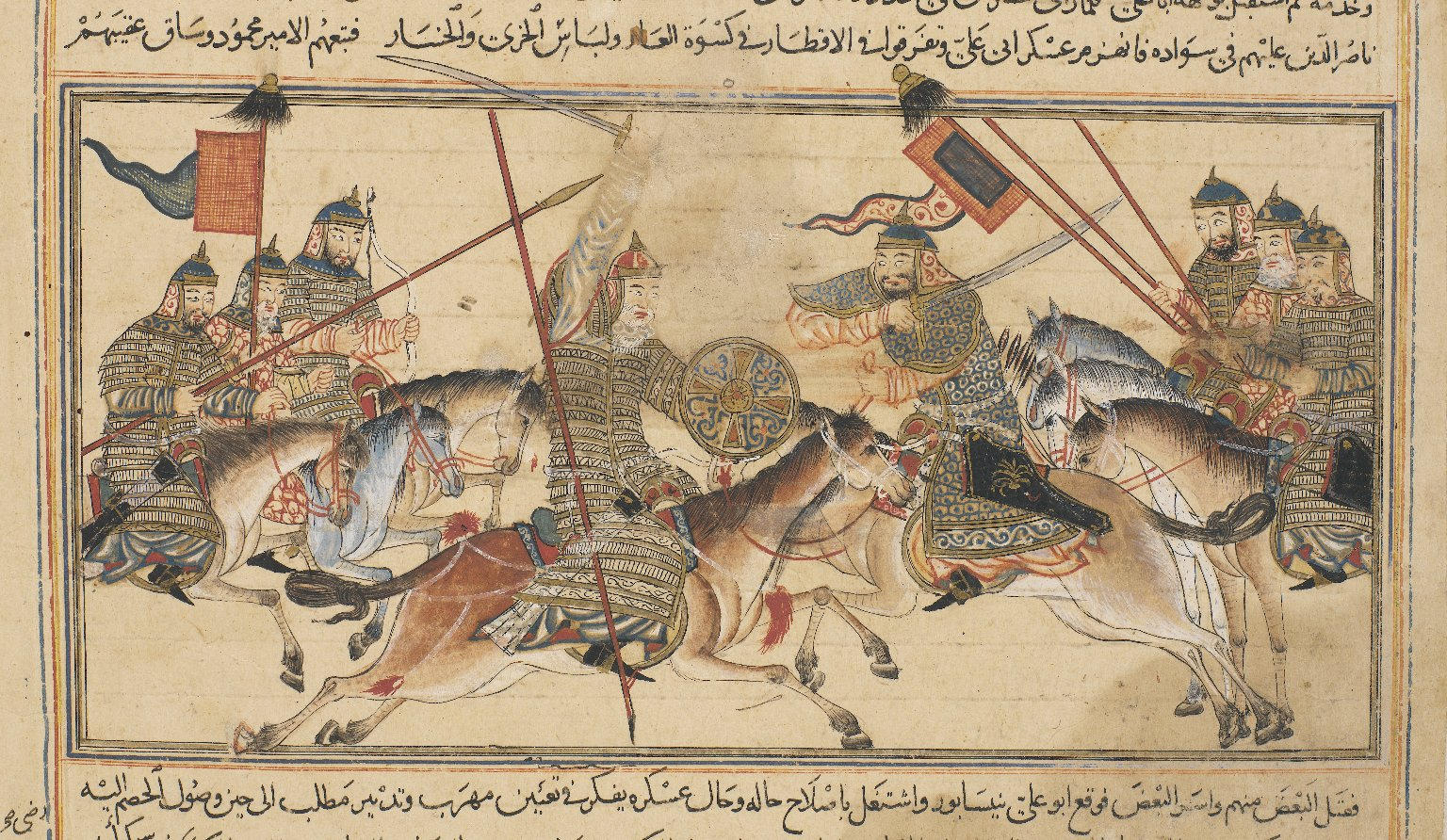
The early eleventh century marked one of the darkest phases of medieval Indian history, characterized by the invasions of Mahmud of Ghazni. Mahmud launched seventeen invasions into the Indian subcontinent, each accompanied by ruthless massacres, large-scale plunder, and widespread destruction. Owing to political fragmentation, internal rivalries, and lack of unity among Indian rulers, the land was unable to offer a collective resistance, making repeated invasions possible.
In 1017 CE, during his ninth invasion, Mahmud of Ghazni targeted Mathura. His method was consistent: invade, loot vast wealth, massacre the population, desecrate sacred sites, and return to Ghazni laden with spoils.

Mahmud’s chief chronicler, al-Utbi (al-Ulvī), provides a detailed account of the Mathura campaign in his work Tarikh-i-Yamini. He writes that at the time, Mahavan—likely the political centre of the Mathura region—was ruled by King Kulchand, who possessed a formidable fortress. King Kulchand was a powerful ruler, commanding a vast territory, immense wealth, a large army, and an almost impregnable fort, which had withstood enemy assaults for years.
Upon hearing of Mahmud’s advance, King Kulchand mobilized his forces and confronted the invader. A fierce battle ensued, but the Indian army was eventually overwhelmed. Many soldiers attempted to escape by crossing the Yamuna River; thousands drowned in the process. According to al-Utbi, nearly 50,000 soldiers of King Kulchand were killed in this battle. The young king, refusing to be captured alive, committed suicide along with his queen by stabbing themselves with daggers, choosing death over humiliation at the hands of the enemy.
Mahmud’s victory yielded immense spoils, including 185 war elephants of superior breed. After the fall of Mahavan, Mahmud marched towards Mathura. Al-Utbi describes Mathura as a city that appeared to have been built by the gods themselves. The Sultan was deeply impressed by its architectural splendour. The city was fortified with stone walls, and its gateways rested on massive wooden pillars along the riverbank. Thousands of well-aligned houses adorned the city, and among them stood an extraordinarily magnificent structure supported by strong wooden columns.
At the heart of Mathura stood a towering temple, surpassing all others in height and beauty. Al-Utbi writes that no pen or painter could truly capture its grandeur. Mahmud himself remarked that constructing such an edifice would require one hundred million gold coins and at least two hundred years, even with the most skilled artisans.
Despite his admiration, Mahmud remained in Mathura for twenty days and ordered the complete destruction and burning of all temples. The plunder included idols made entirely of pure gold, with eyes inlaid with precious red gemstones. The total weight of these idols was fourteen mans, valued at 50,000 dinars. Thousands of silver idols were also seized and transported to Ghazni on the backs of one hundred camels.
Other historians corroborate the devastation of Mathura. Badauni records that Mathura was a major centre of Hindu worship and the birthplace of Krishna, the son of Vasudeva. He notes that Mahmud captured Mathura, razed it to the ground, and amassed enormous wealth. One golden idol alone weighed 98,300 miskals (one miskal equals the weight of ninety-six barley grains). A highly precious gemstone weighing 450 miskals was also seized, along with a massive elephant belonging to King Govindchand.
The seventeenth-century historian Firishta also mentions this invasion. He writes that Mahmud advanced from Meerut to Mahavan and, after its conquest, destroyed idols in Mathura and seized vast quantities of gold and silver. According to Firishta, Mahmud refrained from completely demolishing the buildings either due to the enormous labour involved or possibly because he was awestruck by their beauty.
Mahmud’s invasion struck like a devastating storm, leaving the region in ruins. Another contemporary chronicler, al-Waseni, who accompanied Mahmud to India, also describes the extensive destruction of the Shurasena region. He refers to Krishna as the son of Vasudeva and a pastoralist of the Jat lineage, though some of his accounts appear historically questionable. Al-Waseni remained in India until 1030 CE.
During his seventeenth and final invasion in 1026 CE, Mahmud attacked Somnath. The ruler at the time, likely Bhimsen of the Chaulukya dynasty, fled instead of confronting the invader, leaving the population defenseless. A Hindu commander named Kalapahar is said to have led Mahmud’s forces. Although there was widespread looting and massacre at Somnath, the scale of devastation was reportedly less severe than at Mathura. Contemporary accounts estimate the spoils at Somnath to be around 20,000 dinars, far less than the wealth seized from Mathura.
In contrast, the people of Mathura and Mahavan displayed extraordinary courage and sacrifice. King Kulchand and his 50,000 fallen soldiers offered their lives in defense of their land and faith. Unfortunately, history has failed to accord King Kulchand the recognition he deserves. While the plunder of Somnath has often been exaggerated and repeatedly highlighted, the unparalleled sacrifice of Mathura has largely been forgotten.
The neglect of King Kulchand’s valour and martyrdom represents a serious injustice in historical memory. His heroic resistance and supreme sacrifice remain among the most tragic yet honourable episodes of India’s medieval past—an episode that demands remembrance, respect, and rightful acknowledgment.