By Brij Khandelwal
From the enchanting melody of Krishna’s flute to the relentless roar of concrete mixers: The sacred land of Shri Krishna’s divine plays is crying out in despair.
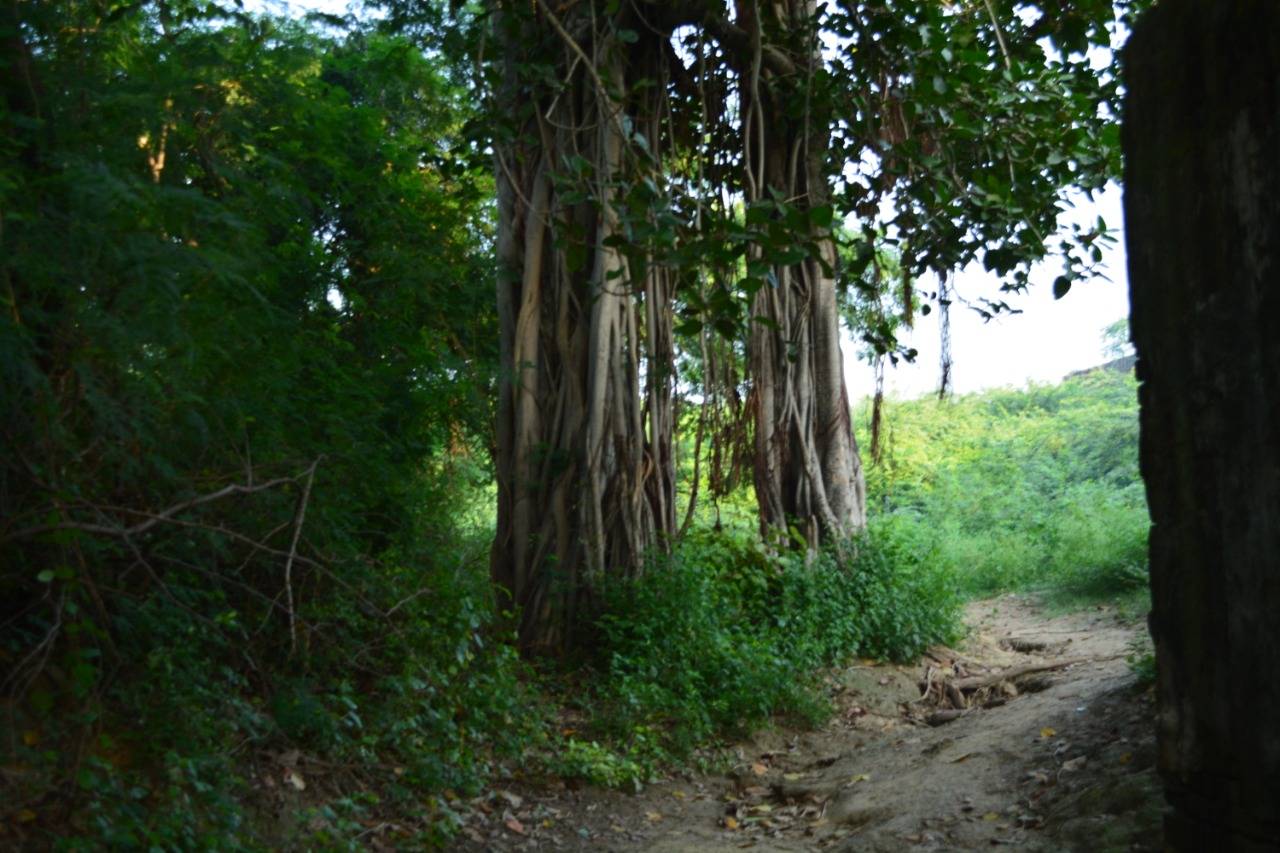
2026.02.12 (Vrindavan Today News): Imagine stepping back into the timeless era of bhakti and devotion. Lush, verdant forests once lined the banks of the Yamuna in Gokul. Towering trees offered cool shade where peacocks danced with their iridescent feathers fanned wide. Butterflies fluttered in vibrant patterns, cows grazed contentedly, and deer bounded gracefully through the undergrowth. Under a majestic Kadamba tree, young Krishna played his soul-stirring flute, drawing the Gopis into an ecstatic trance. The entire Braj Mandal felt like a living paradise, alive with music, nature, and pure bhakti.

This wasn’t mere legend; it was the reality of Braj Mandal, the sacred homeland of Lord Krishna’s childhood. Ancient texts, including the Padma Purana, describe twelve principal forests (Dvadasha Van) that once blanketed the region in a radius of nearly 84 kos (about 100-150 km) around Mathura: Madhuvan, Talavan, Kumudvan, Kamyavan, Bahulavan, Khadirvan, Vrindavan, Mahavan, Bhandirvan, Belvan, Lohvan, and Bhadravan. Beyond these lay twenty-four upvans (smaller groves), countless sacred kunds (ponds), lakes, gardens, and rivulets, forming a perfectly balanced, thriving ecosystem.
It was in these very forests that Krishna’s leelas unfolded, the lifting of Govardhan, the subduing of Kaliya Nag, the enchanting Raas Leela under the moonlit skies. The shade of ancient trees, the gentle Yamuna’s banks, flower-filled bowers, and emerald meadows were the very essence of Braj. For centuries, this natural-spiritual haven drew saints and poets: Chaitanya Mahaprabhu wandered Vrindavan’s paths, Vallabhacharya meditated at Govardhan, and devotees like Swami Haridas, Surdas, Hit Harivansh, Raskhan, and Meera poured forth rivers of devotion. To them, Braj wasn’t just land, it was living divinity.
Even through Mughal times, the region maintained a remarkable harmony between nature and human creation, with gardens and planned greenery enhancing monuments and sacred sites.
But today, that harmony has shattered. The once-lush Braj has morphed into a sprawling concrete jungle. Explosive population growth, unchecked urbanization, luxury townships, high-rise apartments, resorts, and commercial hubs have mushroomed around sacred spots. Encroachment creeps closer to Govardhan Hill itself, while illegal mining and stone-crushing operations have scarred the hills, stripped away vegetation, accelerated soil erosion, and brought the threat of desertification ever nearer from the west.
Data paints a stark picture of this denudation. In Mathura district, tree cover has declined significantly over recent decades. Global Forest Watch reports that from 2001 to 2024, the area lost 13 hectares of tree cover, representing about 4% of the 2000 baseline, though local accounts suggest far greater historical losses as ancient groves have vanished under development pressure. Activists and scholars note that many of the legendary forests, once numbering up to 137 including the 12 major vans, prativans, upvans, and others, have largely disappeared, reduced to vestigial pockets amid urban expansion. Mining and stone crushing around heritage hills have caused widespread deforestation, soil stripping, and air/water pollution, turning verdant slopes into barren, eroded landscapes and hastening desert-like conditions.
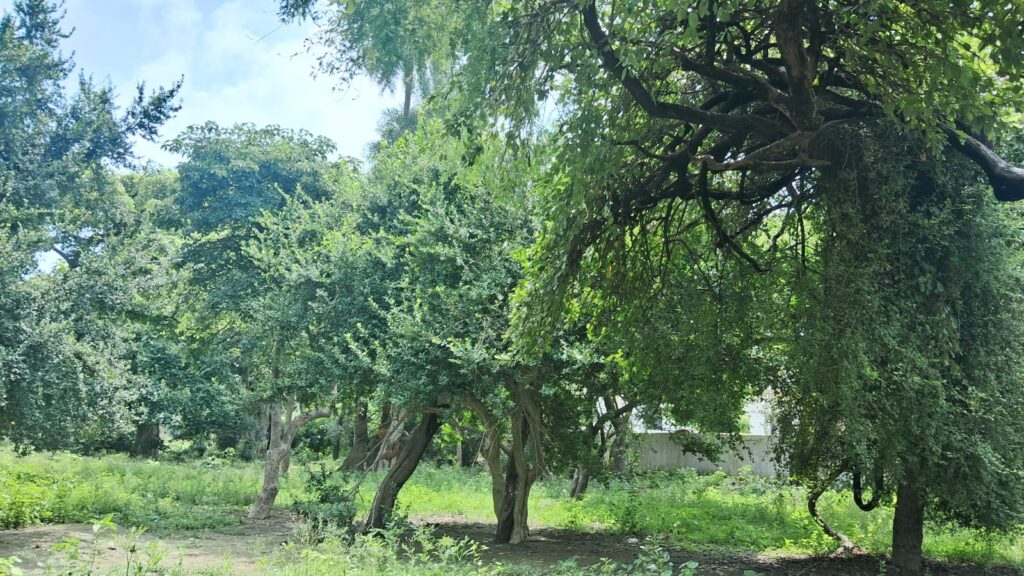
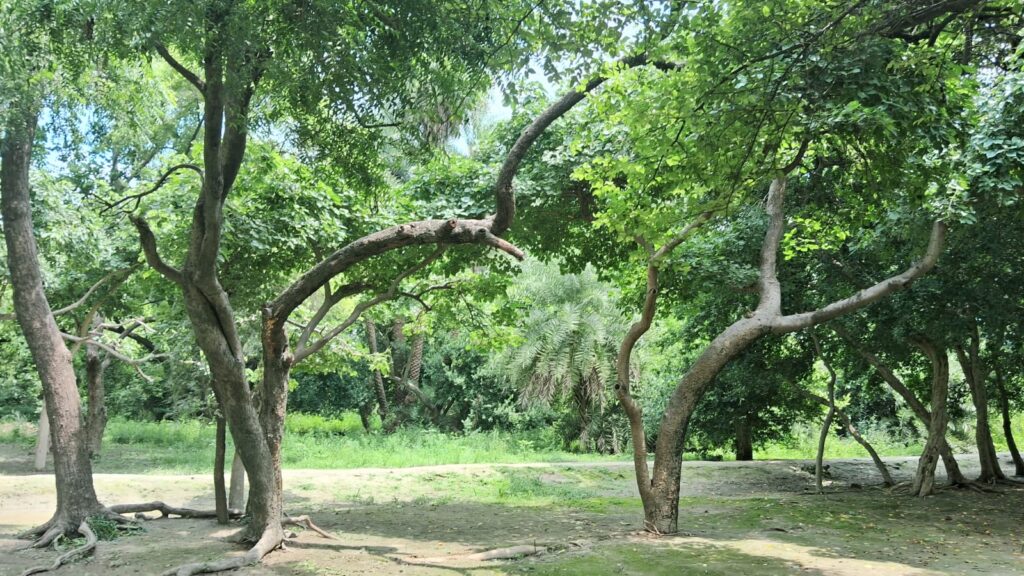
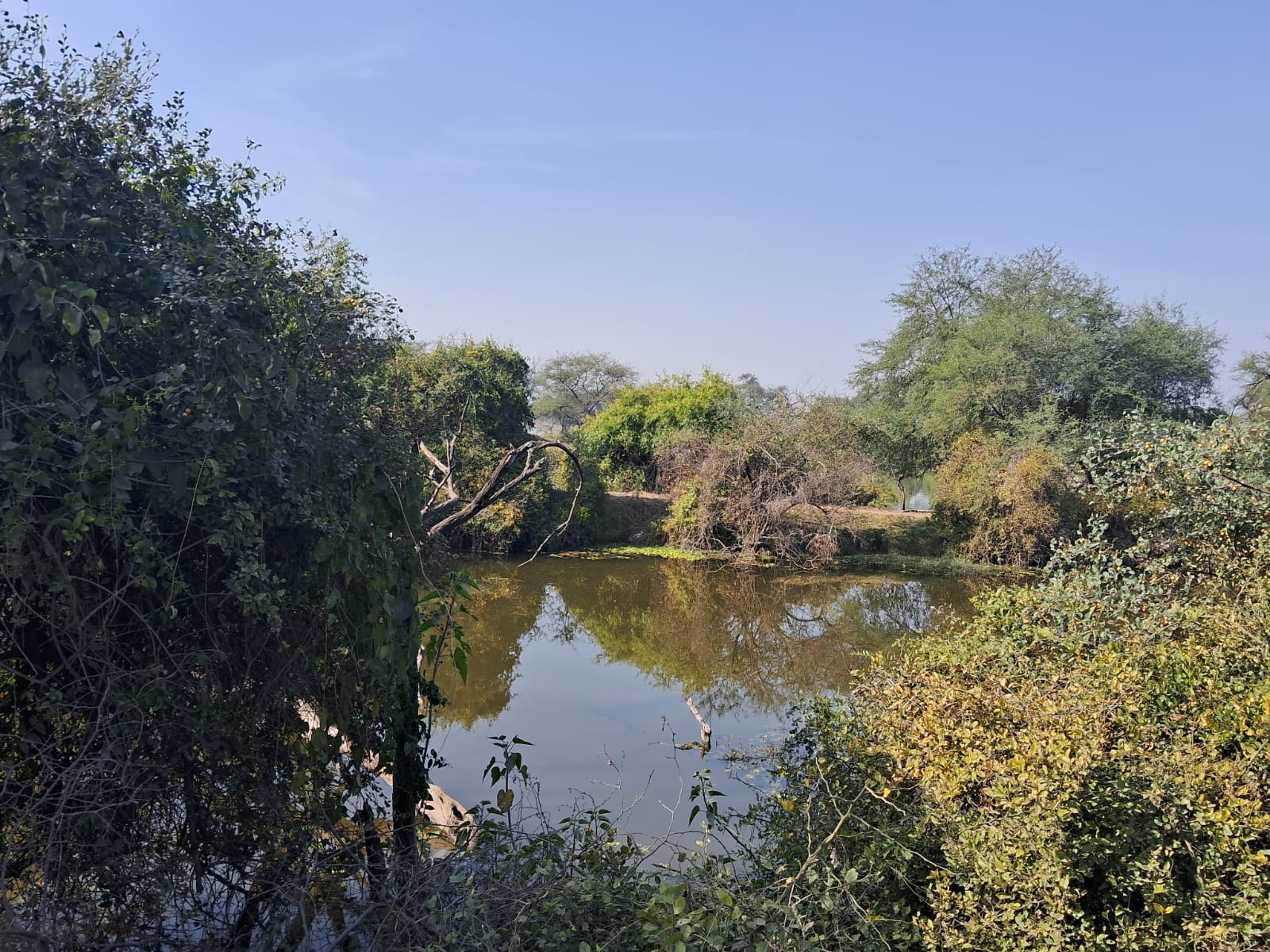
The Yamuna, Braj’s sacred lifeline, faces a dire crisis. What was once a pure, flowing river has become a polluted drain in many stretches. Untreated sewage and industrial effluents have driven dissolved oxygen levels to near zero in places, with fecal coliform counts soaring far beyond safe limits. Recent Delhi Pollution Control Committee reports from late 2025 show levels reaching 92,000 units per 100 ml in some monitoring points, around 37 times the permissible threshold of 2,500. Despite repeated cleaning drives and government plans, the river remains gravely degraded, its banks choked with waste. Sacred kunds and lakes have either dried up or silted over, depleting groundwater and devastating local biodiversity.
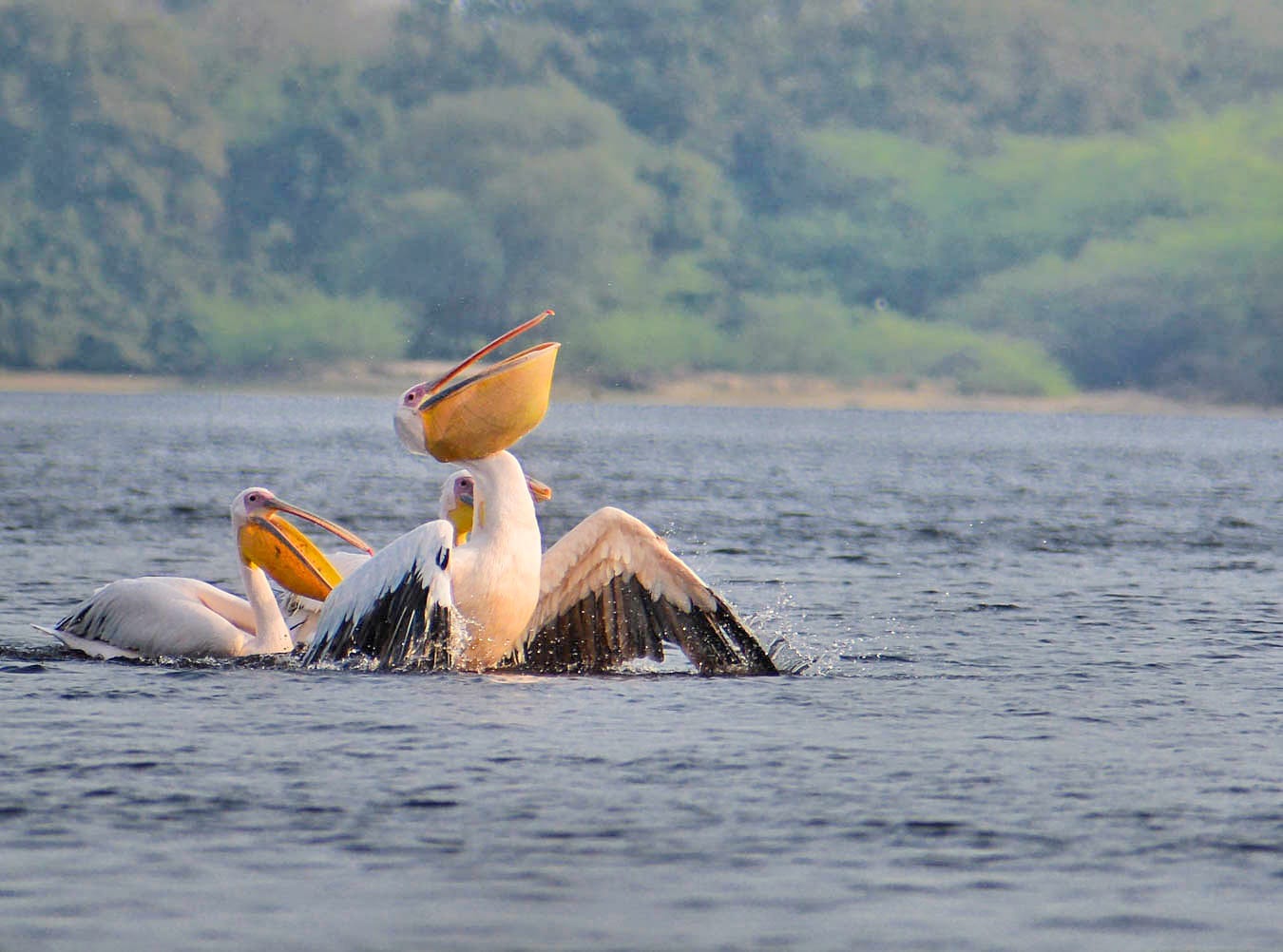
Environmental voices have raised alarms for decades. Groups like Friends of Vrindavan highlight heartbreaking losses: where over 50 species of butterflies once danced, only a handful survive today. Rare medicinal plants and native flora teeter on the edge of extinction. This isn’t just ecological damage; it’s a profound, perhaps irreversible, wound to the region’s soul.
Ironically, some spiritual institutions have contributed unintentionally, replacing green spaces with cement ashrams amid skyrocketing land prices that prioritize profit over preservation.
Yet hope flickers amid the gloom. Recent initiatives offer promise: efforts to revive ancient forests through large-scale plantation of indigenous species continue, with community and NGO-led drives planting native trees and restoring groves tied to Krishna’s lore.
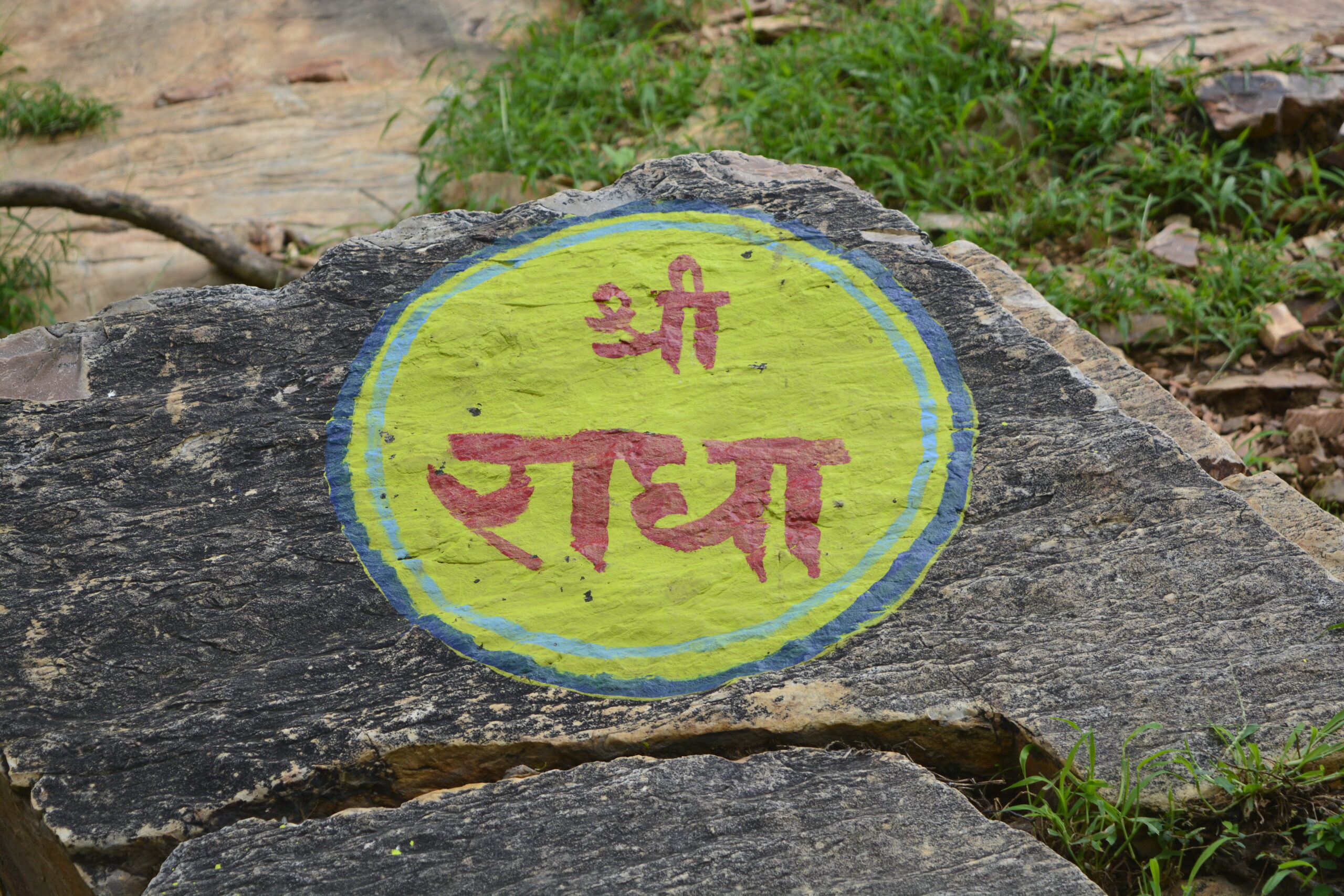
The path forward isn’t about halting development; it’s about finding balance. Braj’s true identity is woven into its sacred ecology. Without its forests, the land becomes a hollow shell, its living spirit buried beneath concrete. Radha-Krishna’s divine plays were inseparable from nature, the flute’s call echoed through trees, the Raas unfolded in moonlit groves.
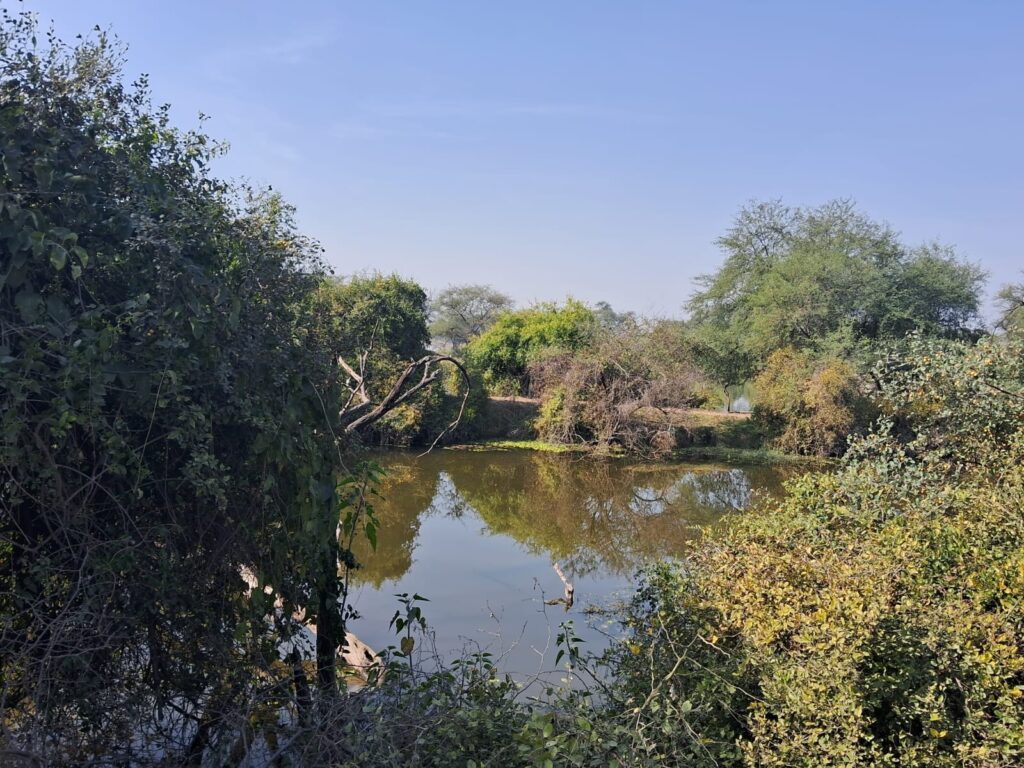
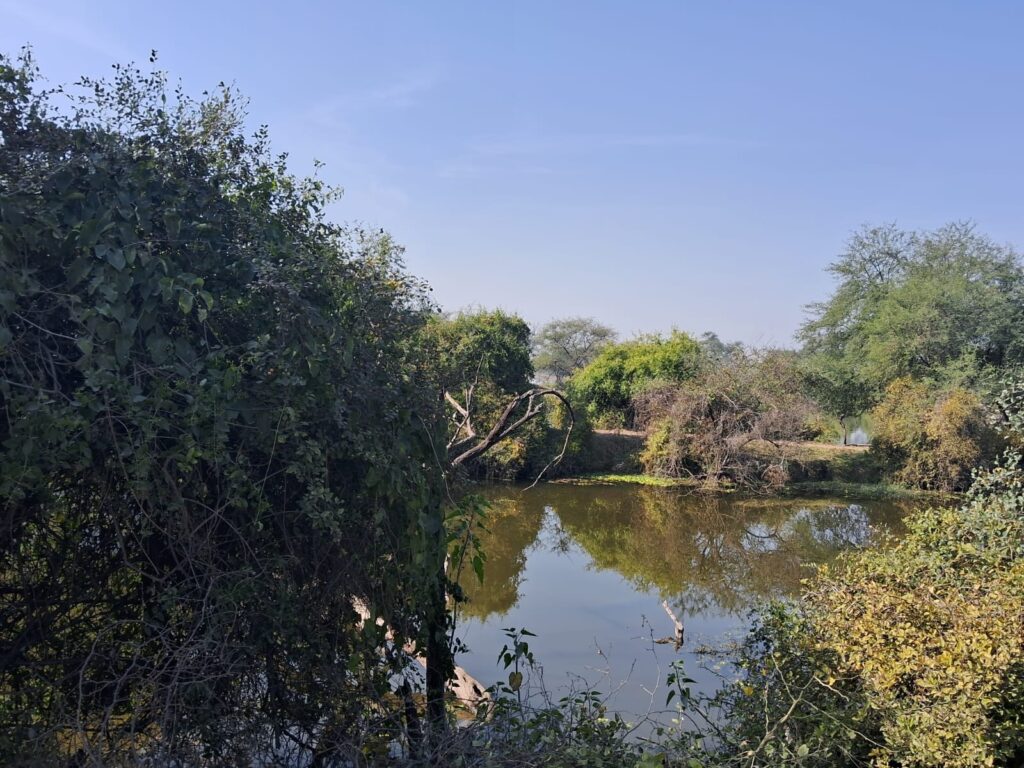
Saving Braj means protecting more than trees and rivers; it means safeguarding our deepest cultural and spiritual heritage. If saints, devotees, environmentalists, locals, and authorities unite in massive, sustained efforts; planting indigenous species, reviving kunds, curbing pollution, and embracing sustainable growth; Braj’s greenery can bloom again. The flute may yet play once more over restored forests, calling us back to devotion in harmony with the divine land.