- Crores Flow Down the Drain under HRIDAY scehme of the Union Government
- In absence of the Yamuna’s flow these structures can’t be called a ghat. It can’t be called a museum either in absence of proper maintenence
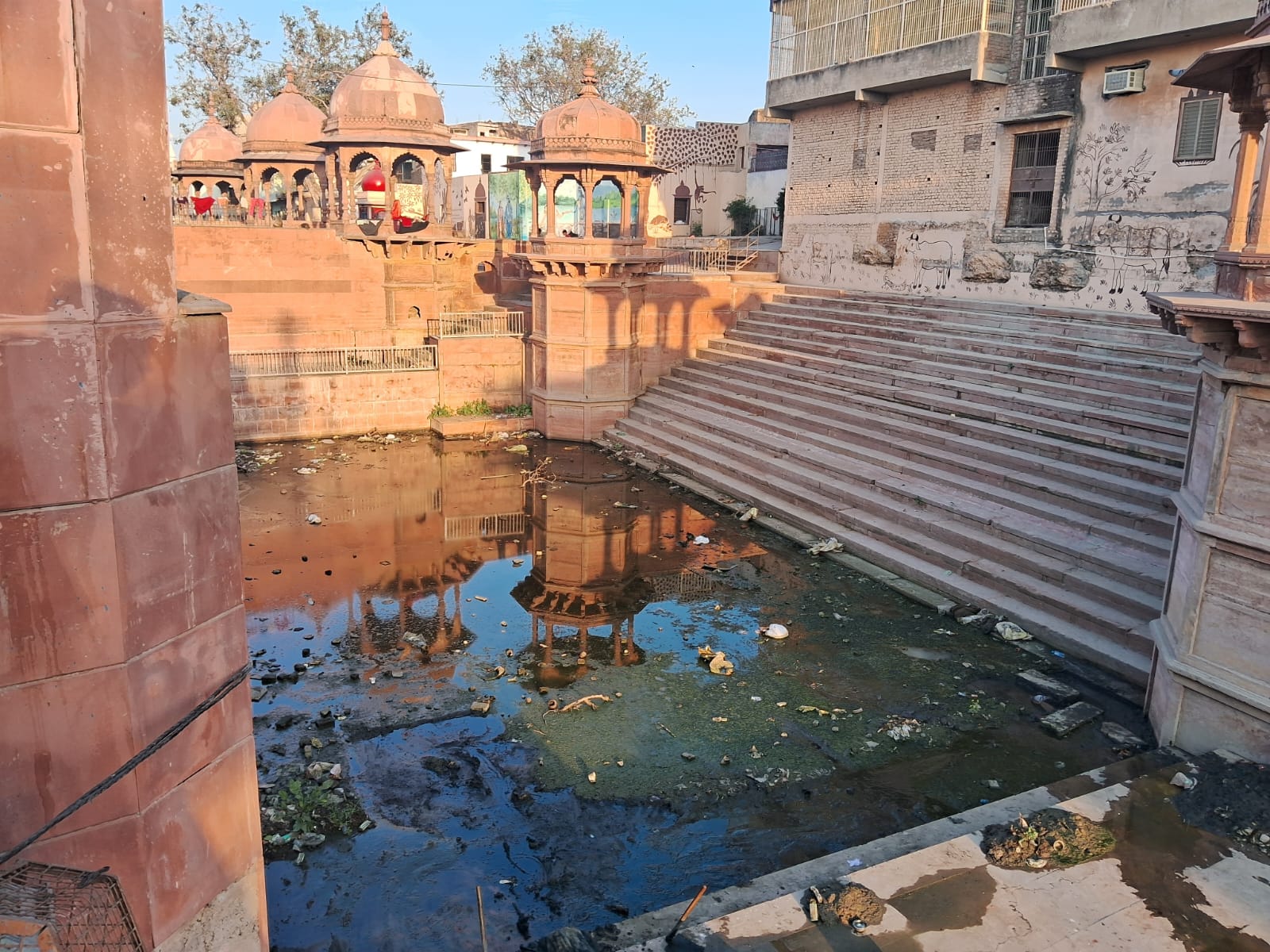
2026.02.08 (Vrindavan Today News): Vrindavan’s ancient Yamuna ghats, once envisioned as vibrant cultural spaces under the Central Government’s HRIDAY (Heritage City Development and Augmentation Yojana) are today slipping into neglect, exposing the failure of post-project governance. Crores spent on beautification now stand reduced to broken fountains, defunct lighting, stagnant polluted water, and encroachments, making these sacred spaces resemble sewer tanks rather than heritage landmarks.
Between Vihar Ghat, Karauli Ghat, Nabha Ghat, Koyaliya Ghat, and Kalideh Ghat, the Municipal Corporation spent nearly ₹7.15 crore on renovation works. These ghats were conceptually developed as open-air heritage museums, showcasing Vrindavan’s sacred riverfront legacy. However, none of these “museums” are active today. No interpretation, no cultural programming, no maintenance, and no public engagement. Ironically, the Yamuna herself remains absent from these ghats.
A deliberately constructed road in the past obstructed the natural flow of the Yamuna, cutting the river off from its historic riverfront. Despite repeated promises of river rejuvenation, there has been no serious effort to reconnect the Yamuna to its ghats, leaving behind stagnant, polluted pools instead of flowing water. What was meant to be a sacred river interface has instead become a breeding ground for mosquitoes, algae, and disease.
The decorative fountains worth lakhs of rupees are broken or non-functional. Colorful architectural lighting meant to enhance night-time beauty has remained switched off since Diwali. Ghat bastions have been encroached upon, with people residing inside heritage structures, accelerating decay. Garbage piles and foul odors dominate the landscape, while sanitation efforts remain sporadic at best.
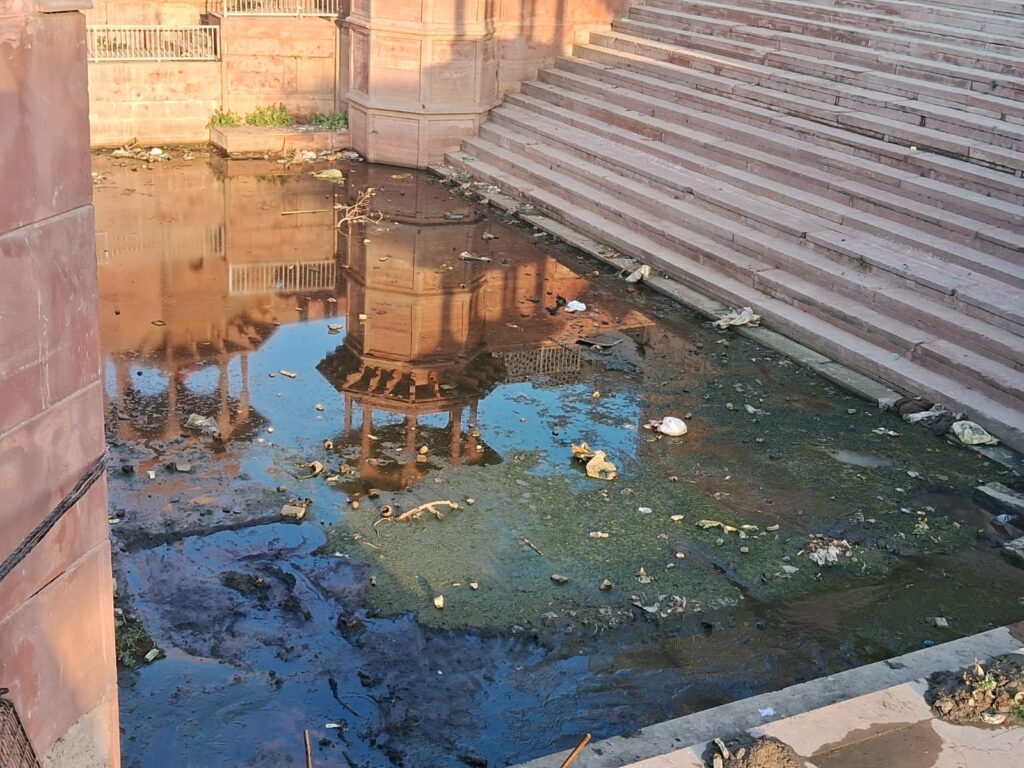
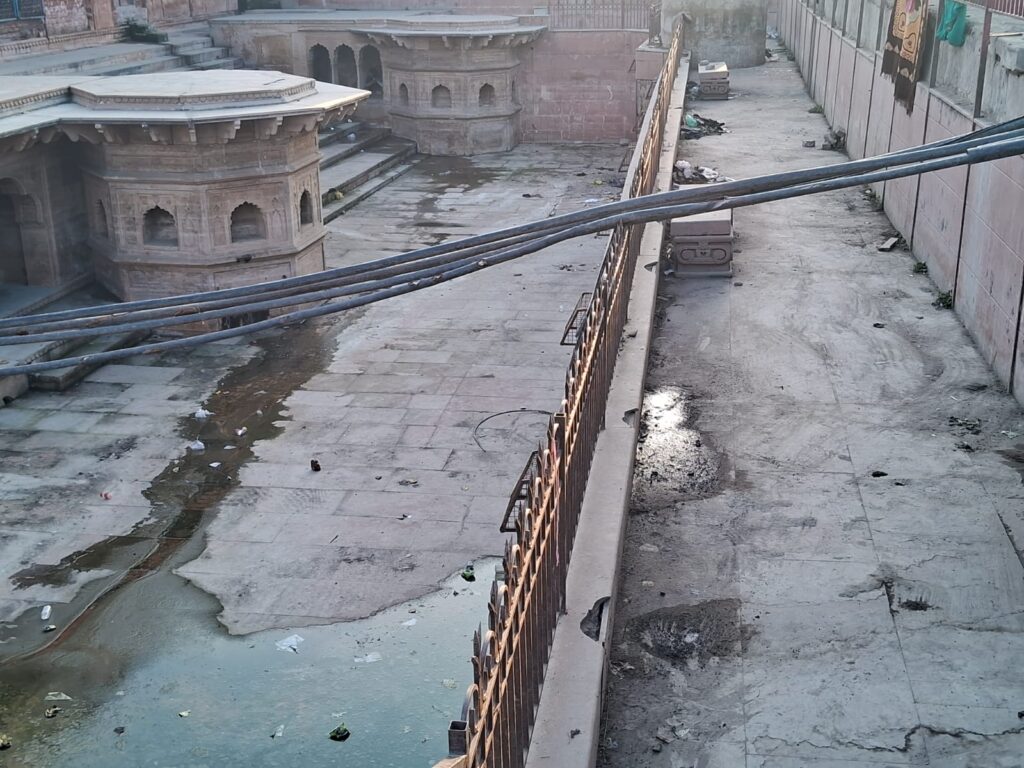
Local residents warn of rising health risks due to stagnant water and lack of cleaning. “There is no regular sanitation here. Mosquitoes are everywhere, and the stench is unbearable,” said Mahesh Bharadwaj, who lives near Vihar Ghat.
Without a long-term maintenance mechanism, removal of encroachments, revival of Yamuna’s flow, and activation of the ghats as living heritage spaces, these assurances risk becoming yet another ritual, much like the abandoned fountains themselves.
Vrindavan’s ghats were never meant to be ornamental backdrops. They are living spiritual thresholds between the city and the Yamuna. Until governance treats them as such, heritage funds will continue to vanish, and sacred ghats will keep drowning in neglect, without a river to save them.