Vrindavan Today | Bureau Report:
May 26, 2026, Vrindavan: Renowned across the world for its divine devotion, intimate temple culture, narrow “kunj” lanes, and timeless spiritual atmosphere, the sacred town of Vrindavan is today facing an unprecedented crisis. The ancient identity of this holy town, deeply rooted in bhakti, simplicity, and heritage, is increasingly being overshadowed by aggressive commercialization that threatens to permanently alter its original character.
Over the past few years, densely populated residential neighborhoods in the old parts of Vrindavan have rapidly transformed into commercial zones. Traditional homes are being purchased by wealthy investors and converted into massive showrooms, warehouses, hotels, and multi-storey commercial complexes. Local residents and social activists allege that building regulations are routinely being ignored, while residential maps are allegedly being used to obtain approvals for commercial constructions.
Serious concerns are also being raised about the role of the Mathura-Vrindavan Development Authority (MVDA). Critics claim that large-scale commercial projects are being approved in highly congested residential areas despite clear violations of safety and urban planning norms. Many believe that financial influence and corruption have allowed unchecked commercialization to spread deep into the heart of the sacred town.
The recent devastating fire incident at a showroom warehouse in the Atkhamba-Balligunj area once again exposed the dangerous consequences of such unchecked development. According to the loals, the building had allegedly been constructed in complete disregard of safety regulations. The structure reportedly included a basement, warehouse, commercial showroom, and residential floors stacked within the same building in one of the narrowest and busiest parts of the town.
Residents claim that complaints regarding the illegal and hazardous construction had previously been submitted to authorities, but no effective action was taken. Had the fire spread further, the tragedy could have engulfed several adjoining houses, potentially resulting in massive loss of life and property due to the extremely narrow lanes that make emergency access nearly impossible.
What makes the situation even more alarming is that despite attracting millions of pilgrims from across India and abroad every year, Vrindavan still lacks a permanent and fully equipped fire safety infrastructure capable of handling emergencies in its congested heritage zones.
This is not an isolated incident. In recent years, multiple fire accidents have occurred in commercial establishments across Vrindavan. A major fire at a hotel in Rukmani Vihar had earlier raised similar questions about safety violations and administrative negligence. Yet, in most cases, investigations end with the formation of committees while accountability remains absent and illegal constructions continue unchecked.
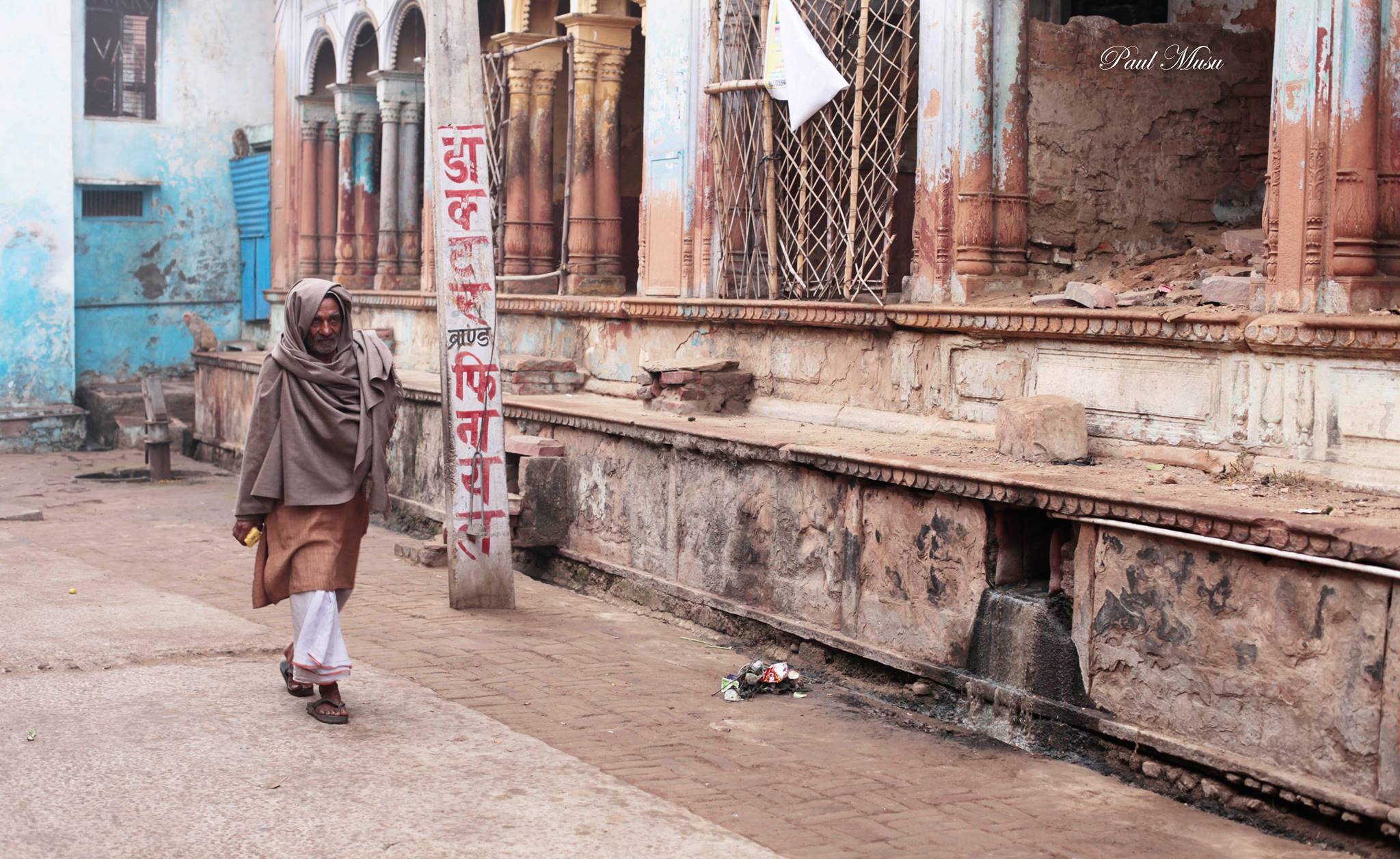
Local citizens fear that if this trend continues for another five to ten years, the old residential character of historic Vrindavan may disappear entirely. The town’s ancient lanes, traditional homes, and spiritual environment could be replaced by an endless chain of shops, malls, hotels, and commercial complexes. The very cultural fabric that has preserved Vrindavan’s sacred identity for centuries now stands at the edge of irreversible destruction.

The danger is not merely architectural, but existential. Vrindavan’s spiritual soul is inseparable from its heritage neighborhoods, temple-centered community life, and centuries-old devotional culture. Once these are replaced by uncontrolled urban commercialization, no reconstruction project will ever be able to restore the original essence of the holy town.
Citizens and concerned devotees are now urging the state government to intervene immediately, conduct an impartial investigation into the alleged nexus enabling illegal commercial expansion, and implement strict measures to preserve the traditional and spiritual identity of Vrindavan before it is too late.