Vrindavan Today | Bureau Report
21st July, 2026, New Delhi / Vrindavan: The Supreme Court has stayed the ongoing Yamuna Riverfront Development works at Keshi Ghat, Vrindavan, bringing national attention to the growing conflict between heritage conservation and river ecology. The interim injunction was passed by a bench comprising Justice J.B. Pardiwala and Justice K.V. Vishwanathan . The order follows an intervention application filed by Braj Vrindavan Devalaya Samiti (BVDS), an alliance of the temple, in the pending environmental case Ashok Kumar Sinha vs. Union of India & Others, raising serious concerns over construction activities within the active channel and floodplain of the Yamuna.
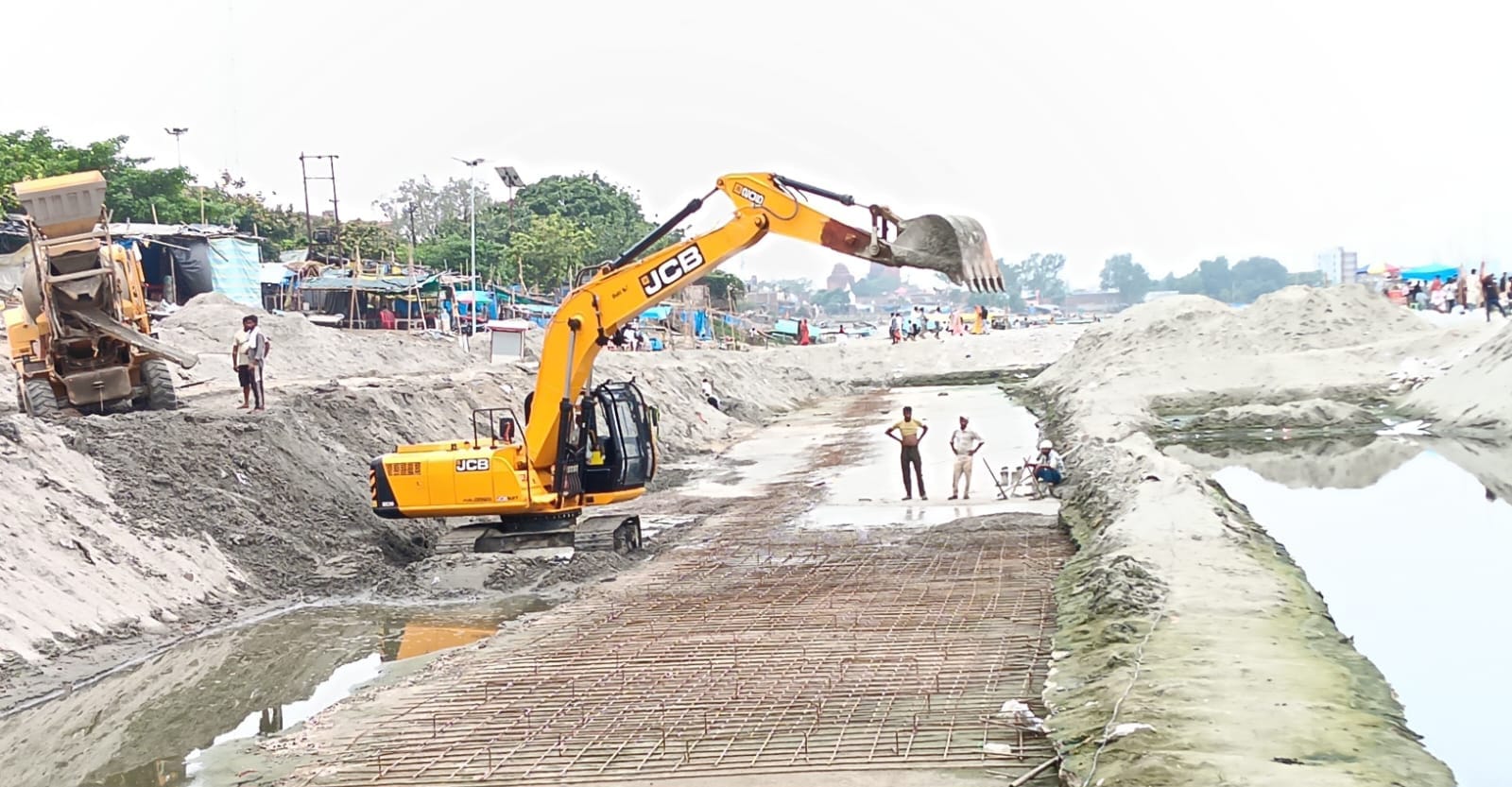
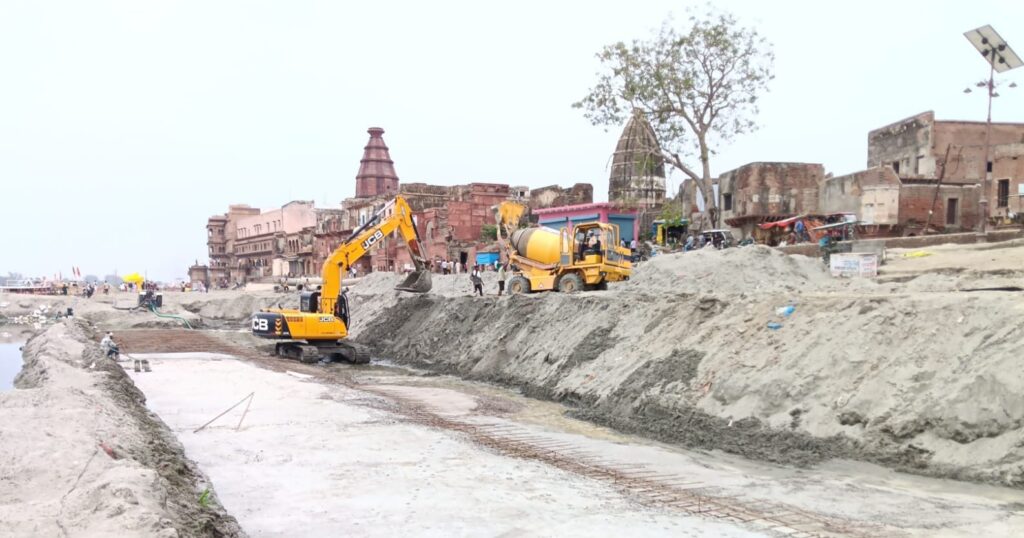
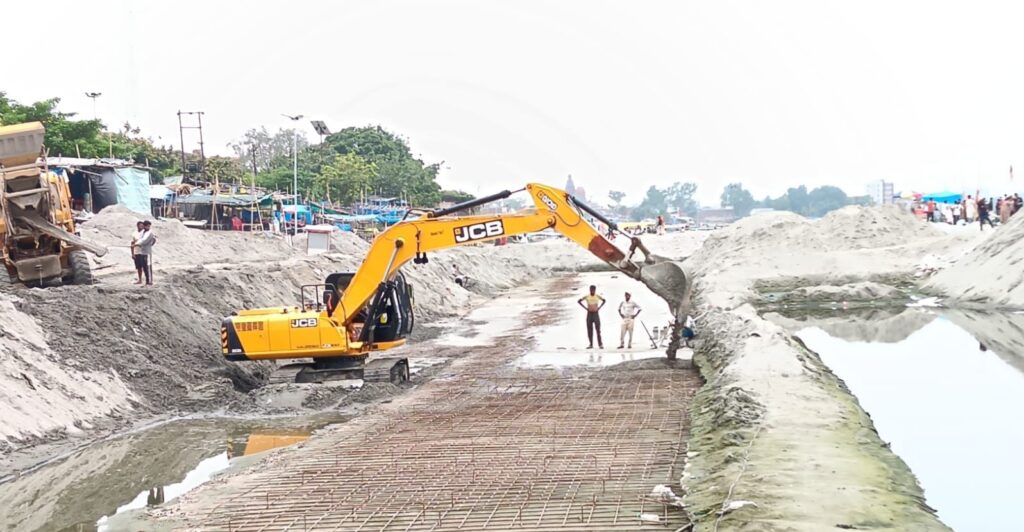
The petition argues that the project, undertaken in the name of riverfront restoration, extends far beyond conservation of the traditional bathing ghats. Instead, it alleges that large-scale engineering works; including sheet piling, concrete platforms and heavy steel structures erected within the active river stream. It has fundamentally altered the river’s natural character.
According to the application, these constructions obstruct the natural flow of the Yamuna, interfere with seasonal flooding, and disconnect the river from its floodplain. The petition further contends that the resulting loss of groundwater recharge has contributed to a sharp decline in groundwater levels, with several tube wells and bore wells situated close to the river reportedly becoming defunct despite their proximity to the Yamuna.
The intervention application relies extensively on the River Ganga (Rejuvenation, Protection and Management) Authorities Order, 2016, whose provisions also extend to major tributaries, including the Yamuna. The petition points out that the project appears inconsistent with several foundational principles of the 2016 Order, including:
Maintaining the uninterrupted ecological flow of the river.
Preserving the river’s natural longitudinal, lateral and vertical connectivity.
Restoring the relationship between surface water and groundwater.
Conserving aquatic and riparian biodiversity.
The application also cites Clause 6(3) of the Order, which generally prohibits construction of permanent or temporary structures within the river, its banks, or active floodplain, except under narrowly defined exceptional circumstances and with prior approval from the National Mission for Clean Ganga (NMCG).
One of the central arguments before the Court is that genuine restoration of heritage ghats should involve repairing and conserving the original historic structures rather than constructing new concrete platforms inside the river itself.
The petition alleges that instead of restoring the Yamuna’s natural channel, the project involves extensive river engineering through sheet piling, concrete embankments and artificial platforms that permanently modify the riverbed. Environmental experts have long cautioned that such interventions can alter sediment movement, disturb aquatic habitats and reduce the river’s capacity to recharge groundwater.
The intervention application also relies upon a 2019 report prepared by Prof. C.R. Babu, Professor Emeritus at the Centre for Environmental Management of Degraded Ecosystems, University of Delhi. Commissioned by the Ministry of Housing and Urban Affairs and the Mathura-Vrindavan Municipal Corporation, the report reportedly recommended removal of unauthorized structures, including the metallic and concretized road built on the Yamuna floodplain, so that the river channel could naturally reconnect with the historic bathing ghats. The report emphasized restoring the Yamuna’s original course rather than further constricting or modifying it with additional hard infrastructure.
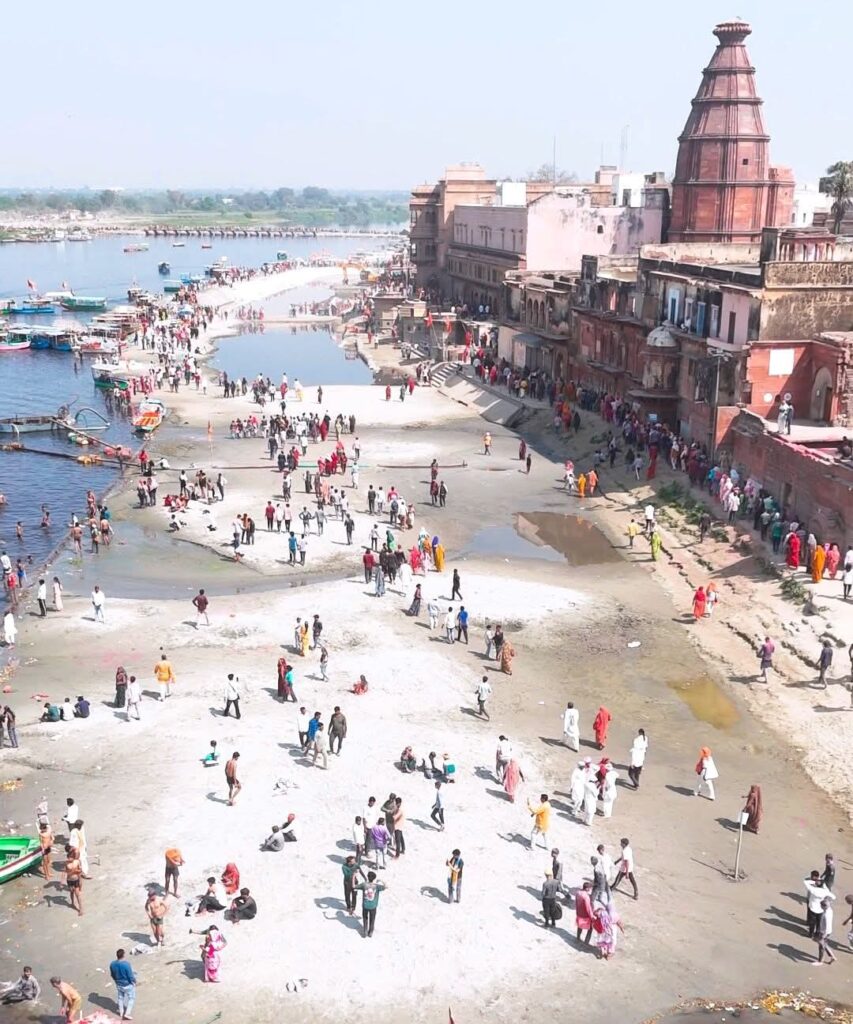
For Braj, the Yamuna is far more than a river. It is the region’s ecological lifeline, sustaining groundwater, wetlands, biodiversity, agriculture and the cultural landscape associated with Shri Krishna. Environmentalists argue that preserving the river’s natural floodplain is essential not only for ecological health but also for the long-term water security of Vrindavan.
Groundwater recharge occurs when monsoon flows spread naturally across floodplains, allowing water to percolate into underground aquifers. Concretization of floodplains and construction within the active river channel can significantly reduce this natural recharge process, increasing dependence on groundwater extraction while simultaneously lowering water tables.
A Landmark Intervention
The Supreme Court’s interim stay does not decide the final legality of the project. However, it signals that the Court considers the environmental concerns serious enough to warrant maintaining the status quo until the issues are examined.
The litigation raises broader questions that extend beyond Vrindavan:
Can riverfront beautification override ecological safeguards?
Should heritage conservation prioritize restoration of original ghats over new riverbed construction?
How should development projects balance tourism with river ecology?
Can floodplains continue to perform their natural groundwater recharge function if increasingly occupied by permanent infrastructure?
The eventual decision is likely to influence future riverfront projects across India, particularly those involving the Ganga and its tributaries, where ecological restoration, cultural heritage and urban development often intersect.
For Vrindavan, the case represents a defining moment in determining whether the Yamuna will be managed primarily as a living river system or as an urban waterfront. The Supreme Court’s final ruling could shape not only the future of the Yamuna in Braj but also the principles governing river conservation throughout the country.