

– Radha-Krishna in a 300-Year-Old Golden Crown – Maha Raas Comes Alive at Madhoi
Vrindavan Today | By Sushil Goswami
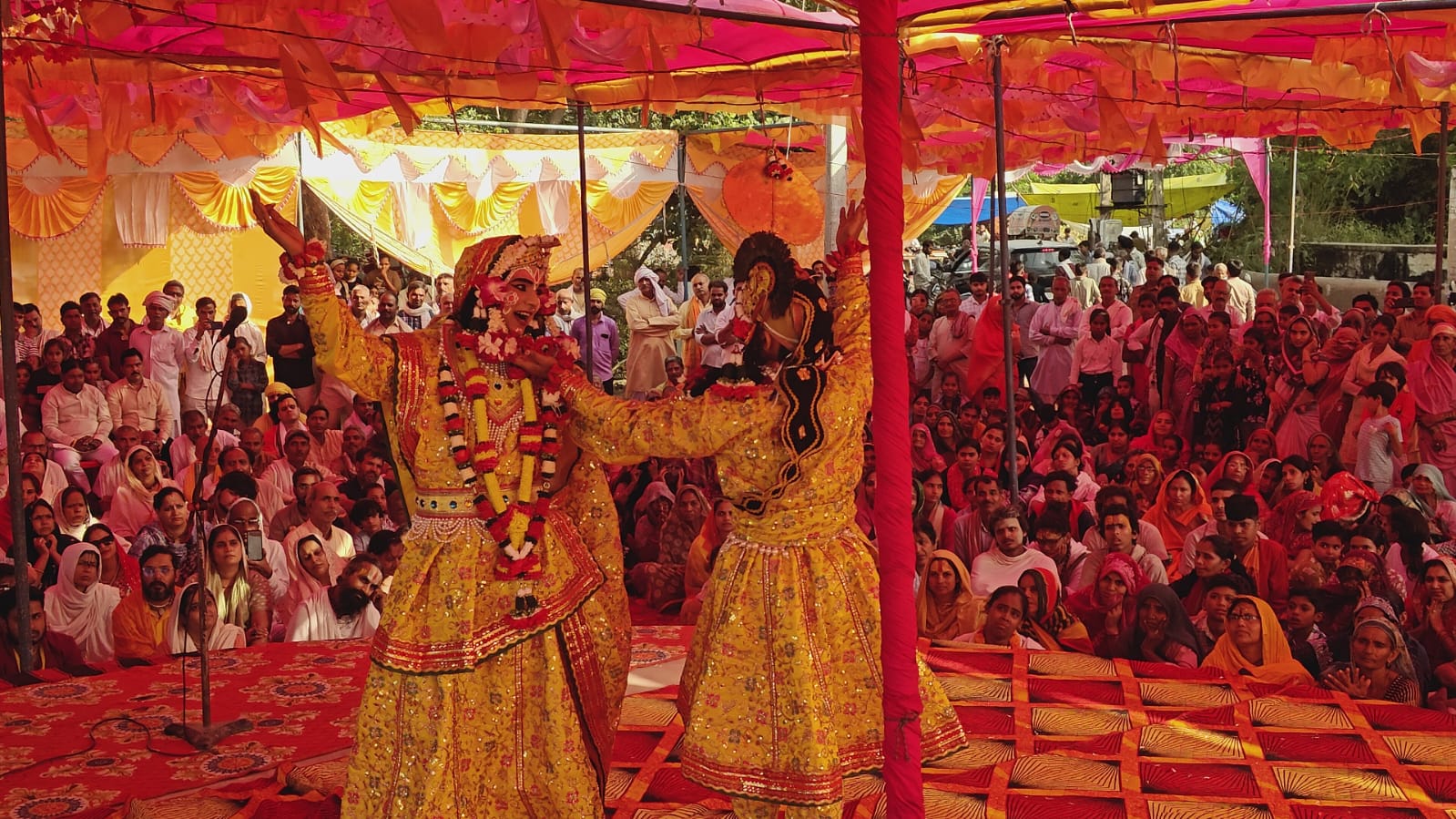
26th September, 2026, (Barsana) A nearly seven-century-old tradition of Raas in Braj came alive once again on Saturday at Madhoi, a village near Barsana, as the sacred Maha Raas was performed at the ancient Raas platform (Raas Chabutara), believed to be associated with the region’s enduring Rasik tradition.
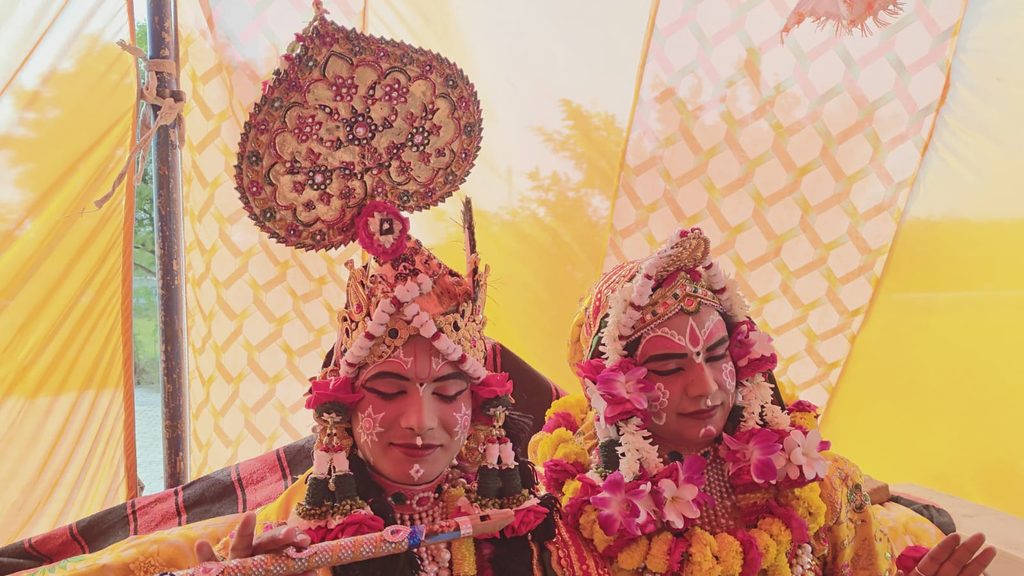
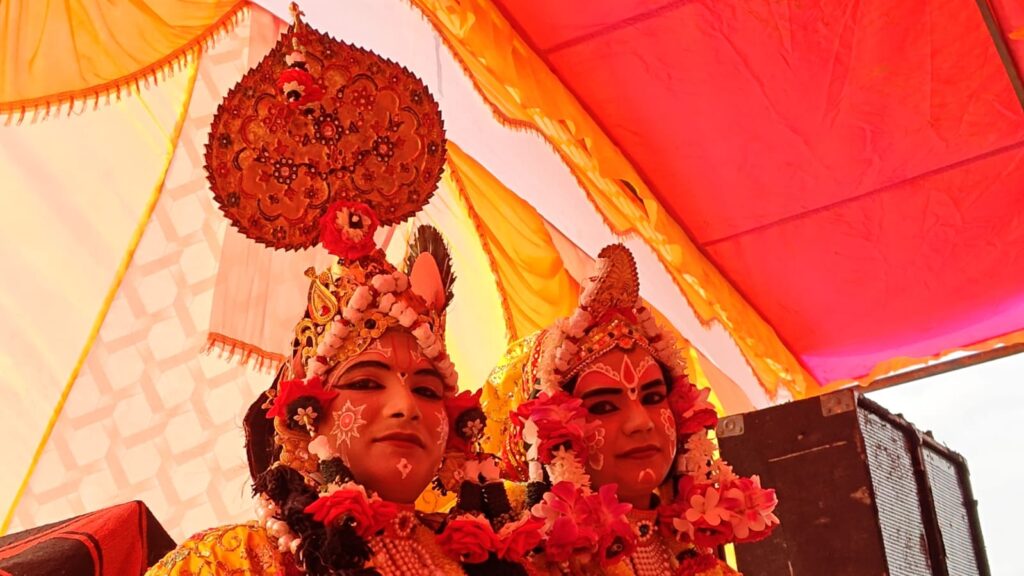
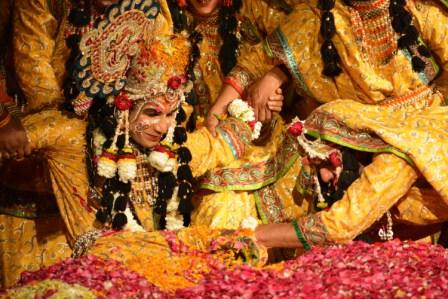
The highlight of the evening was the appearance of the Radha-Krishna swaroops adorned with an approximately 300-year-old golden crown and Chandrika, together weighing around 5.25 kilograms. The rare ornaments, regarded as an invaluable heritage of Braj’s Raas tradition, are brought out only once a year for the Maha Raas on the full-moon occasion.
Hundreds of devotees gathered at the historic site to witness the resplendent forms of Radha and Krishna, dressed in the ancient golden ornaments, as they performed the Maha Raas with the Gopis.
A sacred tradition rooted in the Rasik heritage of Braj
Maha Raas occupies a special place in the sacred imagination of Braj. It is traditionally associated with Lord Krishna’s divine dance with the Gopis on the night of Sharad Purnima at Chandra Sarovar near Govardhan. In the Rasik tradition of Braj, however, the union of Radha and Krishna is also understood as an eternal, ever-present Nitya Raas.
It is this devotional vision that continues to be preserved at Madhoi, where the ancient Raas platform remains a living centre of the region’s Raas tradition.
The Maha Raas is also revered as a divine lila through which Lord Krishna humbled the pride of Kamadeva. For devotees, therefore, the performance is not merely theatrical; it is an act of devotion through which the eternal spiritual relationship of Radha, Krishna and the Gopis is experienced and remembered.
The tradition of Raas and Sant Ghamand Devacharya
The Raas tradition of Braj is traditionally associated with Sant Ghamand Devacharya. According to the religious tradition, in Vikram Samvat 1607, Lord Krishna Himself appeared before the saint and inspired him to perform Raas.
Thereafter, the tradition of staging Raas lila developed and flourished across Braj.
Earlier, Shri Narayan Bhatt, regarded in Braj tradition as one of the principal figures associated with the rediscovery and organisation of the sacred geography of Braj, had given a systematic form to the tradition of enacting Raas-lila.
Over the centuries, the tradition became much more than an annual religious performance. Villages such as Madhoi and Karhala became important centres from which generations of Rasacharyas carried the distinctive devotional culture of Braj to different parts of India and abroad.
Among those associated with this tradition were Swami Radhakishan and Swami Govardhan of Madhoi. From nearby Kamai, Swami Ramswaroop also became known for taking Braj’s Raas tradition to audiences across the country and overseas.
A 300-year-old golden crown gifted by the King of Datia
Perhaps the most extraordinary feature of Madhoi’s Maha Raas is the ancient golden crown preserved by the Raas tradition.
According to the tradition associated with the Raas mandali, the ornaments were presented approximately three centuries ago by King Bhawani Singh of Datia.
The story preserved by the tradition recounts that the king wished to test the spiritual power and authenticity of the Raas performance. During a Kaliya Mardan episode, a real snake was reportedly brought before the deity’s swaroop. According to the traditional account, the incident culminated in a miraculous manifestation of Krishna’s power, deeply moving the king.
Impressed by what he witnessed, King Bhawani Singh is said to have presented the Raas mandali with two golden crowns and two Chandrikas.
One pair of these extraordinary ornaments, weighing approximately 5.25 kilograms, continues to be preserved as a priceless heritage of the Raas tradition.
The golden crown is taken out only once a year, on the occasion of the full moon, when the Maha Raas is performed.
A heritage preserved across generations
The responsibility of preserving these precious ornaments has traditionally remained with the descendants of the renowned Rasacharyas Swami Govardhan and Swami Radhakishan.
For the present Maha Raas, the ancient crown and Chandrika were brought from a bank locker under heavy police security. The arrangements and conduct of the event were overseen by senior advocate Nandkishore Upmanyu, who has been associated with the preservation and organisation of this traditional celebration.
When the Radha and Krishna swaroops, adorned with the centuries-old golden crown and Chandrika, appeared on the Raas Chabutara, devotees were visibly moved.
The performers portraying Radha, Krishna and the Gopis presented the Raas in the traditional devotional spirit, transforming the ancient platform into a living expression of Braj’s sacred culture.
The Maha Raas of Madhoi is therefore much more than a traditional theatrical presentation. It represents a living cultural heritage, connecting contemporary Braj with a devotional tradition that has been transmitted through generations of saints, Rasacharyas and families dedicated to its preservation.
The villages of Madhoi and Karhala continue to nurture this distinctive stream of Braj’s Rasik culture. Their traditions preserve not only the memory of ancient religious performances but also the music, costumes, devotional poetry, ritual practices and artistic vocabulary through which generations have experienced the divine pastimes of Radha and Krishna.
At Madhoi, when the Radha-Krishna swaroops appear wearing a three-century-old golden crown, the past is not merely remembered, but it becomes part of the present.
The annual Maha Raas thus stands as a remarkable example of Braj’s living religious and cultural heritage, carried forward from one generation to the next and continuing to keep alive the ancient rasadhara the sacred stream of divine love and devotion that has flowed through Braj for centuries.
Shree Radhe Radhe ji jo sukh mile barsane mei vo or nhi jamane mei
Tilak Patrika ke madhyam se Yha shree krishan ji or Radha Rani ji ke prem ki itni sunder leelaye dekhne ko milti hai