Brahmakund Saanjhi Mela Revives Vrindavan’s Artistic Heritage with a Tribute to Shri Govind Dev
Vrindavan Today | Bureau Report
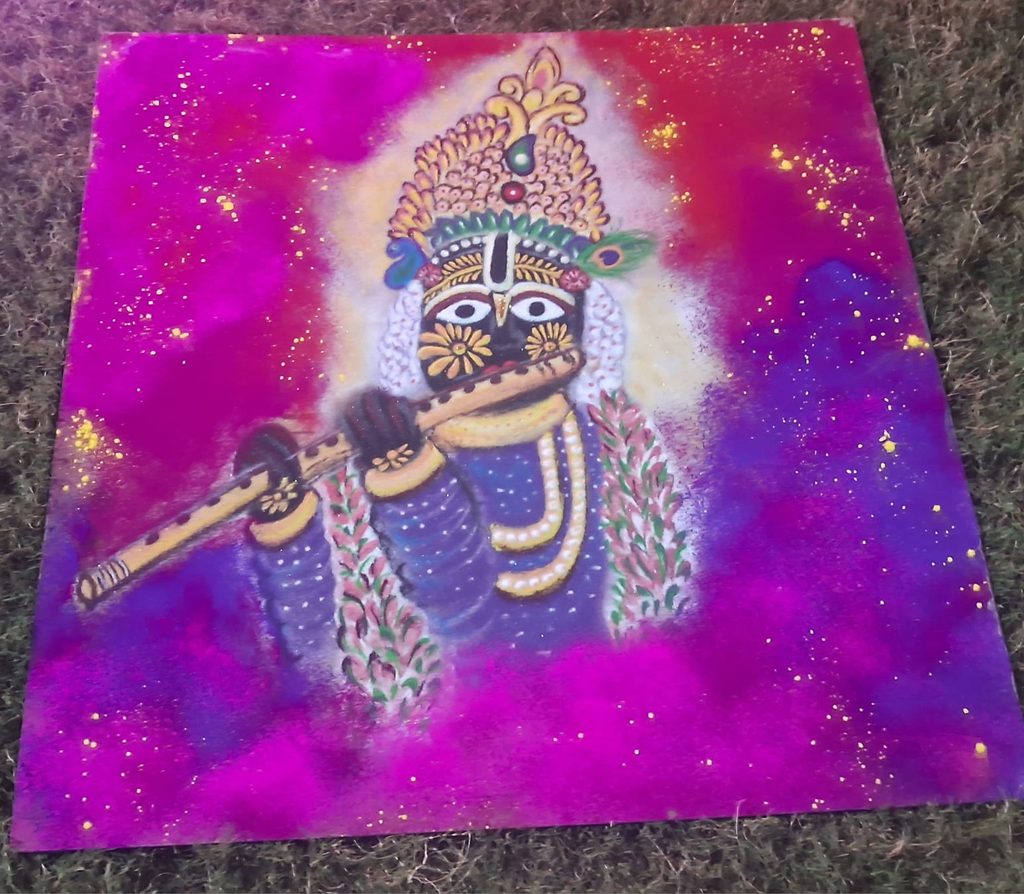
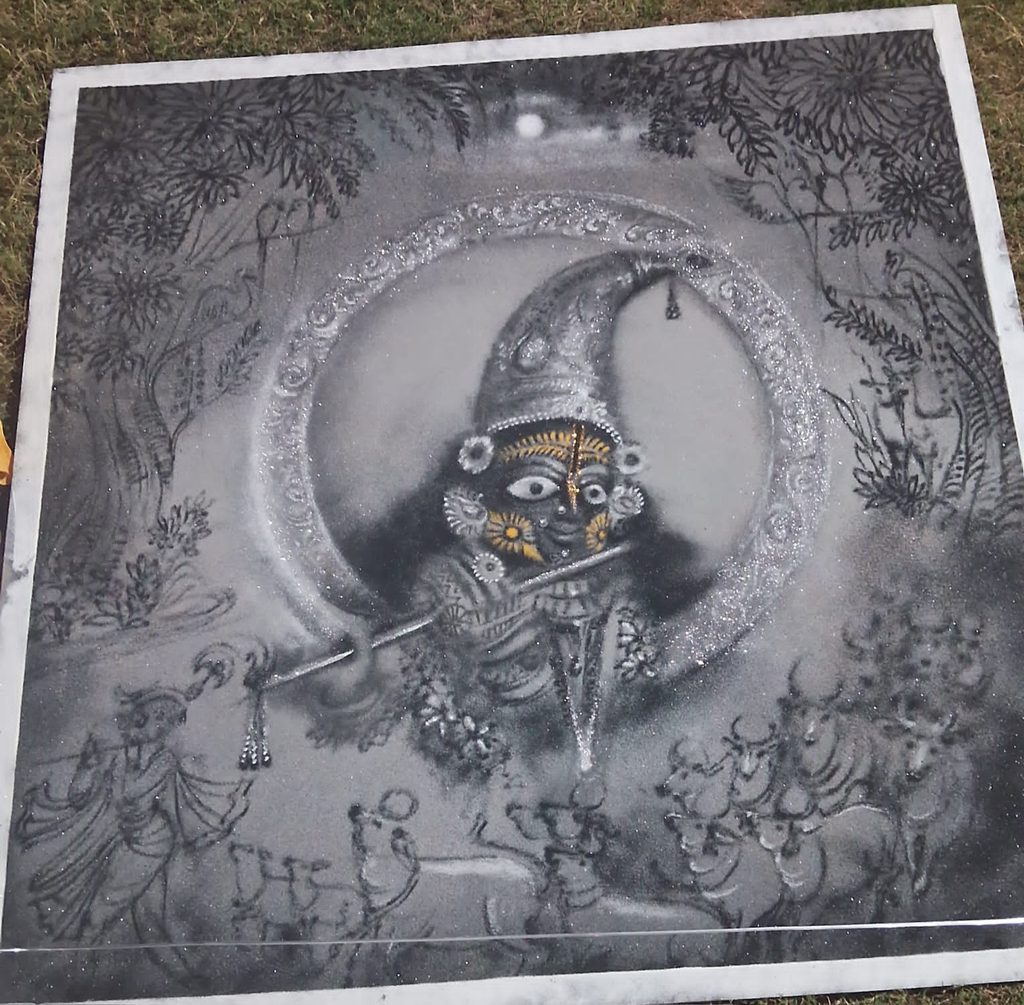
10th October, 2026 (Vrindavan):The tenth Brahmakund Saanjhi Mela, organised at the Brahmakund in Vrindavan, witnessed a vibrant confluence of traditional Saanjhi art, devotional expression and young artistic talent. Dedicated this year toThakur Shri Radha Govind Dev Ji, the festival introduced a distinctive artistic innovation by bringing the history and sacred imagery of Vrindavan’s revered deity into the traditional art form of Saanjhi.
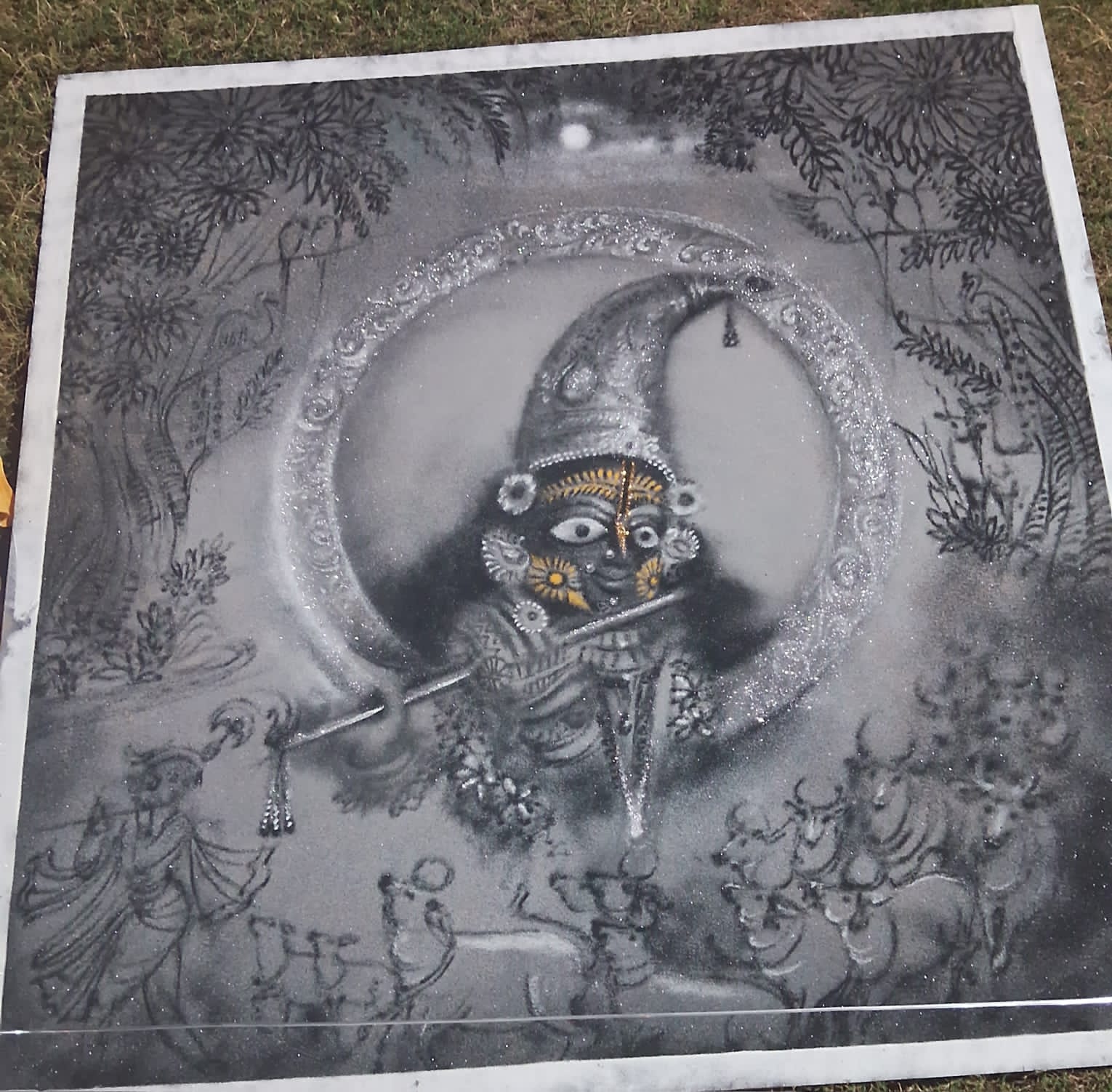
The artists created a remarkable depiction of Shri Govinda Dev Ji and His historic temple using dry colours and traditional stencils, known as khakas. The artwork was presented on an octagonal Saanjhi platform, offering a unique visual tribute to one of Vrindavan’s most significant deities and its architectural heritage.
The initiative reflects a thoughtful approach to keeping Vrindavan’s traditional temple art relevant by connecting it with the town’s ancient temples, sacred personalities and devotional traditions.
Last year, the festival was dedicated to Thakur Shri Banke Bihari Ji Maharaj. The practice of dedicating each edition to a prominent deity of Vrindavan’s ancient temples is emerging as a distinctive feature of the mela, giving the traditional art form a new thematic dimension.
A new chapter in Vrindavani Saanjhi
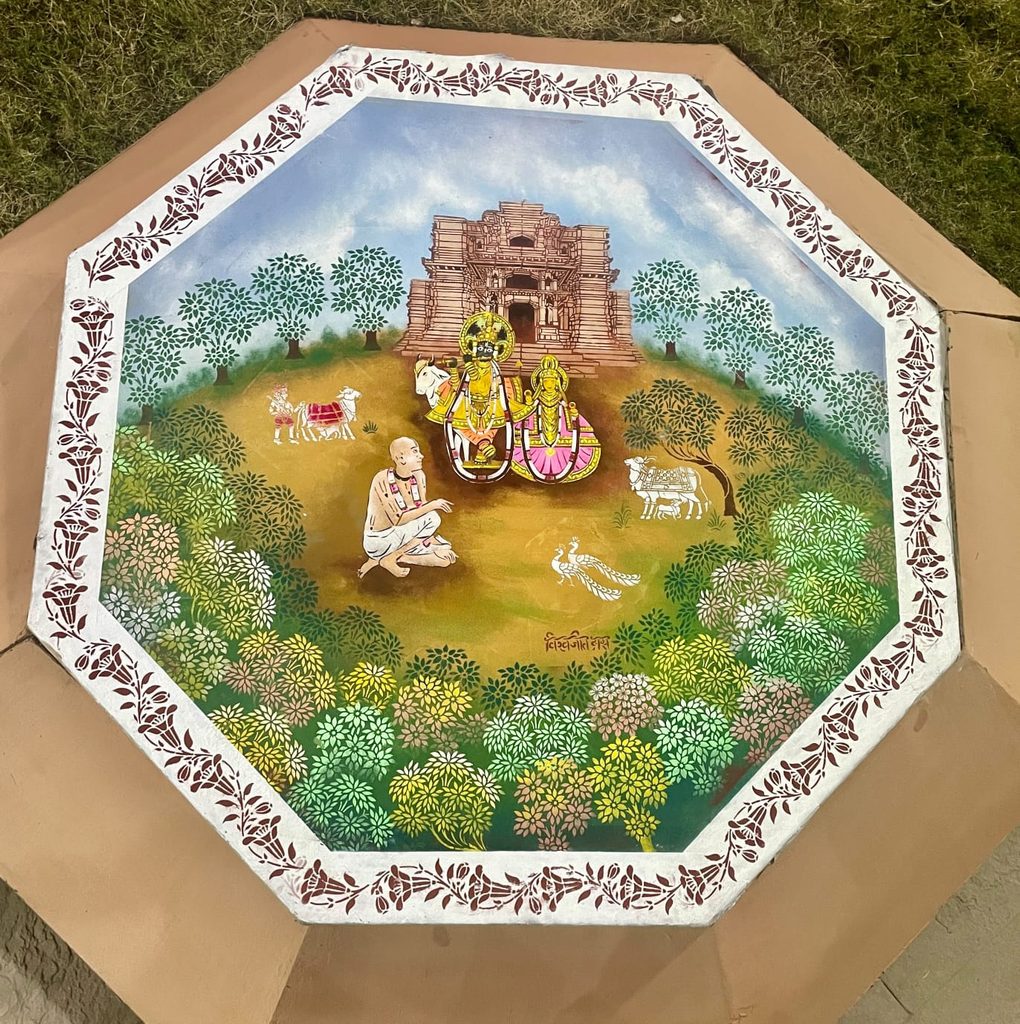
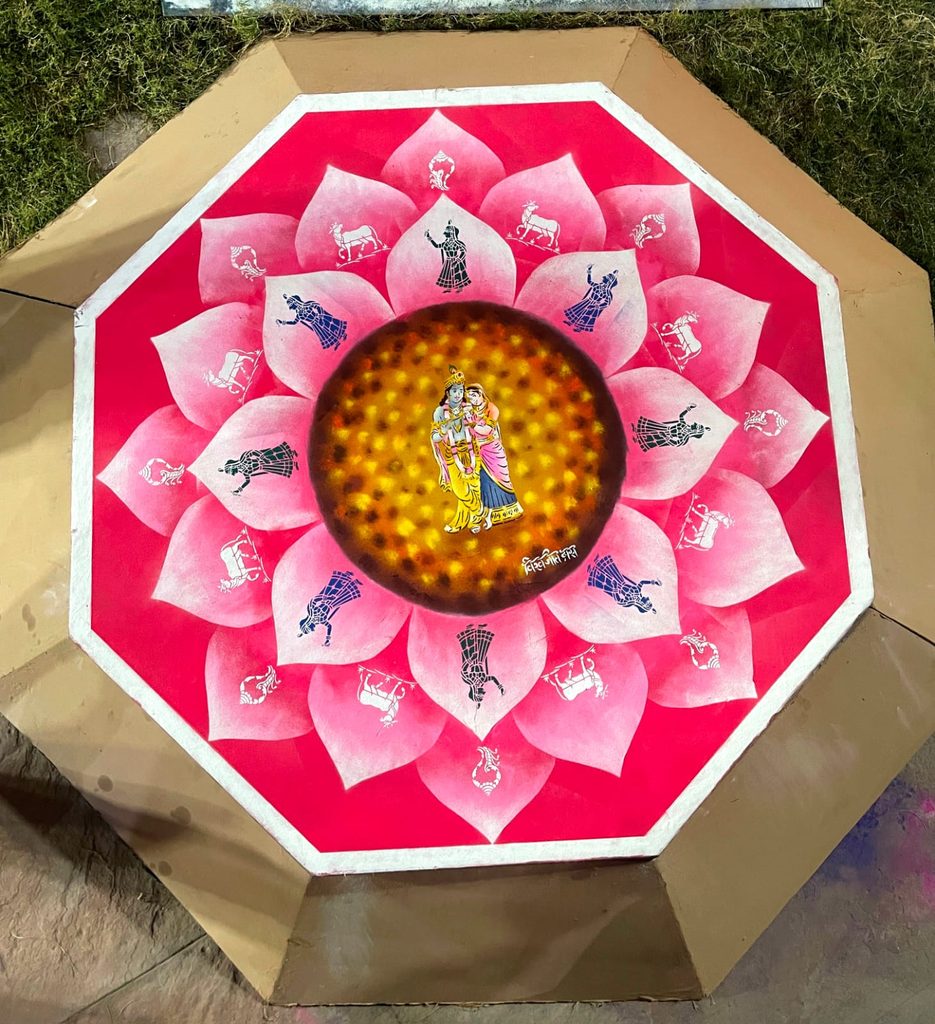
The portrayal of Shri Govinda Dev Ji marked an important creative experiment in Vrindavani Saanjhi. Rather than limiting the compositions to familiar depictions of Radha-Krishna’s pastimes, the artist incorporated the historical identity of a revered deity and the architectural grandeur of His temple into the intricate geometric designs of the traditional art form.
According to Braj tradition, the original deity of Shri Govind Dev Ji was established by Vajranabha, the great-grandson of Krishna. Centuries later, the deity was rediscovered by Shri Rupa Goswami at the ancient Gauma Tila (mound) in Vrindavan during the sixteenth century. The magnificent temple subsequently built by Raja Man Singh of Amber became one of the most celebrated monuments of Vrindavan.
By reproducing the deity and His temple through the delicate arrangement of colours and stencils, the artists transformed the Saanjhi platform into a visual narrative of Braj’s religious and architectural history.
The name Govind itself carries profound devotional significance. According to the traditional account of Govardhan Leela; Shri Krishna protected the people of Braj and their cattle by lifting Govardhan Hill and humbled Indra’s pride. The celestial cow Kamadhenu performed His ceremonial bathing. Lord Krishna was then glorified as Govinda, the protector of cows and the people of Braj.
Such artistic innovations can help preserve Saanjhi as a living tradition, allowing it to evolve creatively while retaining its devotional foundations.
Children discover the beauty of a traditional art form
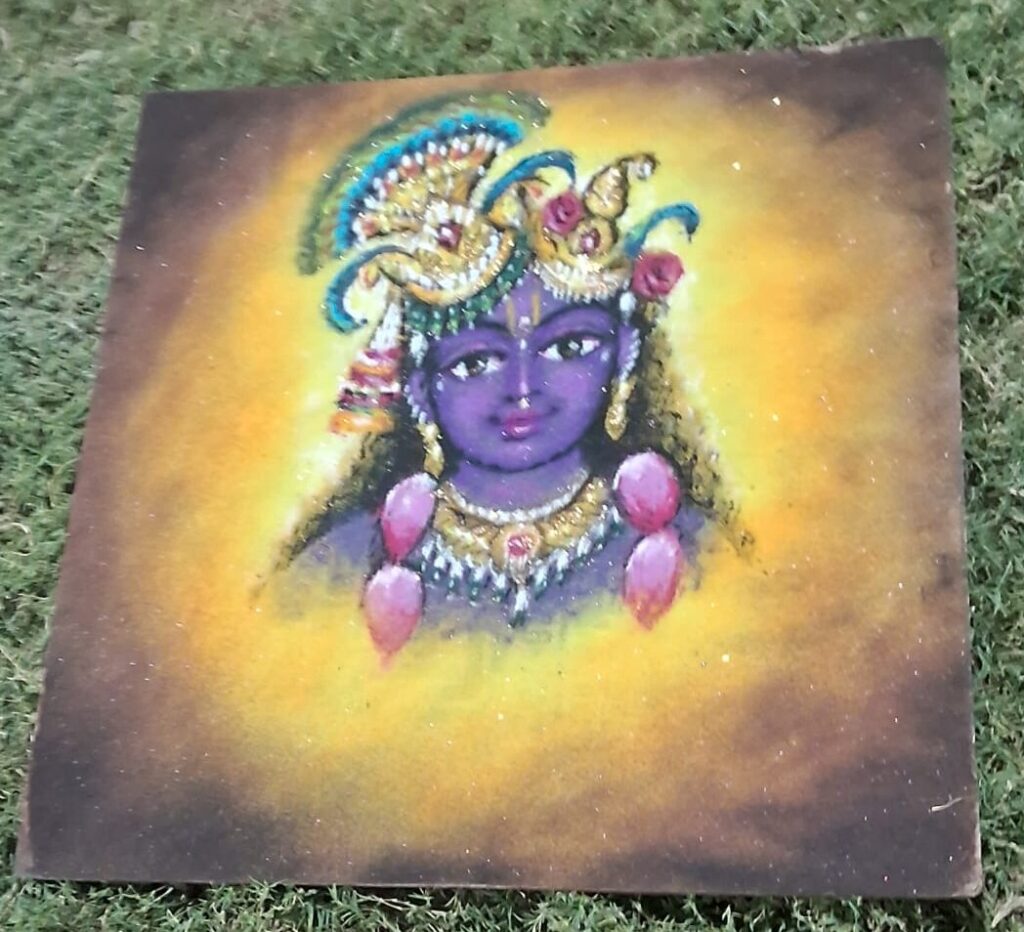
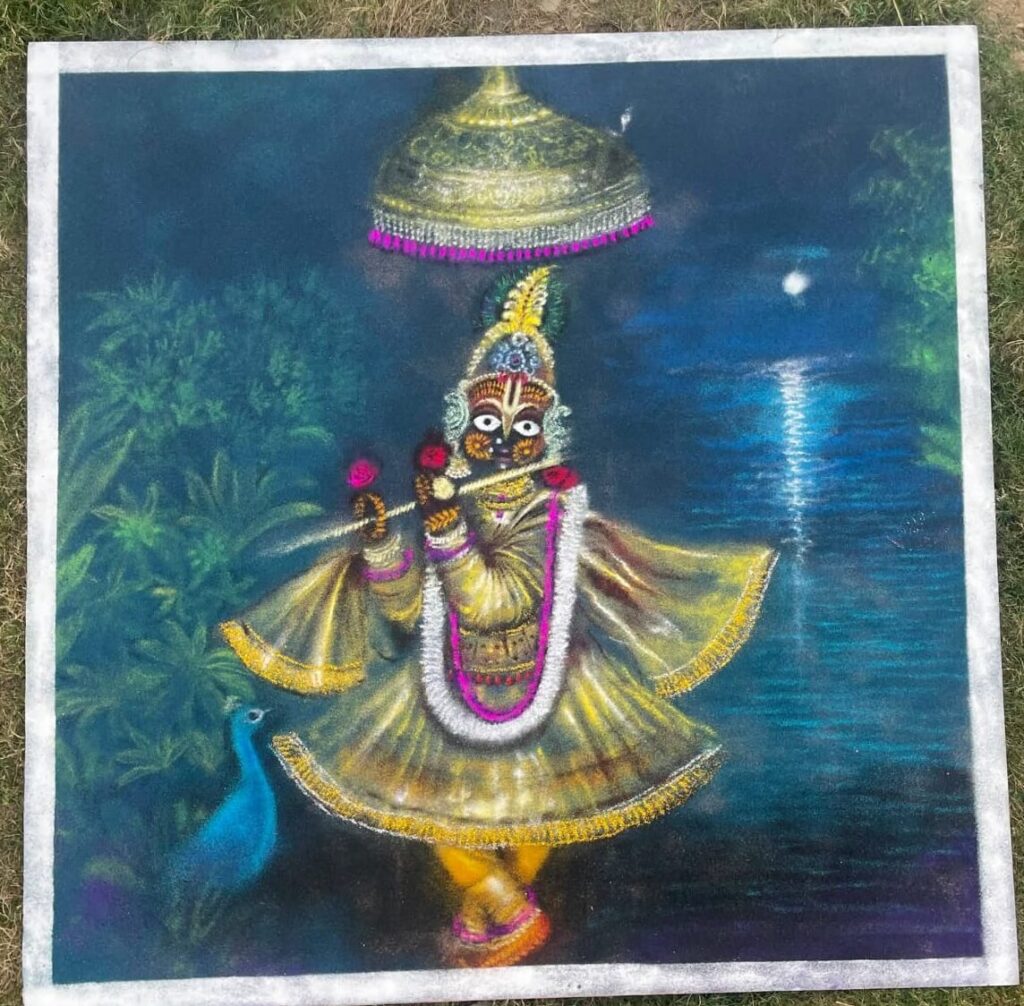
The ‘mela’ also featured a children’s Saanjhi competition in which students from various schools participated enthusiastically. The young participants demonstrated their imagination and artistic skills by creating colourful and intricate compositions inspired by the traditional art form.
The competition provided an opportunity for children to experience the techniques and aesthetic principles of Saanjhi firsthand. Their participation also highlighted the importance of introducing traditional arts to younger generations at a time when many indigenous artistic practices face the challenge of declining public familiarity.
The cultural evenings added further vibrancy to the event, with students presenting solo and group dances, Kathak and other performances. The audience applauded the young performers, making the evening a celebration of both artistic heritage and emerging talent.
Addressing the gathering, Vineet Narain, chairman of The Braj Foundation, said that Saanjhi represents a distinctive folk and temple art tradition of Braj, and its preservation is the responsibility of society as a whole, not merely that of practising artists. Connecting children with traditional art forms, he observed, is an important way of transmitting cultural heritage to future generations.
Laxmi Narayan Tiwari, secretary of the Braj Sanskriti Shodh Sansthan, described Saanjhi as much more than an artwork created with flowers, leaves or colours. It embodies Braj’s devotional sensibility, aesthetic traditions and cultural life. The Brahmakund Saanjhi Mela, he said, seeks to provide this distinctive art with a wider platform and reconnect people with a tradition that has received diminishing public attention.
Gopal Sharan Sharma, publication officer of the institute, emphasised the remarkable synthesis of art, devotion and folk life in Braj’s Saanjhi tradition. The enthusiastic participation of children, he noted, demonstrates the possibilities of sustaining cultural heritage when the younger generation is given opportunities to learn and participate.
Maharaja Nagari Das and the forgotten history of Brahmakund
The historical significance of the Brahmakund Saanjhi Mela extends far beyond its present-day celebrations. Its origins are associated with Maharaja Sawant Singh, popularly known as Nagari Das, the eighteenth-century ruler of Kishangarh, Krishna devotee, Braj Bhasha poet and patron of the arts.
Sawant Singh is remembered for his contributions to devotional poetry and painting. His court played an important role in the flourishing of the celebrated Kishangarh miniature painting tradition. A deeply devoted Krishna bhakta, he eventually left his royal life and came to Vrindavan around 1753, where he spent the remainder of his life with Bani Thani, his companion and celebrated muse.
The Nagari Das enclosure near the Yamuna in Vrindavan preserves the memory of this artistic and devotional association, including the samadhis of Nagari Das and Bani Thani.
Historical accounts preserved by the Braj Sanskriti Shodh Sansthan suggest that Nagari Das initiated grand Saanjhi festivities in the open grounds of Brahmakund, taking the tradition beyond the confines of individual temples. He also composed a dramatic dialogue titled Saanjhi Phool Beenan Samay Samvad, based on the floral-gathering pastime associated with Radha and Krishna, which was staged at Brahmakund.
These gatherings brought together Saanjhi artists, Raslila performers, singers and poets, creating a flourishing cultural environment. Court painters also produced works on Saanjhi Leela inspired by the poetry of Nagari Das.
A significant historical reference appears in Vrindavan Dhamanuragavali, a work attributed to poet Gopal Rai and preserved in the institute’s collection. The text describes the five-day Saanjhi festivities at Brahmakund, referring to the gathering of artists and poets and the recitation of verses celebrating the divine couple.
Another reference appears in Goswami Sundar Lal’s Brajyatra, written in Vikram Samvat 1906, which describes Brahmakund as a place associated with Radha’s Saanjhi pastime with her companions and her dialogue with Krishna.
The mela continued to flourish into the nineteenth century but eventually disappeared. One of its last known historical references is found in F. S. Growse’s 1883 book Mathura: A District Memoir, which lists festivals and fairs celebrated in Vrindavan.
With the passage of time, Brahmakund itself fell into neglect and deteriorated into a neglected site. Its restoration and the revival of the Saanjhi Mela have since helped reconnect the sacred site with its historical and cultural identity.
Restoration of Brahmakund and revival of the mela.
The restoration of Brahmakund in 2009 by The Braj Foundation marked an important step towards reclaiming the historic site. In 2015, The Braj Foundation and Braj Sanskriti Shodh Sansthan jointly revived the long-forgotten Saanjhi Mela.
Since its revival, the festival has provided a platform for leading Saanjhi artists from Braj, performances of Saanjhi Leela, devotional poetry and singing, children’s competitions and academic exhibitions devoted to the art form.
The mela has steadily regained recognition as a cultural event that brings together practitioners, scholars, devotees, students and art enthusiasts. Its growing artistic scope also reflects the potential of heritage restoration to revive not just a physical monument but the traditions and community activities historically associated with it.
As part of its efforts to honour the tradition’s historical figures, the Braj Sanskriti Shodh Sansthan also creates Saanjhi compositions at the samadhi complex of Nagari Das and Bani Thani in Vrindavan, paying tribute to their contributions to devotional literature and art.
The tenth edition of the Brahmakund Saanjhi Mela illustrates how a traditional art form can remain alive through a combination of historical research, artistic experimentation, community participation and cultural education.
By dedicating this year’s festival to Shri Radha Govind Dev Ji and encouraging children to participate in Saanjhi-making, the organisers have brought together Vrindavan’s sacred history and its emerging generation of artists. The effort reinforces the idea that preserving Braj’s heritage requires more than remembering its past; it requires creating opportunities for that heritage to be practised, experienced and renewed in the present.
Support Vrindavan Today Help us preserve the rich spiritual, cultural and environmental heritage of Braj. Your generous contribution will strengthen our efforts to document Vrindavan’s timeless traditions, protect its sacred heritage and raise a voice for the conservation of Braj. Every donation, big or small, helps us continue this mission. Donate today and become a part of our journey to preserve the soul of Braj. You can sponsor articles also. Donation made to Vrindavan Today is tax exempt u/s 80 G of the IT act. You can also help us by placing order of an advertisement of your product, which we will publish here in this site. Email us on: [email protected] or whatsapp us on 7456930889