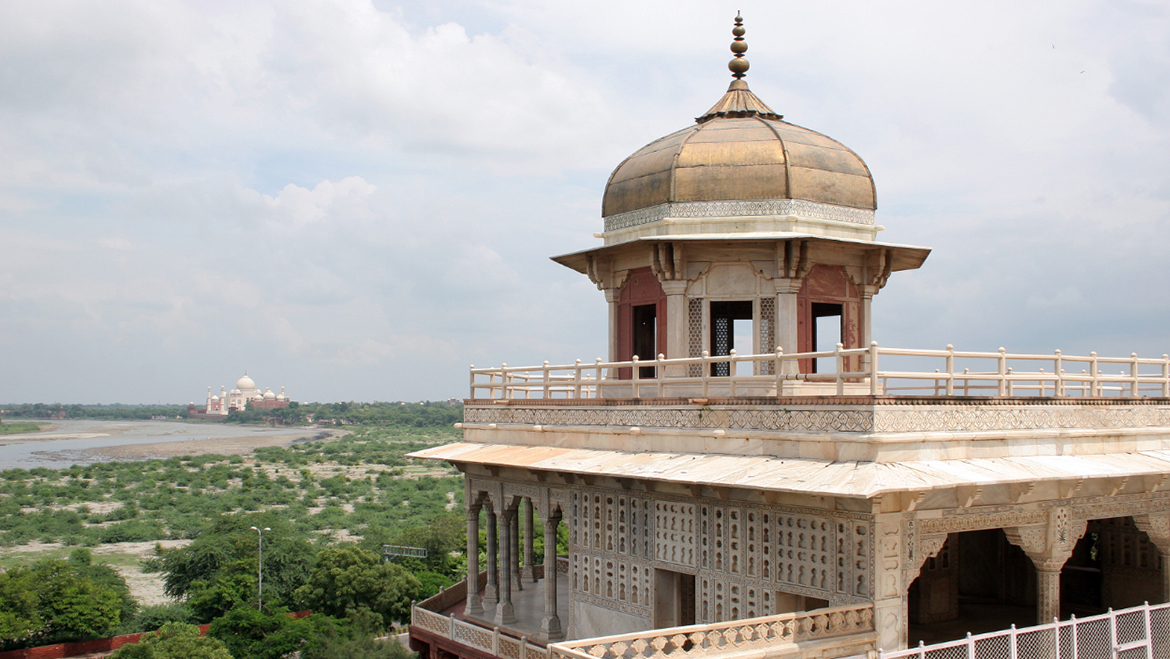
What happens when history dies quietly, brick by brick, arch by arch, and no one is watching?
By Brij Khandelwal
Vrindavan Today | Bureau Report
24 March 2026 Agra: Agra, the city of the Taj Mahal. The postcard of India. The pride of tourism brochures. But step away from the polished marble of the Taj Mahal, and another story emerges, bleak, broken, and buried under layers of neglect.
A story of forgotten monuments. Of silent ruins. Of a heritage that is not just fading, but being allowed to disappear.
This week, the Allahabad High Court sounded a sharp alarm. Taking cognisance of the deteriorating condition of heritage structures across Uttar Pradesh, including Agra, Jhansi, Vrindavan, Lucknow, and Hastinapur, the court issued notices to the Central and State governments. The directive was unequivocal: explain the systemic neglect within eight weeks.
For residents and visitors navigating Agra’s lesser-known lanes, this crisis feels neither sudden nor surprising. Beyond the majestic Agra Fort and the red-sandstone splendour of Fatehpur Sikri, both UNESCO World Heritage Sites, hundreds of smaller monuments stand abandoned. Cracked domes sag under monsoon rains. Weed-choked courtyards swallow pathways. Fading frescoes whisper tales no one stops to hear. No guards patrol. No interpretive signage exists. No conservation plans breathe life back into them. Dara Shikoh’s library, Fatehpur Sikri rock paintings, are examples of official apathy.
A public interest litigation filed by heritage activist and lawyer Akash Vashishtha has exposed the staggering scale. According to court submissions, Uttar Pradesh harbours over 5,400 documented heritage structures, from Mughal pavilions to ancient temples and colonial-era havelis. Yet only 421 enjoy any official protection, leaving nearly 5,000 vulnerable to decay, illegal encroachments, and demolition. The Archaeological Survey of India (ASI) Agra Circle, responsible for western Uttar Pradesh, oversees 265 centrally protected monuments. Shockingly, not one has fully compliant heritage bye-laws in place, 15 years after the 2010 amendment to the Ancient Monuments and Archaeological Sites and Remains Act mandated their preparation.
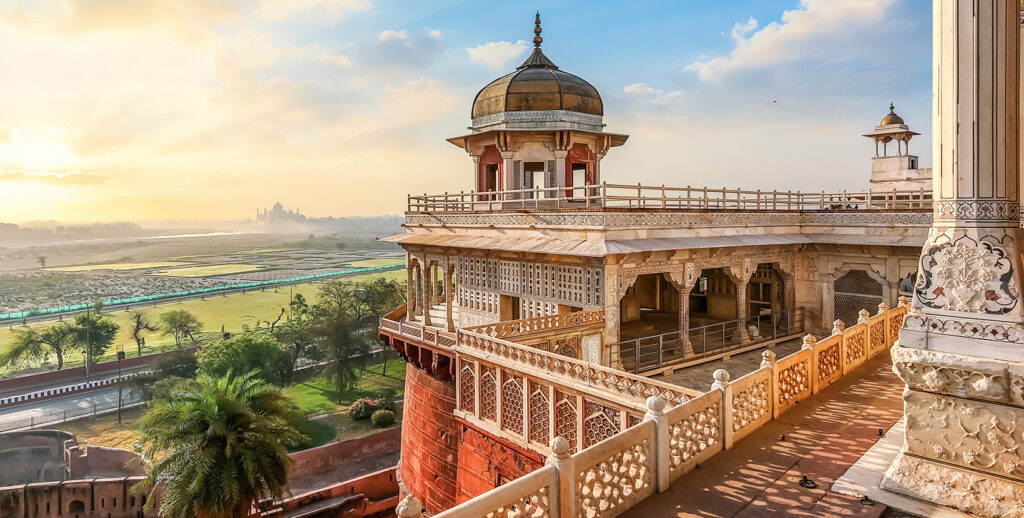
Rules gather dust in files. Action remains elusive.
Encroachments advance relentlessly. Illegal constructions sprout brazenly inside regulated zones. Yet, from September 2023 to April 2025, ASI Agra Circle recorded zero new offences, despite photographic evidence of large-scale violations visible on the ground. Is no crime occurring? Or is enforcement simply absent?
Legal experts describe this as more than negligence; it constitutes a clear breach of statutory duty. The Ancient Monuments Act and subsequent regulations explicitly require proactive protection, conservation, and zoning. Enforcement, however, stays fragmented, understaffed, and reactive. The ASI’s limited resources, stretched across thousands of sites nationwide, leave field officers overwhelmed. Pollution from the Yamuna, rising groundwater, and climate-induced flooding accelerate structural damage that paperwork cannot halt.
The tragedy intensifies beyond official lists. Ancient temples in Vrindavan, centuries-old havelis lining Agra’s alleys, forgotten ghats along the Yamuna, and caravanserais that once welcomed Silk Road traders, all exceed 100 years in age yet fall outside protection. Many remain undocumented. In Vrindavan alone, the petition urges safeguarding 48 historic ghats and numerous sacred kunds in the Braj region, once pulsing with devotional life, now eroded by neglect and urban sprawl.
Along Agra’s Yamuna banks, parallel stories unfold. Structures that once defined the river’s sacred geography now survive as skeletal remains, swallowed by settlements or erased entirely. “Out of sight, out of mind” appears to guide policy.
The court has demanded responses from the Ministry of Culture, National Monuments Authority, and Uttar Pradesh government. The petition calls for transformative reforms: a comprehensive statewide inventory of all heritage assets, immediate drafting of mandatory bye-laws for every protected site, rigorous enforcement mechanisms, dedicated conservation staffing, and the establishment of a Heritage Protection and Development Board to coordinate efforts.
Perspective reveals deeper stakes. Agra’s tourism economy revolves around the Taj Mahal, drawing over eight million visitors annually and generating substantial revenue. Yet this singular focus starves lesser sites of attention and funds. Protected heritage elsewhere, think Rajasthan’s robust community-led initiatives or Europe’s integrated conservation models, demonstrates how modest investment yields dividends: local jobs in guiding, restoration crafts, and eco-tourism. Uttar Pradesh, cradle of Mughal, Hindu, and Buddhist legacies, risks cultural amnesia if thousands of monuments vanish. Each lost arch erases collective memory; every encroached courtyard severs living links to identity.
Heritage once destroyed never returns. Every collapsed dome is a chapter erased from India’s story. Every silenced courtyard diminishes the nation’s soul.
Agra is far more than the Taj. Its essence resides in unnamed tombs, neglected gardens, and crumbling gateways quietly abandoned by history. Unless apathy yields to urgent, coordinated action, the city risks becoming a museum of one iconic monument, ringed by ruins that testify to collective indifference. The High Court’s intervention offers hope, but only sustained political will and public pressure can translate notices into preservation. The clock is ticking, not in centuries, but in seasons.