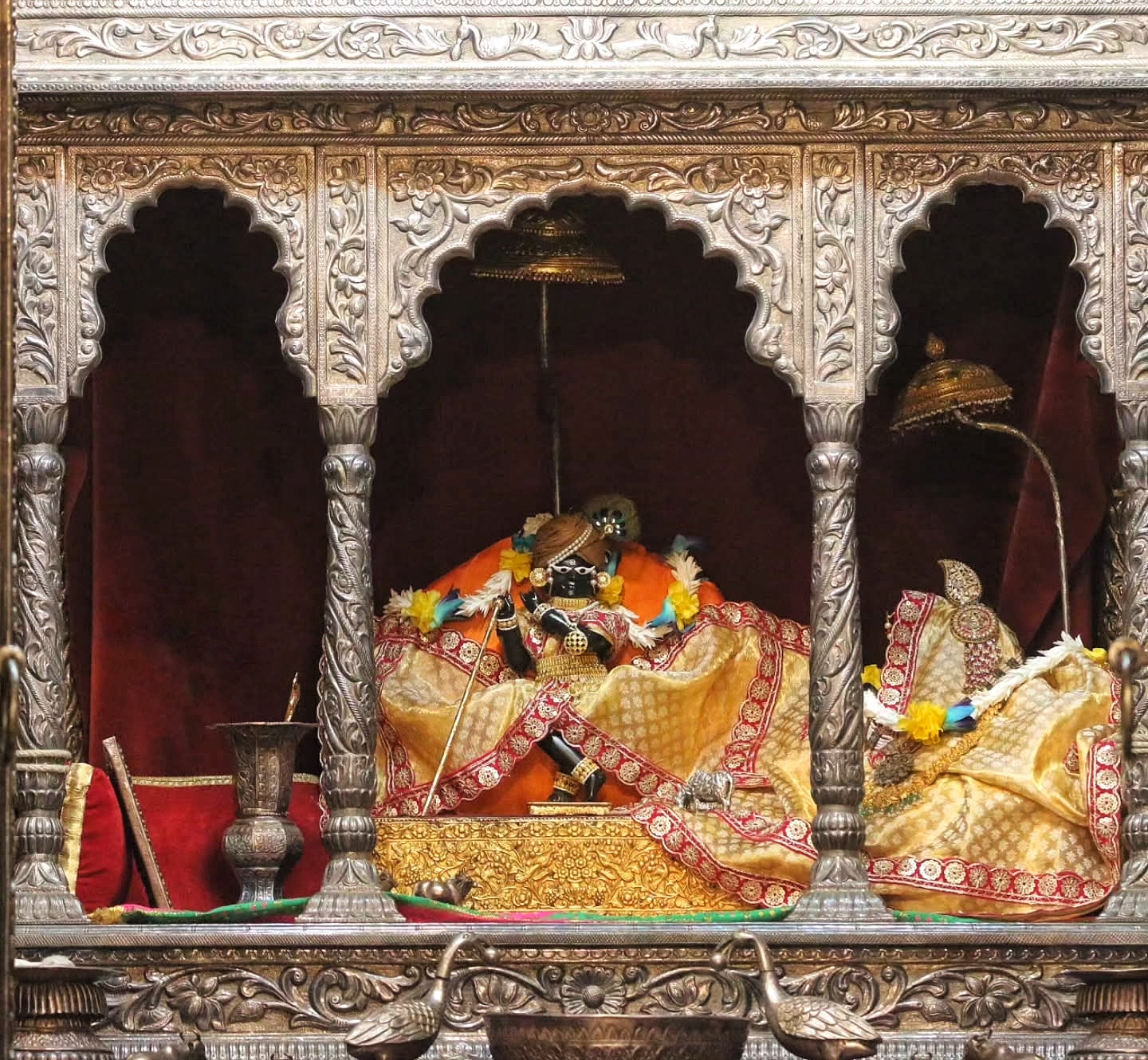
An enchanting Diwali pastime of Lord Krishna, celebrating the joy of sharing, the spirit of community and the divine sweetness of Braj
Vrindavan Today | Bureau Report
Diwali, 8th November, 2026 (Vrindavan): Among the many enchanting devotional traditions associated with Diwali in Braj, the Hāṭrī Manorath holds a special place in the devotional practices of the Pushtimarg tradition. It recreates a delightful childhood pastime of Shri Krishna, in which the young Lord becomes a merchant, setting up a magnificent marketplace and inviting the gopis of Braj to enjoy the pleasures of shopping, playful bargaining and divine interaction.
In Braj, the word Hāṭ refers to a marketplace, while Hāṭrī denotes a shop or stall. This manorath is rooted in the tradition of Krishna’s childhood pastimes, as understood in the devotional imagination of Pushtimarg. It is traditionally observed in Pushtimargiya havelis from Ashwin Krishna Ekadashi until Ashwin Amavasya, the day of Diwali.
Krishna’s Vision of a Self-Reliant Village
According to the devotional narrative, on the occasion of Diwali, Krishna once suggested to His cowherd friends that instead of travelling all the way to Mathura to purchase festive necessities, the people of Nandgaon should establish their own marketplace within the village.
This would ensure that the money spent by the villagers remained within their own community, making Nandgaon economically self-reliant.
The idea, expressed through Krishna’s playful childhood wisdom, carries a remarkable contemporary resonance. The concept of a self-sufficient village, local enterprise and strengthening the village economy, which is widely discussed today, finds a beautiful expression in this divine pastime.
Shri Krishna’s proposal was not merely about establishing a marketplace; it was also about bringing the community together in an atmosphere of celebration, exchange and shared happiness.
A Divine Marketplace at the Foothills of Govardhan
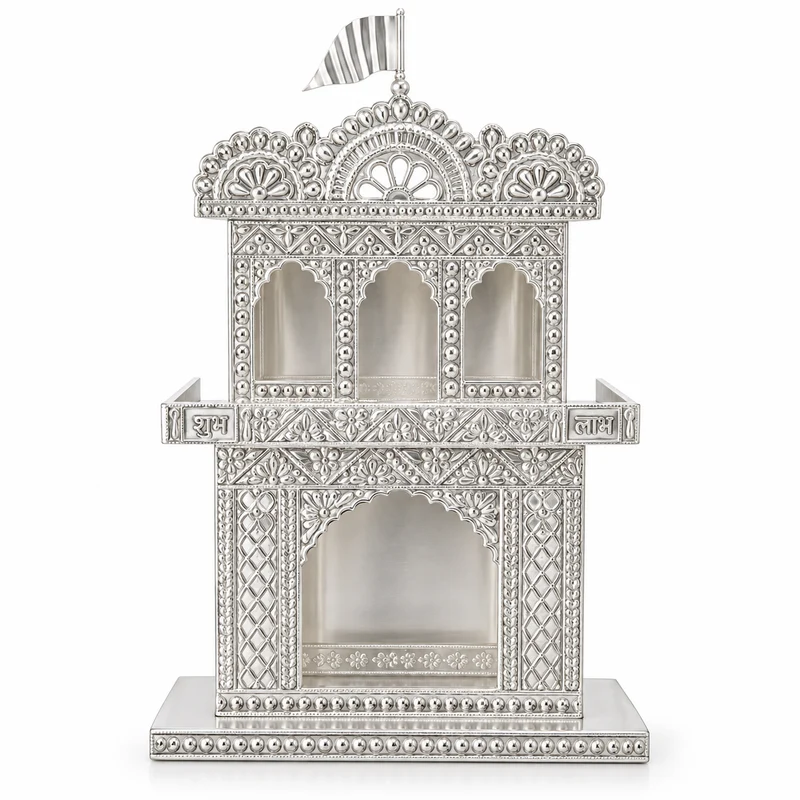
The Hāṭrī Manorath recreates the enchanting scene of a marketplace established at the foothills of Govardhan on the night of Diwali. Shri Krishna invites His friends to bring beautiful things from their homes, including sweets, savouries, fruits, flowers, toys and other delightful offerings, and arrange their own stalls. The gopis, in turn, would visit the marketplace to purchase these items, creating opportunities for playful conversations, affectionate teasing and bargaining with Krishna.
As night descends, the marketplace transforms into a spectacular celebration of divine beauty.
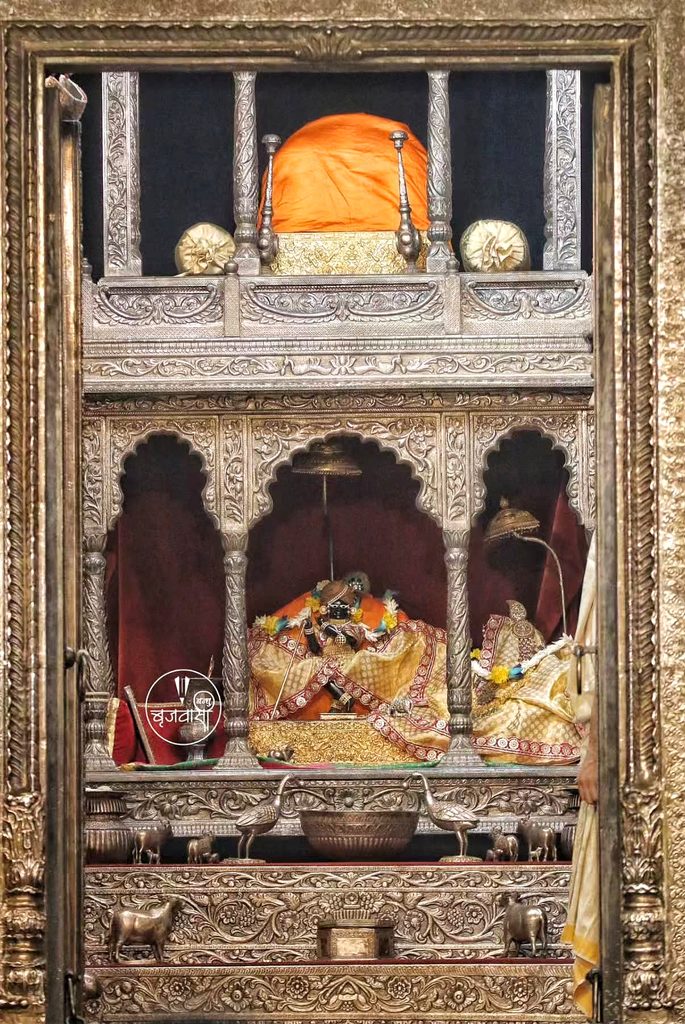
The stalls are adorned with goldwork, exquisite meenakari craftsmanship and precious stones. Pillars studded with jewels support the magnificent structures, while lamps decorated with diamonds, pearls and other precious gems illuminate the surroundings. Rows of ghee lamps and camphor lights add to the splendour, creating an atmosphere of extraordinary radiance.
At the centre of this magnificent Hāṭrī sits Nandalal Shri Krishna, dressed in a beautiful zari-embroidered jama and adorned with precious ornaments. The Lord appears not merely as the beloved son of Nanda Maharaj, but as the charming merchant of this extraordinary divine marketplace.
A Marketplace Filled with Delicacies and Treasures
The stalls are filled with an astonishing variety of goods. Bamboo baskets, large containers and earthen pots are overflowing with delicious sweets, savouries and other delicacies. Fruits and flowers are arranged in beautiful baskets, while perfumes, groceries, garments, jewellery and other articles are displayed in artistic rows.
Krishna personally distributes these items to Shri Radharani and the assembled gopis.
The gopis, including Lalita, Chandravali, Ramavali, Premavali and Vrajmangala, encourage one another to visit the marketplace.
They playfully remark that Nandalal has become a clever businessman. He may charge them an exorbitant price or even cheat them while weighing the goods! Being simple village women, they must be careful not to be deceived by this mischievous merchant.
Yet, their real intention is not simply to purchase anything. They wish to spend time with Krishna, exchange affectionate words with Him and enjoy the sweetness of His company.
The playful bargaining becomes an expression of divine love. Every exchange, every glance and every affectionate remark adds another dimension to the intimate relationship between Krishna and the gopis.
The Kirtan That Celebrates the Hāṭrī Manorath
The devotional sentiment of this pastime is beautifully expressed in a traditional kirtan attributed to the Braj devotional tradition:
Hāṭrī baiṭhe Gopāl,
Ratna jaṛita kī Hāṭrī banāī, hīrā motī param rasāl.
Gopal sits in His marketplace,
A magnificent stall adorned with jewels, diamonds and pearls.
Ḍalā ḍalaiyā aur kulhaiyā, bhar-bhar dhare pakvān rasāl,
Pān phūl sondhe sab bāṇṭata, de-de Nand ke Lāl.
Baskets, containers and earthen pots are filled with delicious delicacies. Nanda’s beloved son distributes fragrant betel leaves and flowers to everyone.
Ramāvalī, Premāvalī, Lalitā, Chandrāvalī, Vrajmaṅgalā bāl,
Chalo sakhī, tahāṅ peṭh lagī hai, bechat hai jahāṅ Gokul Pāl.
Ramavali, Premavali, Lalita, Chandravali and Vrajmangala say to one another: Come, dear friends, let us visit the marketplace where the Lord of Gokul is selling His wares.
Govind Prabhu pīya chitta choryā hai, bandhī prem kī pāl. Govind Prabhu has stolen the hearts of His beloved devotees, binding them in the embrace of divine love.
The Gopis Come to Behold Their Beloved
On the festive night of Diwali, the gopis arrive at Krishna’s Hāṭrī dressed in their finest clothes and ornaments. Outwardly, they come to purchase new things for their homes, but their hearts are drawn towards the enchanting form of Nandalal.
They wish to behold Him to their hearts’ content, engage Him in sweet conversation and enjoy His playful exchanges.
The magnificence of the marketplace is captivating, but nothing compares to the beauty of Shri Krishna Himself. The gopis feel that they could stand there all night simply gazing at Nandakumar without experiencing the slightest fatigue.
In this divine marketplace, buying and selling become secondary. The real treasure is the opportunity to see Krishna, speak with Him and experience His loving presence.
The concluding sentiment of the kirtan captures the essence of this pastime: Krishna steals the hearts of His devotees, drawing them into the eternal bond of prema.
The Deeper Significance of Hāṭrī
The Hāṭrī Manorath is much more than a recreation of an ancient marketplace. It represents the extraordinary sweetness of Krishna’s intimate relationship with the people of Braj.
Here, the Supreme Lord willingly assumes the role of an ordinary village merchant. He invites His devotees into an atmosphere of familiarity, affection and playful interaction. The marketplace becomes a setting where divine love is expressed through everyday activities.
The manorath also reminds us of the spirit of community, local enterprise and self-reliance. Yet, its deepest message lies in the understanding that the greatest wealth of Braj is not its material abundance, but its eternal relationship with Shri Radha and Krishna.
As the lamps of Diwali illuminate the Hāṭrī, the divine marketplace becomes a symbol of the boundless joy of Braj—a place where every transaction is transformed into an exchange of affection, every offering becomes an act of devotion, and every heart ultimately seeks only one priceless treasure: the darshan of Shri Krishna.
Support Vrindavan Today: Help us preserve the rich spiritual, cultural and environmental heritage of Braj. Your generous contribution will strengthen our efforts to document Vrindavan’s timeless traditions, protect its sacred heritage and raise a voice for the conservation of Braj. Every donation, big or small, helps us continue this mission. Donate today and become a part of our journey to preserve the soul of Braj. You can sponsor articles also. Donation made to Vrindavan Today is tax exempt u/s 80 G of the IT act. You can also help us by placing order of an advertisement of your product, which we will publish here in this site. Email us on: [email protected] or whatsapp us on 7456930889