Vrindavan Today | Jagannath Poddar
9th November, 2026, Vrindavan: Govardhan Puja is not merely a religious festival; it is a timeless celebration of nature, ecology and the sacred relationship between human beings and the environment. In the land of Shri Krishna, where every hill, forest, river, tree and living creature is associated with divine pastimes, Govardhan Puja carries a message that is more relevant today than ever before.
Braj is the land where nature itself is worshipped. Its forests, groves, hills, ponds, rivers and sacred trees are not simply geographical features but an inseparable part of its spiritual and cultural identity. Among all the festivals celebrated in this sacred land, Govardhan Puja deserves a particularly important place because it brings together devotion, environmental consciousness and the philosophy of living in harmony with nature.
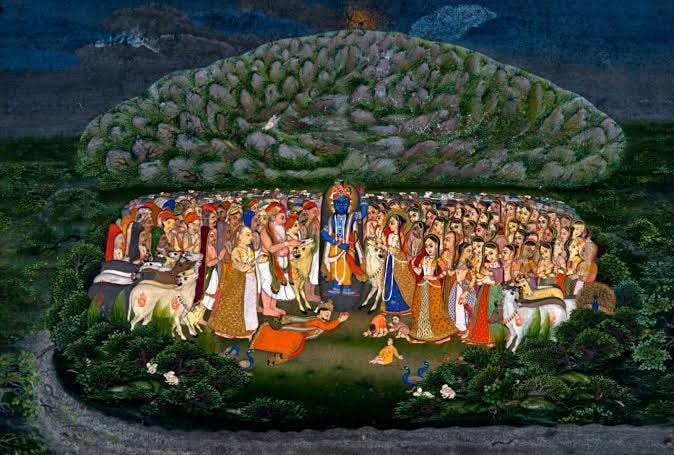
The festival commemorates the divine pastime of Shri Krishna lifting Govardhan Hill to protect the people of Braj from torrential rains sent by Indra. Through this act, Krishna challenged the prevailing practice of worshipping Indra out of fear and reminded the people of the importance of recognising and honouring the natural forces that sustain life. He encouraged the residents of Braj to worship Govardhan Hill, which provided them with pasture, water, vegetation, shelter and nourishment.
This was much more than a divine miracle. It was a profound ecological message. Krishna taught that the elements of nature that sustain our lives deserve our gratitude, protection and reverence. Govardhan represents the entire natural ecosystem that supports human and animal life.
Worshipping Nature, Not Merely a Hill
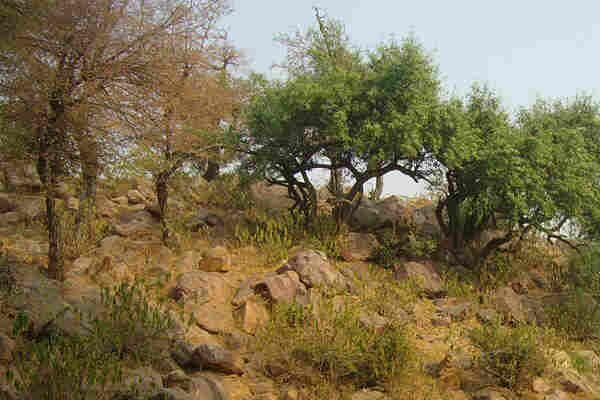
Govardhan is not just a mountain of stone and earth. It symbolises the generosity of nature. Its forests provide shelter to birds and animals, its vegetation sustains cattle, its water bodies support life, and its landscape preserves the ecological balance of the region.
The Govardhan pastime teaches us that human prosperity cannot be separated from the well-being of nature. A society that exploits its natural resources without respecting them eventually puts its own survival at risk.
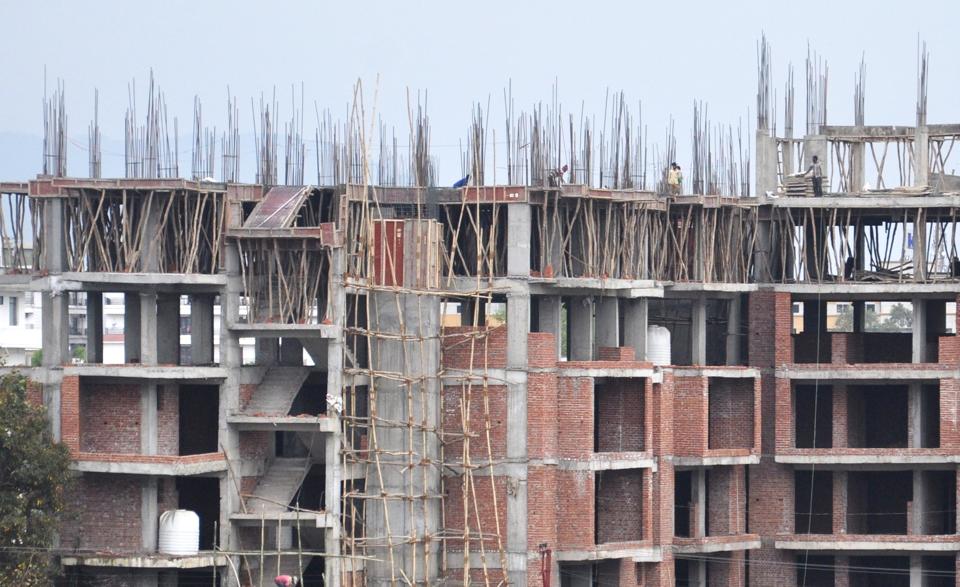
In today’s world, when forests are disappearing, hills are being subjected to construction, water bodies are shrinking, and pollution is threatening the environment, the message of Govardhan Puja becomes especially significant. It reminds us that nature is not a commodity to be exploited but a divine gift to be protected.
Celebration of Equity, inclusiveness, Sharing and Partnership
The story of Govardhan Puja beautifully illustrates the spirit of community partnership, collective participation and social harmony. When Shri Krishna lifted Govardhan Hill to protect the people of Braj, every Brajwasi came forward with a stick to support the mountain. Their contribution may have been symbolic, but it reflected a profound message that everyone has a role to play, and collective effort makes even the impossible possible.
Similarly, during the Annakut celebration, people from every community prepared different food offerings for Shri Krishna. There was no distinction of caste or social status; everyone participated with equal devotion and offered whatever they could. They cooked food under one roof of the Govardhan Hill and offered the Bhog to Shri Krishna. This is the true spirit of Govardhan Puja. It is a celebration of equality, inclusiveness, sharing and partnership. It reminds us that the strength of society lies in bringing everyone together for a common cause.
The Sacred Tradition of Making Govardhan from Cow Dung
One of the most beautiful traditions of Govardhan Puja is the creation of miniature Govardhan Hills using cow dung (gobar). Across Braj, devotees make Govardhan representations in their homes, temples, courtyards and community spaces.
These Govardhan forms are decorated with flowers, leaves, small trees, lamps and other traditional offerings. Devotees perform parikrama around them, offer food and prayers, and celebrate Annakoot by presenting a variety of preparations to Shri Krishna.
The use of cow dung is particularly meaningful. In the traditional rural economy of Braj, cow dung has always been regarded as a valuable natural resource. It is used as organic manure, for preparing traditional fuel, and for maintaining rural homes. It represents the close relationship between the cow, agriculture and the environment.
There is also an important symbolic message in this practice: even something that modern society might dismiss as waste is recognised in traditional wisdom as a resource with value. It reflects the principles of reuse, recycling and a circular rural economy.
The Govardhan made from cow dung is therefore not simply a ritual representation. It is a reminder of an ecological lifestyle rooted in simplicity, sustainability and respect for nature.
Annakoot: Gratitude for Nature’s Abundance

The tradition of Annakoot, meaning a mountain of food, is another important dimension of this celebration. Devotees prepare and offer an enormous variety of food preparations to Shri Krishna, expressing gratitude for the abundance provided by nature.
Food comes from the soil, water, sunlight, forests, agriculture and the hard work of farmers. Annakoot symbolically acknowledges this entire chain of life.
It also reminds us that food should never be taken for granted. The same earth that nourishes us must be protected from chemical degradation, pollution and unsustainable exploitation.
Why Govardhan Puja Should Be the Most Important Festival of Braj
If there is one festival that captures the spiritual, cultural and ecological identity of Braj in its entirety, it is Govardhan Puja.
Braj is not merely a collection of temples and pilgrimage destinations. Its true identity lies in the sacred natural landscape associated with Shri Krishna’s pastimes. Govardhan Hill, Yamuna, the forests of Vrindavan, the sacred kunds and the traditional groves collectively form the living heritage of this region.

Unfortunately, much of this natural heritage is under pressure. Sacred hills face the threat of unregulated construction and commercialisation. Water bodies are losing their traditional character. Trees are disappearing, green spaces are shrinking, and waste and pollution are becoming increasingly visible at important pilgrimage destinations.
In such circumstances, Govardhan Puja should become more than an annual religious observance. It should inspire a collective commitment to protect the natural heritage of Braj.
Bringing Krishna’s Message into Our Daily Lives
The greatest tribute to Shri Krishna on Govardhan Puja would be to follow the message he gave to the people of Braj. Worshipping Govardhan while allowing the actual Govardhan Hill to deteriorate would be a contradiction of the very spirit of the festival.
Similarly, offering food to the Lord while allowing food, water and natural resources to be wasted would miss an important lesson of Annakoot.
Our devotion must extend beyond rituals into our everyday conduct. Protecting a tree, cleaning a kund, preventing pollution, caring for a cow, conserving water and maintaining the sanctity of sacred landscapes are all meaningful expressions of the same reverence that inspires Govardhan Puja.
Let Braj Lead the Way
Braj has the opportunity to present a unique model of faith-led environmental conservation to the world. Its religious institutions, temples, ashrams, local communities, pilgrims and civic authorities can come together to make Govardhan Puja the centrepiece of a regional environmental movement.
Temples could adopt nearby water bodies, communities could undertake cleanliness drives, institutions could promote native tree plantations, and pilgrims could be encouraged to minimise waste. Every year, the festival could become an occasion to review the condition of Braj’s natural heritage and renew commitments towards its protection.
Govardhan Puja is the celebration of a philosophy in which nature is sacred, every element of the ecosystem has value, and human beings are its custodians rather than its masters.
In the land of Shri Krishna, Govardhan Puja should not merely be celebrated as the festival of lifting a mountain. It should be celebrated as the festival of protecting the mountains, forests, rivers, ponds, cows and all forms of life that make Braj what it is.
Perhaps this is the most important message Braj can offer to the world: True worship of Govardhan is not confined to the offerings we make before its representation; it is reflected in the care and protection we extend to Govardhan itself and to the entire natural heritage of Braj.