Krishna, according to the faith of millions, never truly left Braj. Then why has the Yamuna abandoned the ancient ghats of Mathura and Vrindavan?
Vrindavan Today | By Jagannath Poddar
15th May, 2026, Vrindavan: There was a time when the mere mention of the Yamuna evoked devotion. She was worshipped as Papanashini, the destroyer of sins; Mokshadayini, the giver of liberation; and the eternal companion of Shri Krishna in Braj. The sacred geography of Mathura and Vrindavan was not merely built around temples, but around the flowing waters of the Yamuna herself. The river was not a backdrop to Krishna’s pastimes, but was a living participant in them.
Krishna, according to the faith of millions, never truly left Braj. Then why has the Yamuna abandoned the ancient ghats of Mathura and Vrindavan?
This question echoes painfully across the riverbanks today. Over the past few decades, the Yamuna has transformed from a flowing holy river into one of the most polluted rivers in India. Despite thousands of crores spent under river-cleaning schemes and national conservation programs, the river’s condition continues to deteriorate. The tragedy is not only ecological; it is civilizational.
A river is not merely a channel carrying water between two fixed points. A river breathes. It spreads, retreats, floods, nourishes wetlands, replenishes groundwater, supports biodiversity, and shapes entire cultures around it. Its floodplains, wetlands, sandbanks, and catchment areas are not “vacant land” waiting for urban development. They are the living organs of the river itself.
Yet modern development has reduced rivers to engineered corridors.
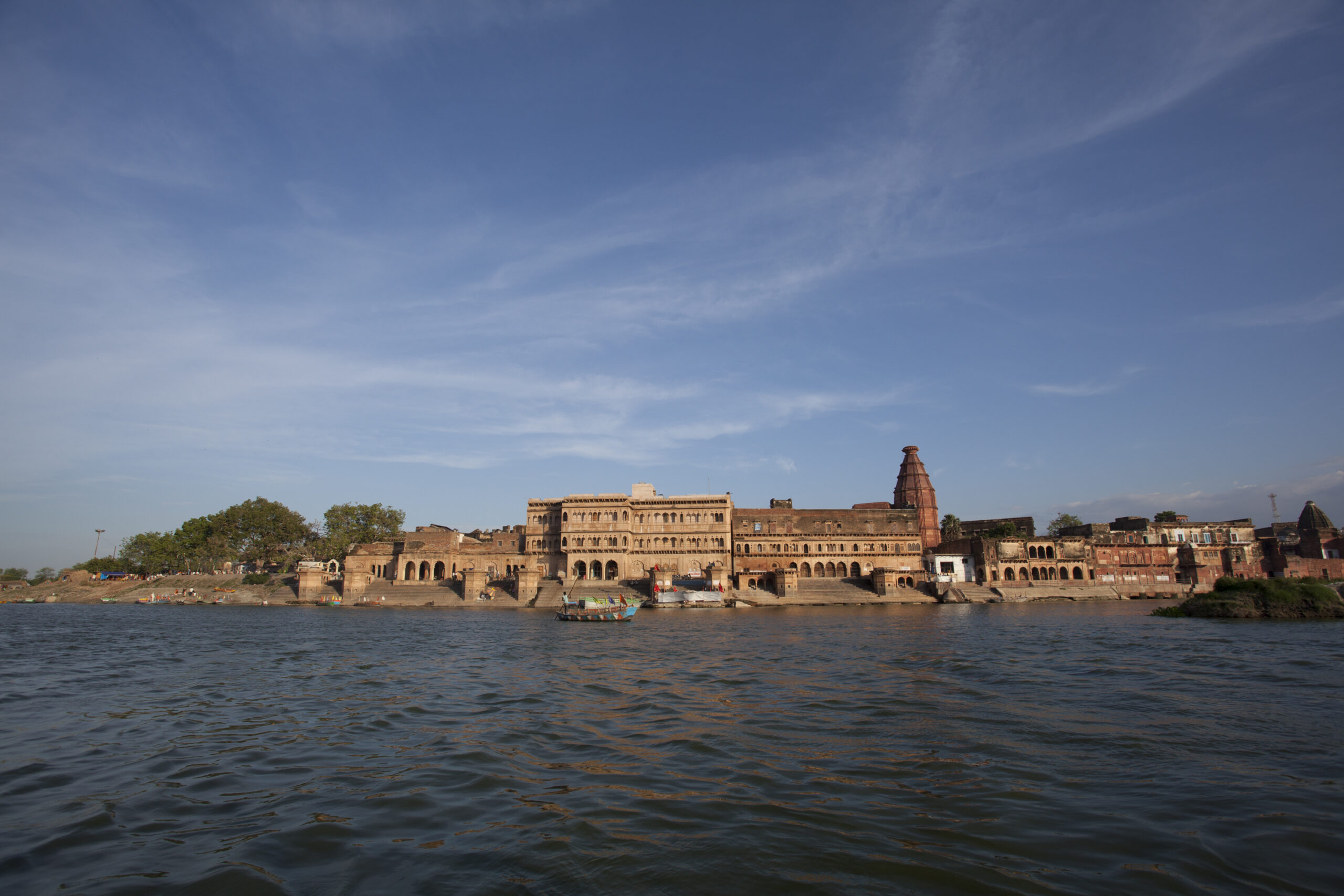
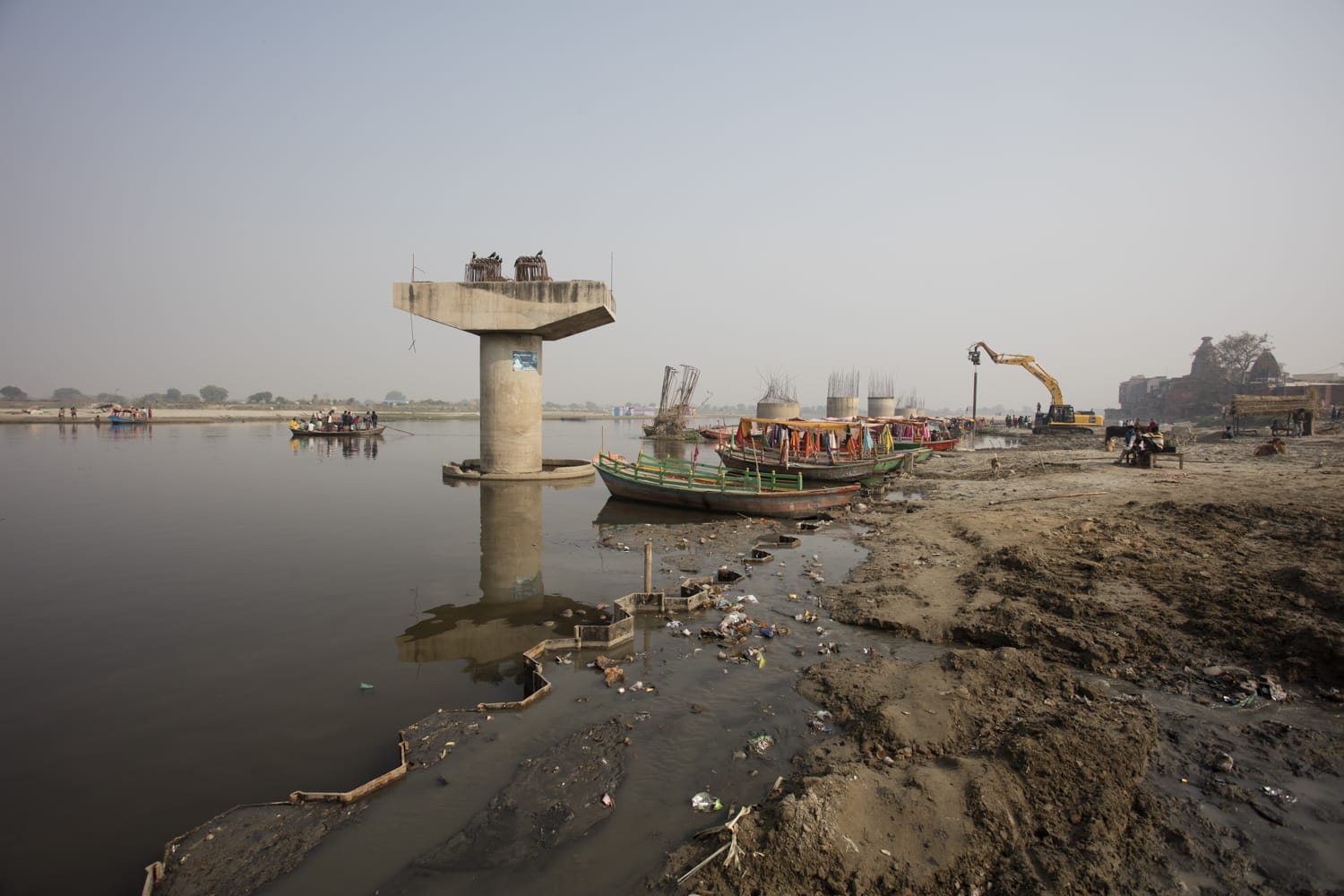
In Vrindavan, the Yamuna once flowed beside the iconic Keshi Ghat, Bhramar Ghat, Cheer Ghat and near Kaliya Dah, where generations remember bathing in relatively clean waters. Elderly residents still recall a time when the river touched the steps of the ancient ghats. Today, the river has shifted nearly a kilometer away in several stretches. The abandoned riverbed and floodplain areas have gradually been occupied, filled, commercialized, and converted into parking spaces and concrete structures.
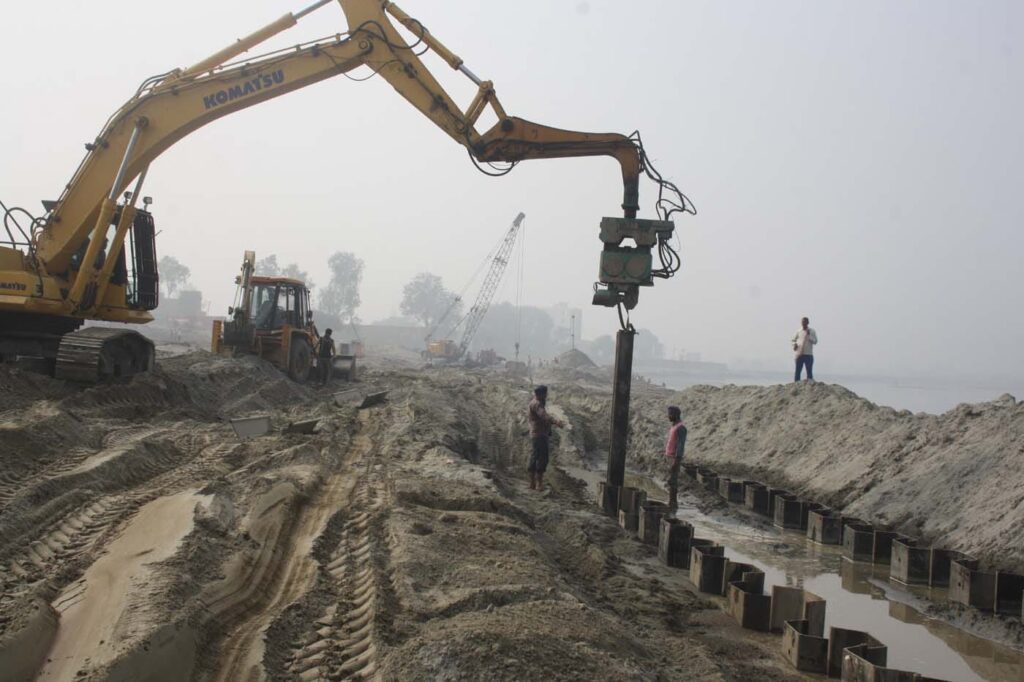
Instead of restoring the river’s natural ecology, new “riverfront development” projects are now being promoted along the Yamuna in Vrindavan. Massive concrete corridors are being constructed parallel to centuries-old ghats, often within the river’s active floodplain and catchment zone. Environmentalists argue that these projects further suffocate the river by shrinking its natural expansion area and disrupting the fragile hydrology of the floodplain.
The irony is painful ! The projects undertaken in the name of saving the Yamuna may ultimately accelerate its destruction.
Across India, riverfront developments are frequently showcased as symbols of urban modernization. But rivers are not ornamental canals. Unlike roads or railways, they cannot survive confined within rigid concrete boundaries. A river’s seasonal flooding is not a defect in need of correction; it is part of its natural life cycle. Once floodplains are buried under concrete, the river loses its ability to recharge groundwater, support vegetation, and sustain aquatic life.
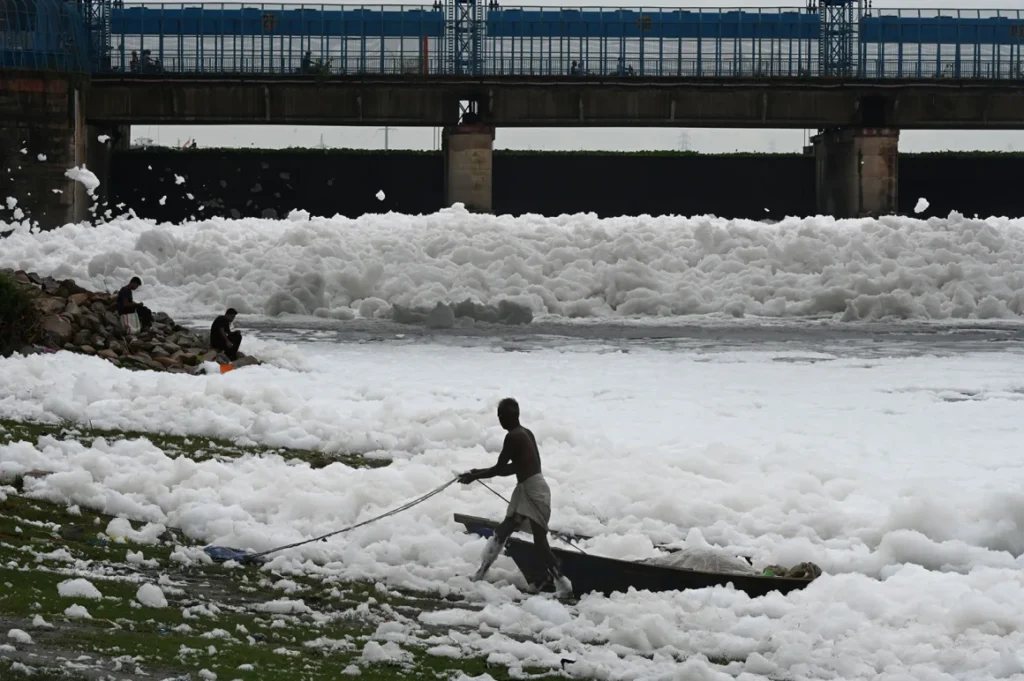
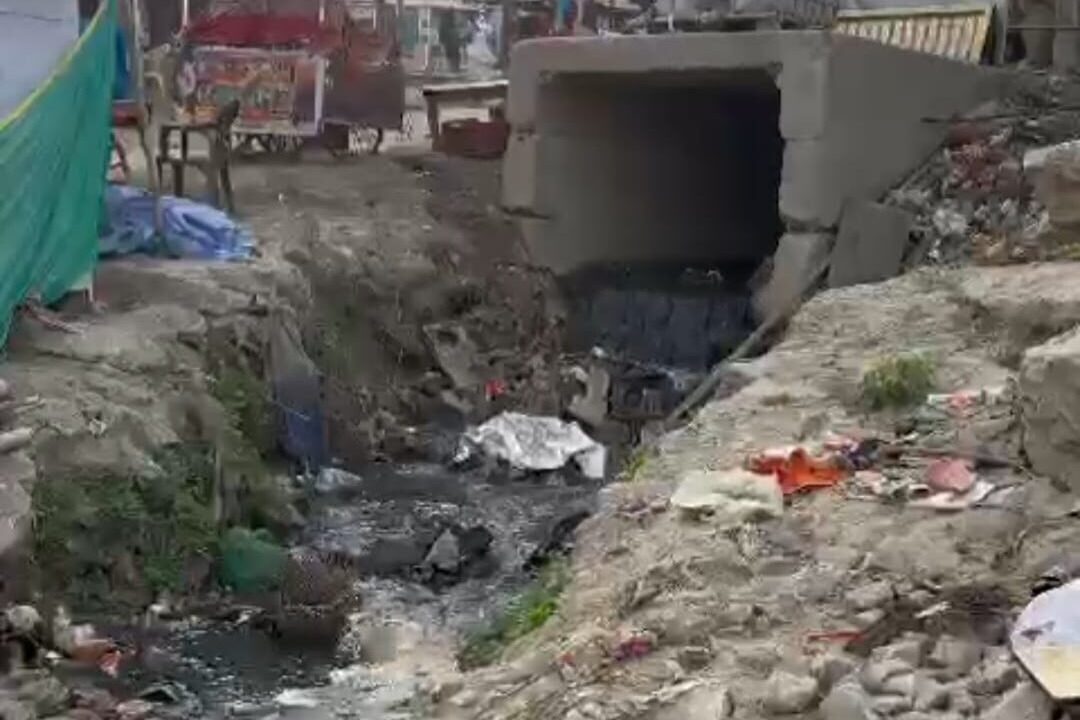
The Yamuna’s pollution statistics reveal the scale of the crisis. Biological Oxygen Demand (BOD) levels have risen dramatically over the years in several stretches of the river. BoD is a key indicator of organic pollution in the waterbodies. In some areas downstream of Delhi, pollution levels have reached catastrophic proportions, making survival difficult even for aquatic organisms. Large volumes of untreated sewage, industrial waste, detergent foam, plastic waste, and toxic runoff continue to enter the river daily.
And yet, in public discourse, the focus often shifts toward beautification rather than restoration.
The ancient ghats of Braj are themselves becoming disconnected relics. They are almost museum pieces separated from the living river by roads, embankments, and artificial infrastructure. In some places, concrete pathways now stand between the Yamuna and the very ghats that were historically built to embrace her waters.
This separation is not merely physical. It reflects a deeper disconnect between society and the ecological understanding of rivers.
The Yamuna is central not only to the spiritual heritage of Braj, but also to the environmental future of northern India. A dying Yamuna means collapsing groundwater levels, declining biodiversity, increasing heat stress, and worsening public health conditions for millions. The destruction of floodplains also increases vulnerability to urban flooding during extreme rainfall events.
Perhaps the greatest tragedy is that the river is still spoken of with reverence while being treated with neglect.
Devotees continue to offer prayers to the Yamuna every evening, but prayer alone cannot heal a river being choked by sewage, encroachment, and unchecked construction. If the Yamuna is truly sacred, then protecting her ecology must become a sacred responsibility too.
The cry of the Yamuna is not just the cry of a polluted river. It is the cry of a civilization forgetting how to live with nature.