From a solitary ascetic at Maan Garh to the leader of campaigns for Braj’s forests, hills, kunds, cows and Yamuna, Ramesh Baba spent decades linking religious devotion with environmental conservation
Vrindavan Today | Bureau Report
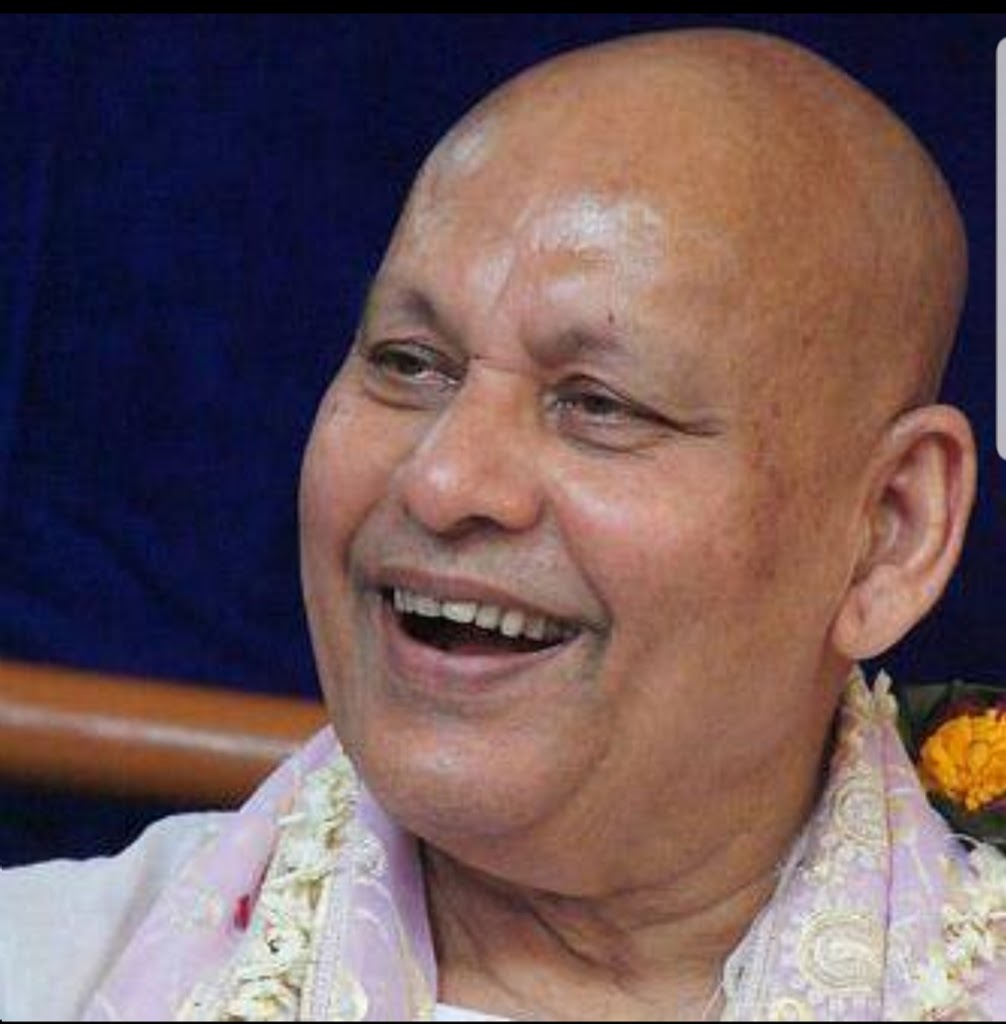
Barsana, October 6, 2026: Ramesh Baba passed away today at Maan Mandir in Barsana, leaving the entire Braj region in deep mourning. The news of Padma Shri awardee and revered Braj saint Ramesh Baba Maharaj’s demise sent shock wave among his admirers. It brought to an end of a life that was closely identified with the religious and ecological landscape of Braj.
His demise has been followed by mourning in Barsana and across the Braj region. For more than six decades, Ramesh Baba made Barsana his home and built Maan Mandir into a major centre of religious activity. At the same time, he emerged as an influential campaigner for the preservation of Braj’s forests, traditional water bodies and sacred hills, while establishing one of the region’s largest institutions for cow care.
The Government of India conferred the Padma Shri on Ramesh Baba in 2019 in the field of Social Work.
His significance, however, extended beyond the religious sphere. His campaigns against mining in the hills associated with Krishna’s pastimes, his efforts to protect Gahvarvan, restoration of kunds, cow protection initiatives and mobilisation for the Yamuna made him an important figure in the environmental history of modern Braj.
Braj Mourns the Passing of Ramesh Baba. A revered saint, tireless protector of Braj’s forests, hills, cows and Yamuna, leaves behind a legacy of devotion and conservation
Early life and arrival in Braj
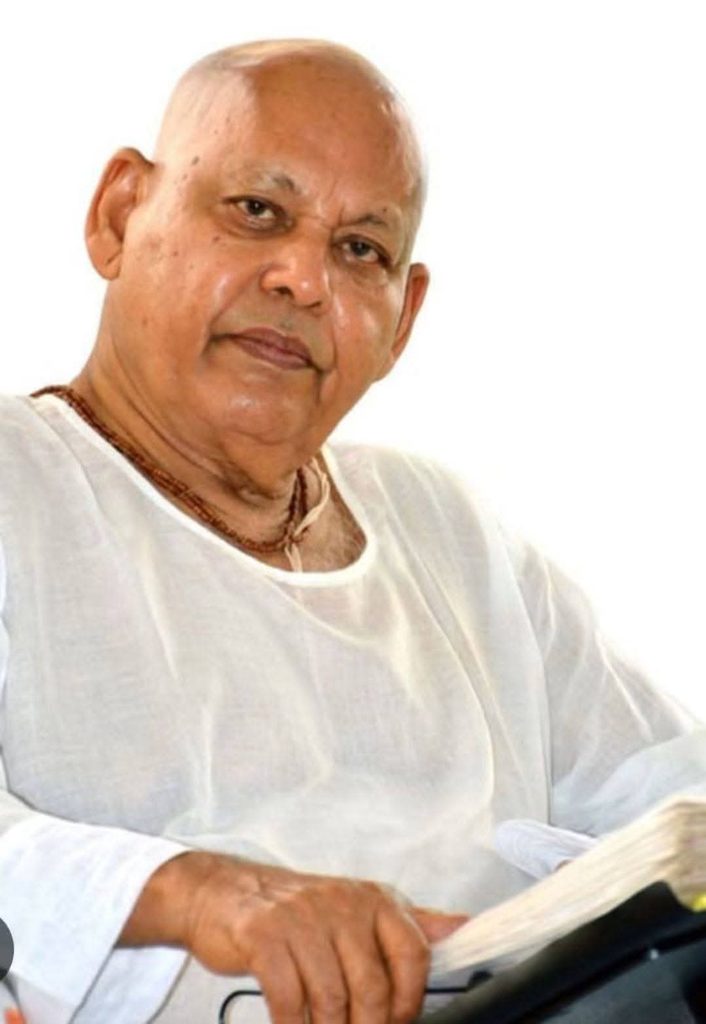
Ramesh Baba was born in 1938 in Prayag. His father, Baldev Prasad Shukla, was a noted astrologer, and his mother was Hemeshwari Devi. According to biographical material published by Maan Mandir, he completed his early education in Prayag and developed a strong inclination towards spirituality at a young age. He was also interested in music and learnt instruments including the mridang, pakhawaj, tabla and dholak.
His search for a spiritual life eventually brought him to Braj, where he became associated with the saint Priya Sharan Ji Maharaj.
He eventually settled at Maan Garh, on Brahmachal Parvat in Barsana.
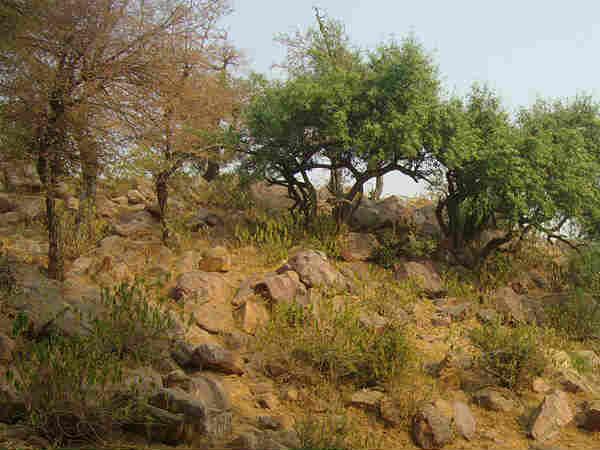
The location at that time was far removed from the prominent religious centre it would later become. Maan Mandir’s official biography describes the site as a neglected and dilapidated structure surrounded by dense forest. It was also associated with criminal activity and had reportedly been used as a hideout by dacoits.
Ramesh Baba chose the isolated hilltop for his spiritual practice. Over the years, his presence transformed the site into what became known as Maan Mandir.
From spiritual practice to the preservation of Braj
Ramesh Baba’s work gradually moved beyond his own place of worship.
He began taking up the protection of the wider Braj landscape, particularly Gahvarvan, the forests around Barsana and the numerous traditional water bodies scattered across the region.
He intervened to protect Gahvarvan from encroachment and his subsequent involvement in the restoration of several historic kunds and religious sites. These included Ratna Kund in Dhabhala, Vihval Kund in Sanket, Krishna Kund in Nandgaon, Bichhua Kund in Bichhor, Gaya Kund in Kaman, Lal Kund in Dudavali, Gopal Kund in Deeg and Rudra Kund at Jatipura.
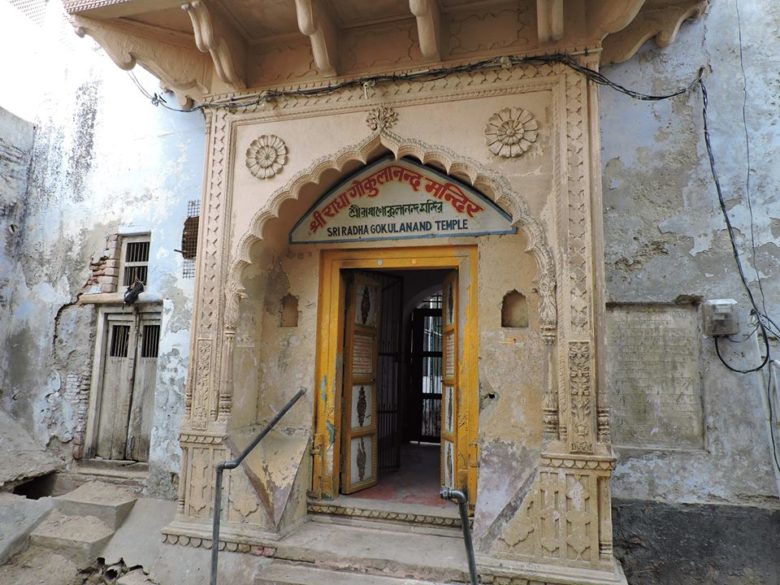
Maan Mandir describes its broader work under Ramesh Baba as including restoration of kunds and protection of the cultural and spiritual heritage of Braj.
The restoration of these water bodies had significance beyond pilgrimage. The kunds were historically part of Braj’s traditional water-management system and remain important to the region’s cultural landscape.
Campaign against mining
The most prominent environmental campaign associated with Ramesh Baba was his opposition to mining in the hills of Braj.
During the late twentieth and early twenty-first centuries, mining and quarrying posed a serious threat to several hill areas associated with the Braj pilgrimage landscape. Ramesh Baba made the issue a public campaign, arguing that the destruction of the hills was also destroying places associated with Krishna’s pastimes.
In 2009, he undertook an indefinite fast in the Kaman area against mining. According to Maan Mandir’s account, thousands of Brajwasis and pilgrims joined the campaign. It contributed to the protection of approximately 5,253 hectares of land, which was subsequently declared reserved forest.
Maan Mandir currently describes its environmental work as having helped protect thousands of hectares of mountain land and convert it into reserve forest.
The campaign established Ramesh Baba as a distinctive figure in Braj’s environmental movement: a religious leader who used the influence of the saintly tradition to mobilise public opinion around ecological issues.
Mataji Gaushala and the expansion of cow protection
Cow protection became another major component of Ramesh Baba’s work.
In 2007, Mataji Gaushala was established at Barsana, initially on a small scale. It subsequently expanded into a large cattle-care institution. The gaushala has been caring for tens of thousands of cattle. The institution is caring for a very large population of indigenous cows.
The institution also incorporated facilities and activities associated with animal care and the use of cattle waste, including biogas-related initiatives. A gobar-gas plant generating electricity for the gaushala.
The scale of Mataji Gaushala turned Ramesh Baba’s advocacy of gau seva into an institutional programme rather than an exclusively religious appeal.
The Yamuna campaign
The Yamuna was another major concern in Ramesh Baba’s public life.
Maan Mandir and organisations associated with the saint participated in campaigns seeking the restoration of the Yamuna and its protection from pollution. These included public mobilisation and padyatras.
Maan Mandir had undertaken marches towards Delhi demanding action for the Yamuna.
The campaign reflected a central feature of Ramesh Baba’s environmental thinking: the river was simultaneously a religious symbol, an ecological system and a defining element of Braj’s cultural geography.
The 84-kos Braj Yatra
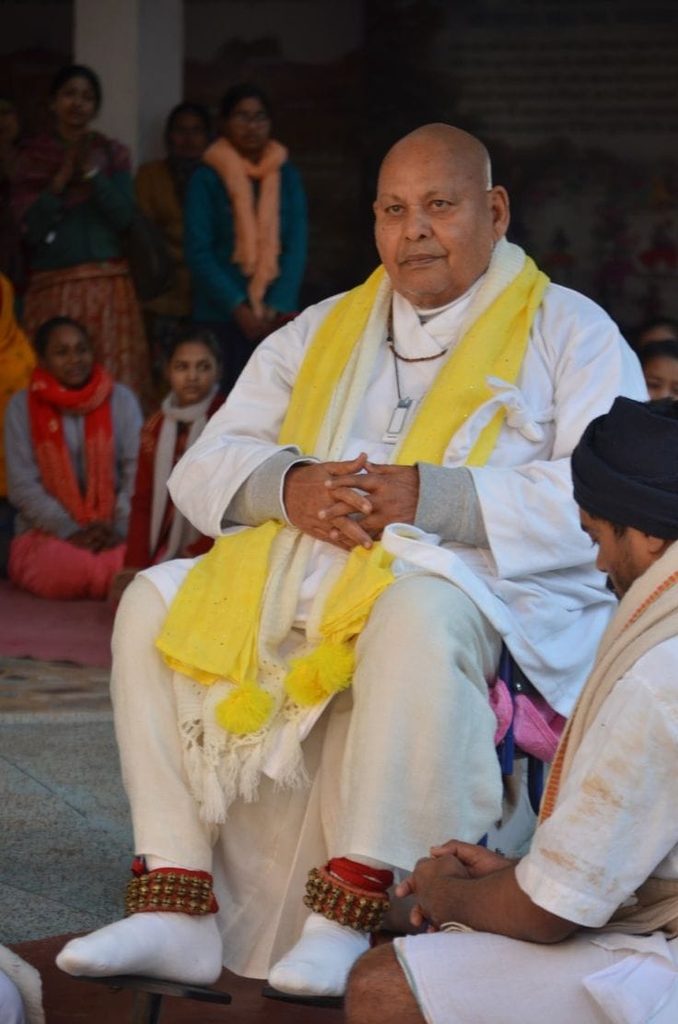
Ramesh Baba also played a central role in popularising the Radha Rani Braj Yatra, an extensive foot pilgrimage covering the traditional 84-kos Braj circuit.
The annual pilgrimage takes devotees through a wide range of villages and religious sites across Braj, including places that receive considerably less attention than the major temple towns.
Maan Mandir describes the yatra as a major annual pilgrimage conducted over several weeks and organised without charging participating devotees.
The yatra also brought attention to the broader Braj landscape at a time when pilgrimage and tourism were increasingly concentrated around a relatively small number of major urban centres.
Harinam Sankirtan and rural mobilisation
Ramesh Baba’s work was not limited to environmental campaigns.
Through Maan Mandir and associated organisations, he promoted Harinam Sankirtan across Braj and other parts of northern India. Maan Mandir describes the spread of the practice to thousands of villages.
The religious movement and environmental work often operated alongside one another. The underlying idea was that awareness of Braj’s sacred character could create a greater willingness among residents and pilgrims to protect its natural and cultural resources.
A saint who stayed within Braj
One unusual feature of Ramesh Baba’s public life was the extent to which it remained centred on Braj.
Reports and biographical accounts have repeatedly noted that after coming to Braj he rarely, if ever, travelled outside the region. A 2019 account described him as having remained within Braj after his arrival and linked this to his commitment to the region.
His own institutional biography expresses the same attachment to Barsana and Gahvarvan, describing Braj, its residents and Radha-Krishna as the centre of his life.
This physical rootedness was significant. Ramesh Baba’s campaigns were not conducted from outside the region. He lived in the landscape whose protection he advocated.
Recognition with the Padma Shri
The Government of India announced the Padma Shri for Ramesh Baba in 2019, categorising the award under Social Work.
Because of his reluctance to leave Braj, the award was subsequently presented to him at Barsana rather than at the usual ceremony in Delhi. Contemporary reporting noted that the district administration brought the honour to him in Barsana.
The award brought national recognition to work that had until then been largely identified with Braj’s religious and social circles.
Baba’s final years
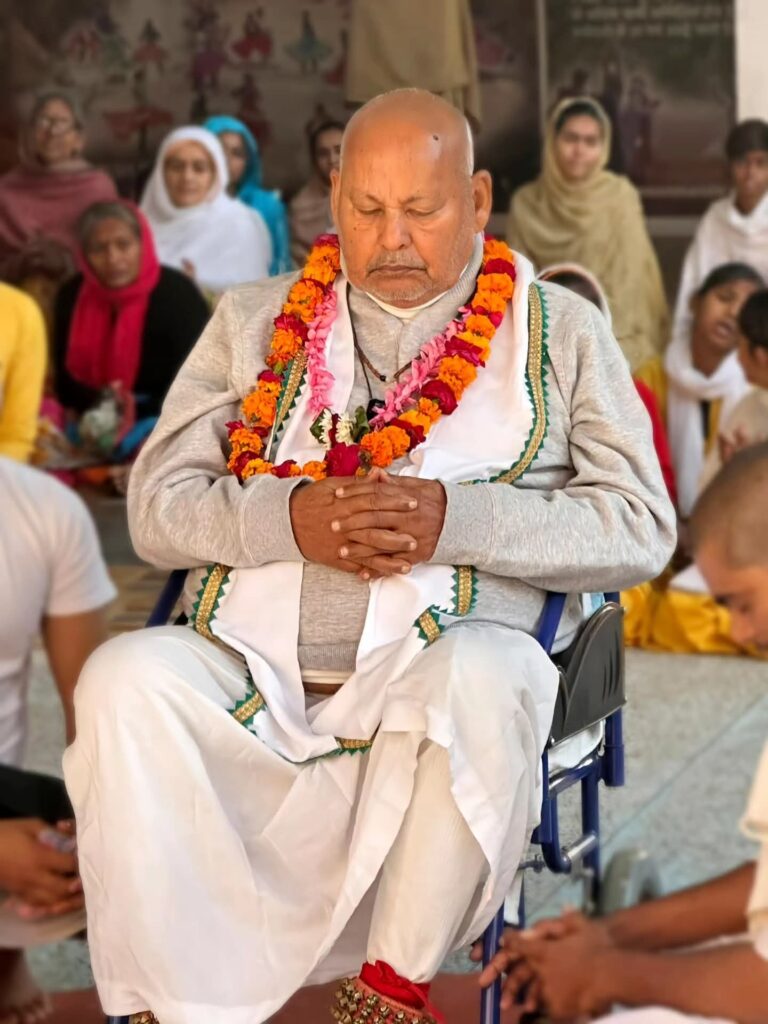
Ramesh Baba continued to be associated with the activities of Maan Mandir and its institutions in his later years, despite declining health.
In 2024, arrangements were made for succession within Maan Mandir and the institutions associated with his work. The emphasis remained on continuing the programmes of gau seva and the campaign for the Yamuna.
His passing on Indira Ekadashi (Tuesday) at Maan Mandir brings to a close one of the longest individual chapters in the modern history of Barsana.
Ramesh Baba’s legacy is likely to be debated and remembered from several perspectives.
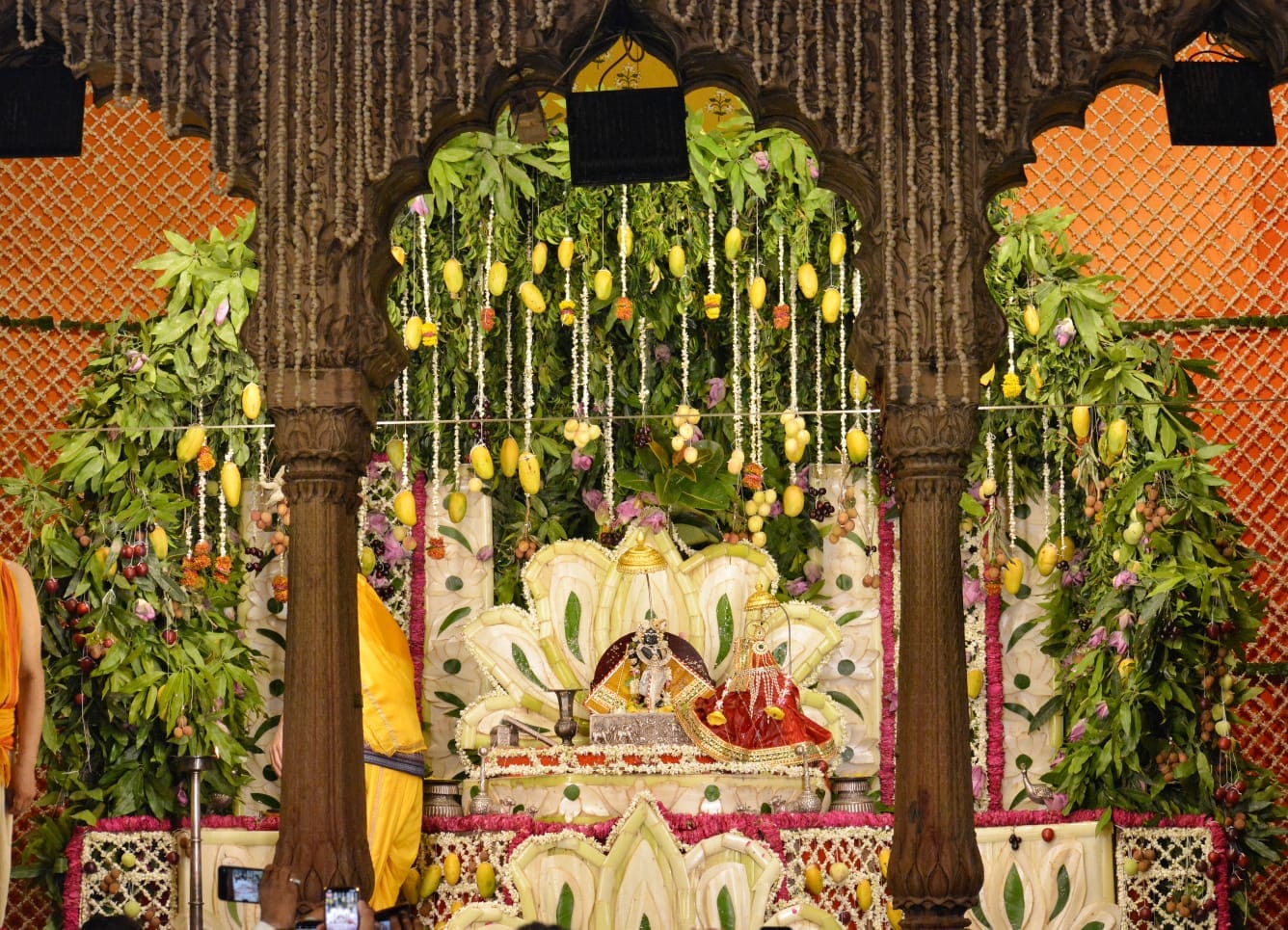
For devotees, he was a renunciant saint devoted to Shri Radha Rani.
For the cow-protection movement, he was the inspiration behind a large-scale gaushala.
For environmental activists in Braj, he was one of the religious figures who brought public attention to the destruction of forests, hills and traditional water bodies.
For those working on Braj’s heritage, his contribution lay in drawing attention to sites beyond the region’s famous temples.
And for Barsana, he was a figure whose entire adult life became inseparable from the town and its surrounding landscape.
Perhaps the most distinctive feature of his life was the manner in which these different strands came together.
Ramesh Baba did not treat religion, environment, animal welfare and heritage as separate causes. He saw them as interconnected parts of Braj. That approach gave his environmental campaigns an unusual social and religious base.