Yogi Adityanath inaugurates and lays foundation stones for 229 development projects worth ₹1,051 crore in Mathura; inaugurates Swami Shri Haridas Auditorium
Vrindavan Today | Bureau Report
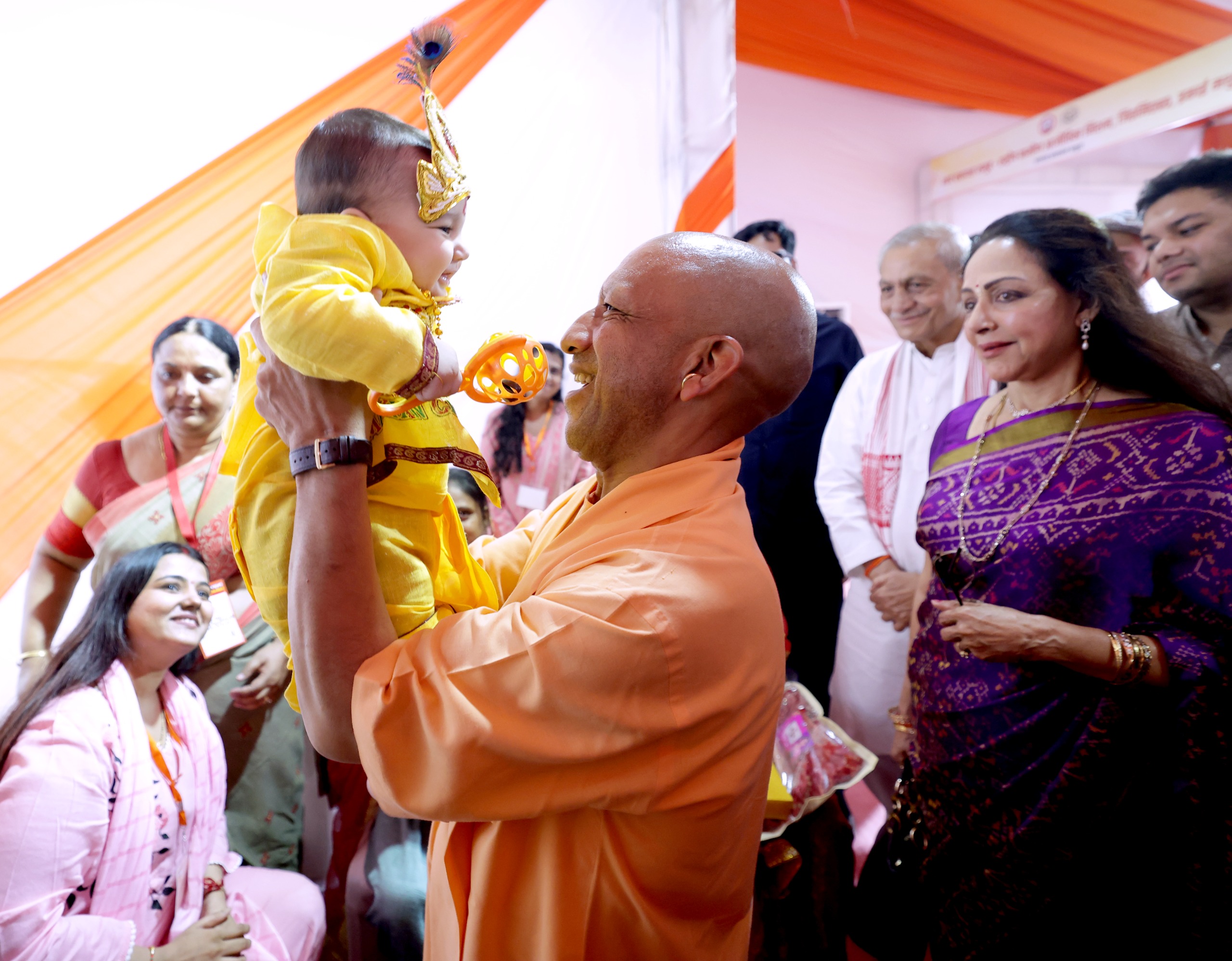
September 3, 2026, Vrindavan: Uttar Pradesh Chief Minister Yogi Adityanath extended greetings to the people of the state on the occasion of Shri Krishna Janmashtami from the sacred land of Braj, asserting that while foreign invaders destroyed temples, they could never weaken the faith and devotion of the people.
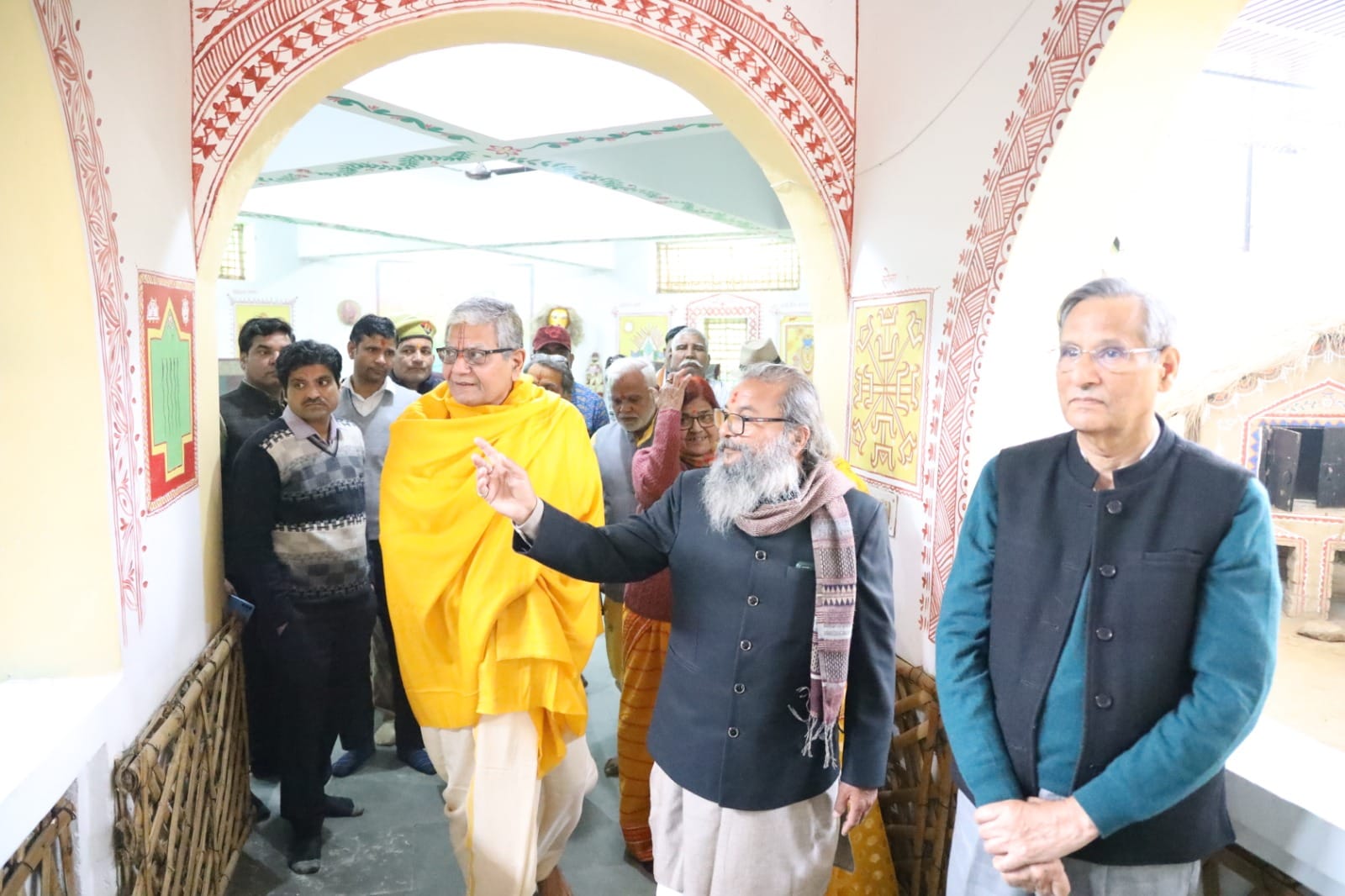
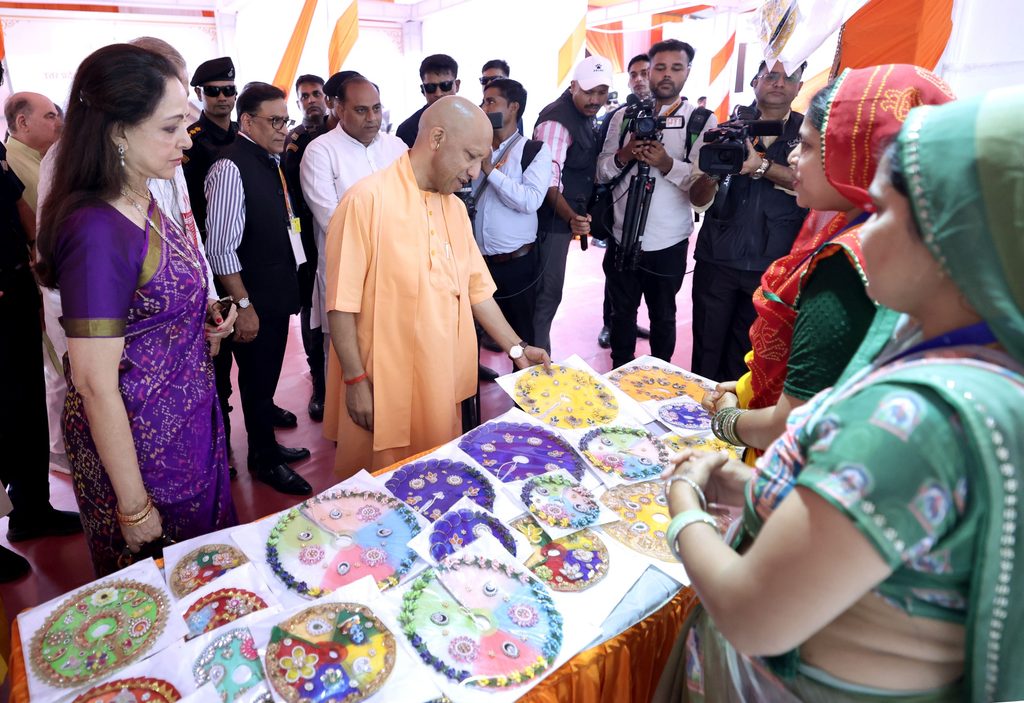
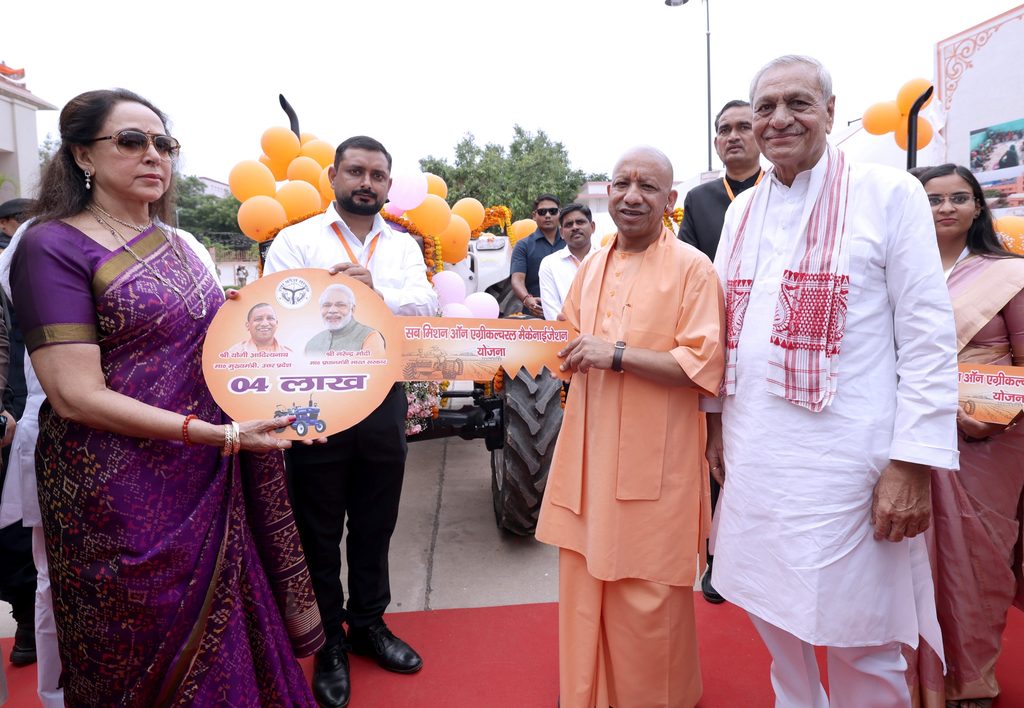
The Chief Minister inaugurated and laid the foundation stones for 229 development projects worth ₹1,051 crore at the Geeta Research Institute and Raslila Academy in Vrindavan. The projects include the newly constructed Swami Shri Haridas Auditorium.
Of the total projects, 62 projects worth more than ₹540 crore were inaugurated, while foundation stones were laid for 167 projects costing over ₹437 crore. In addition, more than ₹72 crore was transferred directly into the bank accounts of beneficiaries under housing schemes.
Addressing the gathering, Yogi Adityanath said that Braj, Ayodhya and Kashi represented the extraordinary resilience of India’s spiritual and cultural traditions.
Swami Haridas connected devotion with social consciousness
Speaking about the legacy of Swami Haridas, the Chief Minister said that the great saint gave devotion a musical expression and transformed music into a form of spiritual practice.
“Swami Haridas connected his spiritual practice with the consciousness of society,” he said, highlighting the saint’s profound influence on Indian classical music. He also recalled that the legendary musician Tansen was a disciple of Swami Haridas.
The new auditorium, he said, would further strengthen the cultural and musical heritage associated with Vrindavan and Braj.
Development cannot come at the cost of heritage
The Chief Minister observed that for a long time development was viewed primarily through the prism of roads, electricity, water, buildings and industries.
“Development was often pursued at the cost of heritage,” he said, adding that attempts had also been made to erase historical personalities and symbols from India’s collective memory.
According to Yogi Adityanath, foreign invaders and later the British damaged India’s historical and cultural symbols, while governments after Independence often neglected or even disrespected the country’s heritage.
He said that India’s history was not merely a history of achievements, but also one of struggle, preservation, reconstruction and the continuity of Sanatan traditions.
Mathura is an example of the resilience of Sanatan tradition
Referring to Mathura, the Chief Minister said the city provided one of the strongest examples of the resilience of India’s spiritual traditions.
He referred to the repeated attacks on the Keshav Dev temple at Shri Krishna Janmabhoomi and said that despite the destruction of temples, the memory of Shri Krishna and Radha could never be erased.
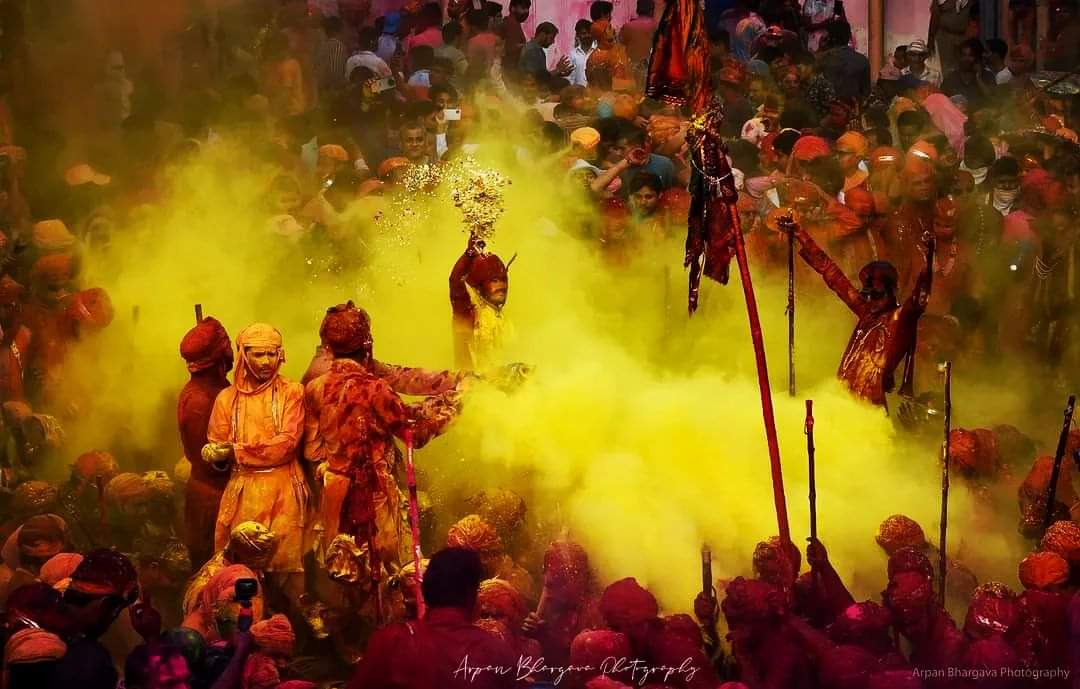
“Janmashtami never stopped, nor did devotion in Vrindavan. The Holi of Barsana did not stop, nor did the Govardhan Parikrama,” he said.
He described this continuity as the strength of Sanatan tradition and the spiritual power of Braj.
Kashi and Ayodhya also symbolise cultural continuity
Yogi Adityanath cited Kashi Vishwanath and Ayodhya as further examples of India’s cultural resilience.
He said that although the Kashi Vishwanath temple was destroyed during the Mughal period, the tradition survived, and the temple was subsequently rebuilt with an important contribution from Lokmata Ahilyabai Holkar. Today, he said, the Kashi Vishwanath Dham has emerged as a major centre combining spirituality with modern facilities.
Referring to Ayodhya, he said that the destruction of the temple at Shri Ram Janmabhoomi in 1528 and the construction of a structure there could not extinguish the city’s religious traditions. Ram Navami, the Panchkosi, 14-kosi and 84-kosi parikramas and the Sawan Jhula festival continued through the centuries.
“The radiance of Sanatan Dharma continued to grow and generated the spirit to struggle. The result is the construction of the grand Ram temple in Ayodhya,” he said.
From Jawahar Bagh violence to a culture of celebration
The Chief Minister contrasted the situation in Uttar Pradesh before 2017 with the state’s present atmosphere.
Recalling the Jawahar Bagh incident of June 2016, in which 29 people were killed, including two police officers, he said that the atmosphere at that time was marked by violence and disorder.
“Who could have imagined festivals, development, civilisation and protection of culture amid such disturbances?” he asked.
He said that today Mathura, Vrindavan, Barsana, Govardhan and Baldev were increasingly recognised for their heritage and festivals.
According to the Chief Minister, Uttar Pradesh has become “curfew and riot-free” during the past nine-and-a-half years, and festivals are now preceded by preparations rather than apprehensions of violence.
Heritage extends beyond temples
Yogi Adityanath stressed that heritage should not be understood merely as physical structures.
“It exists in our temples, languages, literature, music, art and philosophy, as well as in India’s traditions of mathematics, science, medicine, astronomy and folk knowledge,” he said.
He said the government’s approach was to combine heritage with development, faith with the economy, tradition with transformation and modernity.
He listed Ayodhya, Kashi, Mathura, Vrindavan, Barsana, Govardhan, Nandgaon, Baldev, Vindhyachal, Chitrakoot, Shukteerth, Sambhal, Bareilly, Naimisharanya, Sarnath and Kushinagar among the religious and cultural centres being developed.
The growing tourist footfall, he said, was evidence of Uttar Pradesh’s changing connectivity, improved law and order and infrastructure. He stated that 156 crore tourists visited Uttar Pradesh last year.
Heritage-led development for a self-reliant India
From Braj, the Chief Minister gave a broader message that India’s ambition of becoming a developed and self-reliant nation would have to remain rooted in its heritage.
He said that women, youth, farmers, entrepreneurs, artisans and handicraft workers must all benefit from development.
“Rule of law is the first condition,” he said, emphasising that devotees, tourists and investors would come only when they had confidence in their safety.
He cited the movement of around five crore Kanwar pilgrims between Ghaziabad and Haridwar during the month of Sawan as an example of the scale at which religious gatherings are now being managed.
Braj being integrated with tourism development
Highlighting the development of Braj, Yogi Adityanath said that over the past eight years the Braj Teerth Vikas Parishad had completed numerous projects involving approximately ₹1,000 crore.
He said that development was being undertaken with emphasis on security, cleanliness, connectivity and dignified facilities for pilgrims.
Vrindavan, Barsana, Nandgaon, Govardhan, Radha Kund, Gokul, Baldev and Mathura are being integrated into a wider tourism development network, he said.
The 84-Kosi and Panchkosi Parikrama routes are being developed and the restoration of traditional water bodies is also being undertaken.
He said that, subject to protection and directions from the Supreme Court, the area around the Banke Bihari Temple in Vrindavan could also undergo large-scale development.
The proposed ropeway in Vrindavan, mega parking facilities and the Raya Urban Node in Mathura were cited as projects intended to create the foundation for the modern future of Braj.
Surdas Brajbhasha Academy established
The Chief Minister also highlighted the establishment of the Surdas Brajbhasha Academy for the preservation of Braj culture and promotion of the Braj language.
He said the government was bringing renowned artists from India and abroad onto a common platform to preserve, promote and showcase Braj’s rich musical and literary heritage on the global stage.
Another major initiative, he said, was the development of Saurabhi Van, described as Asia’s largest city forest, over an area of approximately 400 acres within Vrindavan’s urban limits.
The Chief Minister said that the objective was not merely to modernise Braj but to ensure that development remained connected with the region’s spiritual identity, cultural memory and living traditions.