Vrindavan Today | Bureau Report
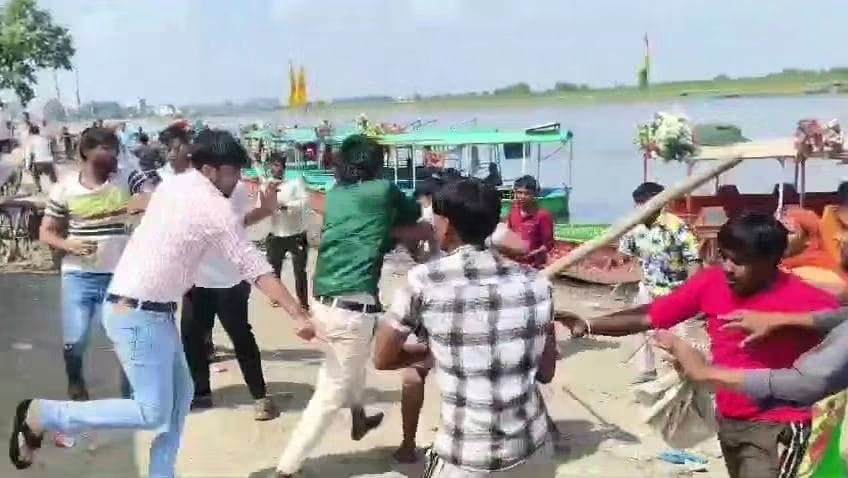
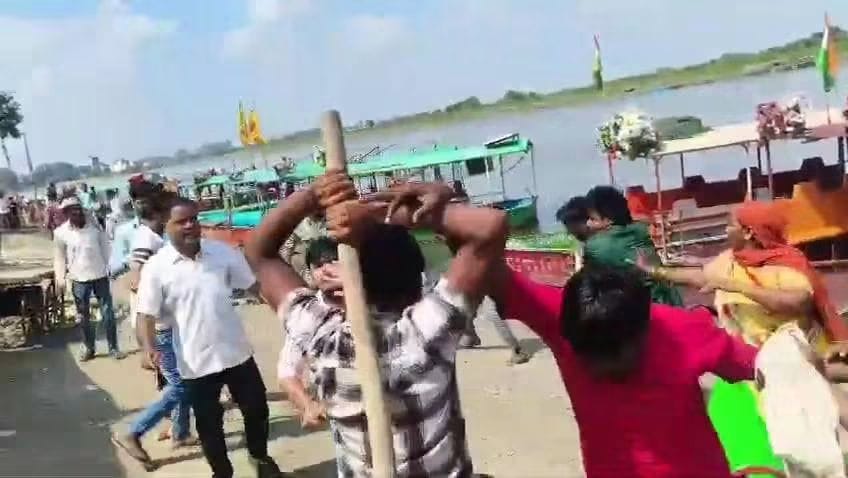
15th September, 2026, Vrindavan: A dispute over removing an e-rickshaw parked on the Parikrama Marg near Chir Ghat in Vrindavan escalated into a violent clash between two groups on Tuesday morning. The confrontation involved stone-pelting and the use of sticks and iron spikes, leaving more than half a dozen people injured and creating panic among visitors and local residents.
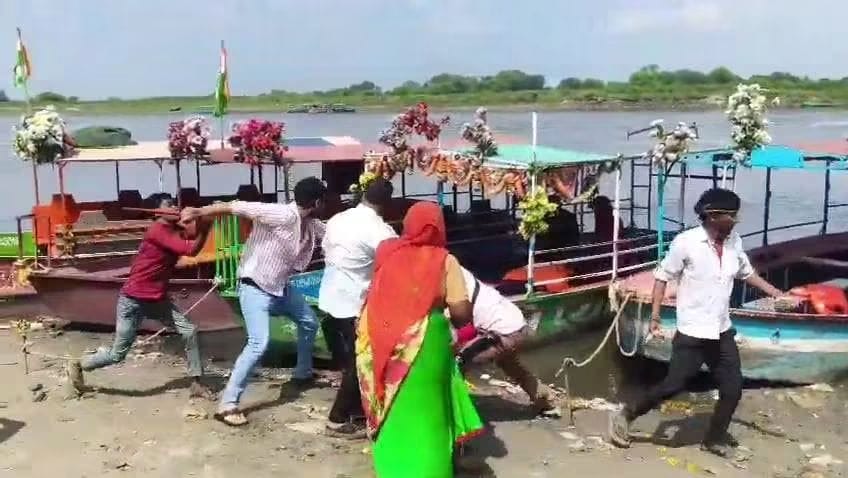
According to reports, the incident occurred around 11 a.m. when a boatman allegedly asked an e-rickshaw driver to move his vehicle from the road near Cheer Ghat. When the driver refused, the boatman reportedly struck the vehicle with a stick. A heated argument followed, soon drawing members of both sides into the dispute.
The situation quickly turned violent as more than a dozen people confronted each other. Stones, bricks and sticks were allegedly used during the clash along the Yamuna bank, causing chaos in the area. A video showing the assault, including an alleged attack with an iron spike, has also gone viral on social media.
Several people from both sides reportedly sustained injuries. Rajendra Nishad, a resident of Jahangirpur, said that members of his family, including Ravi, Lotan, Kaushal, Neeraj and Yogesh, were injured in the incident.
Both groups subsequently reached the police station, following which the injured were sent to the District Joint Hospital for medical examination and treatment. Doctors later referred Yogesh to Agra after finding his condition serious.
The violence, however, allegedly continued at the hospital. While Emergency Medical Technician (EMT) Akhairam Yadav and ambulance driver Deepesh Yadav were taking the seriously injured Yogesh to the ambulance on a stretcher for referral to Agra, they were allegedly attacked by the same group. Both ambulance personnel suffered serious injuries and were admitted for treatment.
The injured EMT subsequently submitted a written complaint at Jaint Police Station against 20–25 unidentified persons, alleging an attempt on his life.
Police from Jaint and Vrindavan are investigating the incident. Jaint Police are examining CCTV footage from the hospital, while Vrindavan Police are looking into the viral videos and the complaints submitted by the parties involved.
The incident has raised serious questions about law and order and security arrangements along the busy Parikrama Marg and around Cheer Ghat, an important religious and tourist area of Vrindavan. The use of violence in a public place frequented by pilgrims and visitors has also heightened concerns over traffic management and the unchecked movement and parking of e-rickshaws in the area.
E-Rickshaw Chaos and Lawlessness in Vrindavan
The violent clash near Cheer Ghat over the removal of an e-rickshaw is not merely a dispute between a boatman and a driver. It is a warning about the growing traffic and law-and-order challenges facing Vrindavan.
What began as an argument over an e-rickshaw parked on the Parikrama Marg reportedly escalated into stone-pelting, attacks with sticks and an iron spike, leaving several people injured. Even more disturbing is the allegation that an ambulance EMT and driver were attacked while taking a seriously injured person to Agra.
Such incidents cannot be viewed in isolation. Vrindavan receives enormous numbers of pilgrims and visitors, particularly during festivals and weekends. The Parikrama Marg, access roads to temples and the areas around the Yamuna ghats frequently become congested with e-rickshaws, private vehicles, vendors and roadside parking. When traffic management is inadequate, even a minor disagreement can quickly become a serious law-and-order problem.
E-rickshaws: Convenience Without Regulation?
E-rickshaws have become an important part of Vrindavan’s public transport system. They provide affordable mobility, particularly for elderly pilgrims and visitors who cannot walk long distances.
But their increasing numbers also require proper regulation.
Parking vehicles on narrow roads, stopping indiscriminately to pick up passengers, entering congested areas and creating bottlenecks can obstruct emergency vehicles and endanger pedestrians. The answer, however, cannot simply be periodic drives against e-rickshaws. Vrindavan needs a properly designed, transparent and enforceable mobility plan.
Designated parking and waiting areas, regulated routes, clearly marked no-parking zones and effective enforcement are urgently required.
Pilgrim Safety Must Come First
The Parikrama Marg is not an ordinary urban road. It is part of Vrindavan’s sacred landscape and are used daily by pilgrims performing the traditional parikrama.
Visitors should be able to walk along these routes without fear of traffic congestion, aggressive driving or street violence.
The reported attack on ambulance personnel is particularly alarming. An ambulance carrying an injured person must have an absolutely safe passage. Any obstruction or assault on emergency medical personnel is a matter of grave concern and should be dealt with firmly under law.
Police Presence and Quick Response
The incident also raises questions about the adequacy of policing in sensitive and heavily visited areas.
Important stretches of the Parikrama Marg and the Yamuna ghats need visible police and traffic personnel, particularly during peak hours and festival periods. CCTV cameras should cover vulnerable points, and the footage should be actively monitored rather than merely reviewed after an incident occurs.
A coordinated system involving the police, traffic authorities, Municipal Corporation, temple managements, e-rickshaw operators and local residents is necessary.
Vrindavan Cannot Be Managed Only After Incidents The larger lesson from the Cheer Ghat incident is that Vrindavan needs preventive governance rather than reactive enforcement.
Authorities should undertake a comprehensive survey of traffic and pedestrian movement on the Parikrama Marg and around the major temples and ghats. Based on the findings, a scientific mobility plan should be prepared.
The plan should include:
Designated e-rickshaw stands and parking areas.
Clearly identified no-parking and no-stopping zones.
Regulated routes and stopping points.
Strict action against dangerous or illegal parking.
Dedicated emergency access routes for ambulances and fire services.
Adequate pedestrian space along the Parikrama Marg.
CCTV coverage at vulnerable locations.
Better coordination between police and municipal authorities.
Special traffic arrangements during festivals and major religious occasions.
Awareness and training programmes for e-rickshaw drivers.
Protecting the Character of Vrindavan
Vrindavan is not simply another growing city. It is a sacred cultural landscape whose roads, ghats, kunds, groves and traditional pathways are themselves part of its heritage.
Development and transportation systems must therefore be designed according to the character of the town.
The objective should not be to eliminate e-rickshaws, which provide an important service to residents and pilgrims. The objective should be to regulate them intelligently and humanely.
The violence near Cheer Ghat should serve as a wake-up call. If traffic congestion, unregulated parking and inadequate enforcement continue to be ignored, similar conflicts may become more frequent.
Vrindavan deserves a transport system that respects both the needs of its residents and the sanctity and safety of its millions of pilgrims.
The time has come for the administration to move beyond temporary drives and formulate a comprehensive, long-term traffic and mobility policy for Vrindavan.